Japan hosts festivals year-round, ranging from ancient traditional events to modern attractions like Formula 1 racing and anime celebrations. They come in many forms, including shrine rituals, parades, fireworks, fire festivals,light-up events, and dance festivals.
These festivals are a great way to experience local Japanese culture. Below is our curated list of festivals, from major highlights to more hidden gems. You can choose the ones that best match your travel dates and add them to your itinerary.
Japan Festival Schedule 2026
Find below a table of Japan's major festivals by month. It include both popular festivals and lesser-known events that are still worth visiting.
| Dates | Festivals | Location | Highlights |
|---|---|---|---|
| Mar 27–29 | Formula 1 Japanese Grand Prix | Suzuka Circuit, Mie | F1 Racing International Sports |
| Mar 28, 29 | AnimeJapan | Tokyo Big Sight, Tokyo | Pop Culture / Anime & Manga Expo |
| April 1-30 | Miyako Odori | Kyoto, Gion | Kabuki Performance |
| April 14-15 | Takayama Matsuri | Takayama, 3.5 hours from Kyoto | Float Parades and Puppet Performances, Night Illuminations |
| Apr 13-20 | Kamakura Spring Festival | Kamakura,around 1 hour from Tokyo | Portable Shrine Parade and Samurai Performances |
| May 4–5 | Yabusame Shinji | Kyoto | Traditional Horseback Archery Festival |
| May 10-24 | Tokyo Sumo Tournament | Tokyo | National Sumo Tournament |
| May 10-15 (Held in odd-numbered years) | Kanda Matsuri | Tokyo | One of Japan's Three Great Festivals |
| June 5–7 | Hyakumangoku Matsuri | Kanazawa | Samurai Parades and Traditional Performing Arts Processions |
| June 7–17 (Held in even-numbered years) | Sanno Matsuri | Tokyo | Traditional Shinto Historical Festival |
| July 1–31 | Gion Matsuri | Kyoto | The most important of Japan's Three Great Festivals |
| July 14 | Nachi Fire Festival | Wakayama | Fire Festival Event |
| July 12–26 | Nagoya Sumo Tournament | Nagoya | Grand sumo tournament |
| July 24–25 | Tenjin Matsuri | Osaka | River parade and fireworks |
| July 25 | Sumida River Fireworks | Tokyo | One of Japan's largest fireworks displays |
| Aug 2–7 | Nebuta Matsuri | Aomori | Summer Festival with Giant Lantern Floats Parade |
| Aug 3–6 | Akita Kanto Festival | Akita | Folk Festival featuring Long-Pole Lantern Parade |
| Aug 6–8 | Sendai Tanabata | Sendai | Folk Festival featuring colorful bamboo decorations and lanterns |
| Aug 13-15 | Obon (Bon Odori) | Kyoto and Miyajima | Ancestral ceremonies, Bon Odori dancing |
| Sep 13-27 | Tokyo Sumo Tournament | Tokyo | Sumo Tournament |
| Oct. 9-10 | Takayama Autumn Festival | Gifu, around 1.5 hours from Kyoto | Cultural & Folk Float Parade |
| Oct. 14-19 | Shirakawa-go Doburoku Festival | Kanazawa | Folklore experiences celebrating the harvest |
| Oct. 22 | The Jidai Matsuri | Kyoto | Historical Parade |
| Oct. 22 | Kurama no Hi-Matsuri | Kyoto | Fire festival |
| Weekend around Oct. 31 | Halloween Day | Tokyo, Osaka | Cosplay gathering and street carnival |
| Nov. 1-10 | Gion Odori | Kyoto | Geisha Dance |
| Nov. 8-22 | Fukuoka Sumo Tournament | Fukuoka | Sumo Match |
| Dec 25 | Christmas | Tokyo, Osaka, Sapporo | Romantic Light Displays |
| Jan. 7 | Oniyo Fire Festival | Fukuoka | Fire Festival |
| Jan. 12, 18, 25, Feb. 1 | Shirakawa-go Winter Illumination | Kanazawa | Light illumination event |
| Feb. 4-11 | Sapporo Snow Festival | Sapporo | Winter Illumination & Snow Festival |
| The third Saturday of February | Saidaiji Hadaka Matsuri | Okayama City | Traditional Shinto purification festival |
Japan Spring Festivals
Spring (March to May) is one of the most popular times to visit Japan. In addition to cherry blossom season and Japan's most iconic and largest festivals are the Kanda Matsuri and the Gion Matsuri, you can also experience nationwide events like sumo tournaments, international events such as Formula 1 races, and anime conventions.
Mt. Fuji Kawaguchiko Cherry Blossom Festival

- Date: March 28 – April 12
- Location: the north shore of Lake Kawaguchiko
Cherry blossoms line the lakeshore, with Mount Fuji right in front of you. On a clear day, you can see Fuji reflected on the water, framed by soft pink petals.
After the views, a market adds a nice local touch. You can wander through small craft stalls and casual yatai stands, trying sakura mochi (sweet rice cakes), local jams, and other seasonal treats.
Go early, around 8:00 AM, for fewer crowds and the clearest views. We recommend staying at least one night here, so you can enjoy the quiet morning view and increase your chances of seeing Mount Fuji at its best.
Kyoto Miyako Odori
- Date: Apr 1–30
- Location: Gion Kobu Kaburenjo Theater, Gion District
You could sit in a quiet Kyoto hall, watching geiko and maiko glide across the stage in stunning spring costumes. This traditional dance showcases refined Kyoto arts, and the elegant movements with live music remain captivating even if you don't understand Japanese.
For the best view, choose front-center reserved seats (first floor) for a close-up experience—we can arrange premium seating for you.
You can combine the show with a walking tour of Gion and nearby temples.
Ashikaga Flower Park Wisteria Festival
Beautiful wisteria illumination in Ashikaga Flower Park, Tochigi prefecture- Date: April 10 – May 20
- Location: Ashikaga Flower Park, Tochigi (about 1.5 hours from Tokyo)
Here, you'll feel surrounded by a sea of wisteria. You can walk through nearly 100-meter-long flower tunnels. Late April is the best time for peak blooms, and evenings are perfect for the magical light-up.
Kyoto Yabusame Shinji
- Date: May 3
- Location: Shimogamo Shrine
You can see riders dressed in elaborate Heian-period hunting costumes performing horseback archery.
The event runs from 1:00 PM to 3:30 PM. The grounds are open and free to enter, but it can get very crowded, so paid viewing seats are recommended for an unobstructed, close-up view.
Tokyo Sumo Tournament
Sumo Racing- Date: May 10–24
- Location: Ryogoku Kokugikan, Sumida City
You can enjoy the excitement and lively atmosphere of a sumo match while snacking on Japanese food.
We recommend attending the afternoon session, usually entering around 2:00 PM, when higher-ranked wrestlers compete and the matches are most exciting.
Tickets are released about 1 month in advance via the official Sumo Association website. For the best experience, choose first-floor S-class seats or box seats for a clear, close view of the ring.
Tickets for the Tokyo tournament are the hardest to get. Tickets for the March Osaka tournament are generally easier to buy.
Tokyo Kanda Matsuri
- Date: May 11–17 (Held in odd-numbered years)
- Location: Kanda Myojin Shrine & Central Tokyo Districts
Over 200 beautifully decorated portable shrines are carried by thousands of people. You'll see Heian-era costumes, samurai outfits, musicians, and colorful festival floats all around.
The route stretches about 30 kilometers through Akihabara, Nihonbashi, and Otemachi. Best viewing spots and times include:
- In front of Mitsukoshi Department Store in Nihonbashi. Best at around 4:30 PM when the main procession reaches its peak.
- Entrance of Kanda Myojin Shrine, where the shrine processions return between 9:00 AM and 7:00 PM. This area has the most intense atmosphere.
Arrive at least one hour early to secure a good spot, as it gets very crowded.
Takayama Spring Matsuri
- Date: Apr 14–15
- Location: Sakurayama Hachimangu Shrine & Old Town, Takayama City, Gifu Prefecture
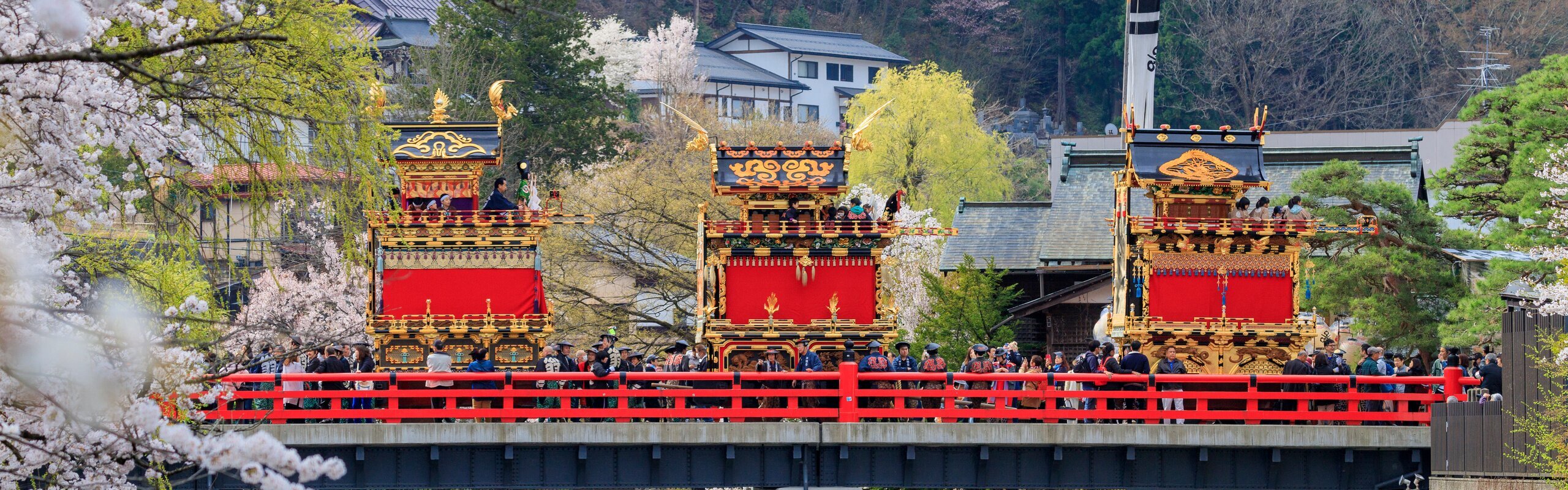
This is one of Japan's most beautiful float festivals. The festival usually coincides with the local cherry blossom season. You could watch the portable shrine procession surrounded by blooming sakura.
Takayama is about 2.5–3.5 hours from Kyoto or Nagoya. Overnight stay is highly recommended to experience both daytime parade and evening lantern display.
Formula 1 Japanese Grand Prix
- Date: Mar 27–29
- Location: Suzuka Circuit, Suzuka City, Mie Prefecture, about 2 hours from Osaka
This is Japan's premier international racing car event. You can watch elite F1 drivers compete on one of the world's most technical circuits.
Tickets for the event should be purchased 4–6 months in advance through the official website.
Mie Prefecture is about 2-2.5 hours from Osaka and Kyoto by car. Most visitors stay in Osaka, Nagoya, or near Suzuka for race weekend access.
AnimeJapan
- Date: Mar 28–29
- Location: Tokyo Big Sight, Koto City, Tokyo, Japan
This is one of the world's largest anime and manga expos. You can explore major studios, exclusive trailers, cosplay zones, and merchandise halls.
To attend, you need to plan ahead. Tickets are usually released through an official lottery system about 2 to 3 months in advance, and you can only purchase them if you're selected.
Japan Summer Festivals
Japan's summer festivals mainly highlight parades and fireworks displays, and are concentrated in late July and early August, when the weather is hot.
Get there at least an hour early for parades and street festivals to grab a front-row spot. For fireworks or major events, arrive 2–4 hours ahead if you don't have reserved seating.
Gion Matsuri
- Date: July 1-31
- Gion Matsuri is one of Japan's most famous traditional festivals and the largest summer festival, lasting an entire month!
You watch huge decorated floats move slowly through Kyoto's narrow streets. Drums play, people chant, and the whole city feels like one big summer festival.
We recommend the evening of July 23. It has the best summer festival vibe. Lights are beautiful, food is plenty, and the crowds are smaller. It also feels more comfortable than during the day.
Sumida River Fireworks
- Date: Last Saturday of July (July 25, 2026)
Over 20,000 fireworks explode directly above you, lighting up the sky against the iconic backdrop of Tokyo Tower.
Street food stalls line every nearby lane, and you'll see locals in yukata (summer kimono) enjoying snacks, shaved ice, and other festival treats. The whole Asakusa area turns into one giant summer celebration.
Get there by at least 5 PM to secure a good spot along the riverbank.
Osaka Tenjin Matsuri
Fireworks over Tenjin Matsuri celebrations along river in Osaka.- Date: July 24-25
Tenjin Matsuri is one of Japan's three great festivals. You can watch thousands of people in traditional costumes parade through the streets, and at night see over 100 illuminated boats float past you under a sky full of fireworks.
The best day to visit is night of July 25. Our recommendation is to book a river cruise in advance. You will get the best views of both the boat procession and the fireworks from the water.
If you want to escape the heat in northern Japan, head to the Tohoku region. In early August, you can explore volcanic lakes and forest scenery while attending Nebuta Matsuri in Aomori.
For more details on summer festivals, check out Japan Summer Festivals and Top 12 Japan Fireworks Festivals.
Japan Autumn Festivals
Japan's autumn festivals are less about the lively, high-energy celebrations of summer and more focused on culture and immersive experiences.
Kyoto Jidai Matsuri
- Date: Oct 22
- Location: Kyoto Imperial Palace to Heian Shrine, Kyoto
This historic parade recreates over 1,000 years of Kyoto history. You can see samurai, court nobles, and imperial processions.
The best viewing spots are along the main route, especially near the Kyoto Imperial Palace at the start or near Heian Shrine at the finale. The parade usually runs from around 12:00 PM to 2:30 PM. We recommend paid seating to avoid crowds and ensure a clear view, and we can arrange reservations if needed.
Kyoto Shichi-Go-San (Children's Festival)
- Date: Nov 15
This traditional celebration marks the growth of children aged 3, 5, and 7, who dress in formal kimono and visit shrines. The main day is November 15, but ceremonies take place for about two weeks before and after.
In Kyoto, you can visit Yasaka Shrine, Shimogamo Shrine, or Fushimi Inari Taisha. Events typically run from 9:00 AM to 5:00 PM. If you have children of the right age, we can also arrange for them to take part in the ceremony.
Takayama Autumn Festival
- Date: Oct 9–10
- Location: Sakurayama Hachimangu Shrine, Takayama(about 2.5 hours from Nagoya)
One of Japan's most beautiful festivals, featuring elaborate floats, traditional puppet performances, and evening lantern displays.
It's best to stay overnight in Takayama to enjoy both the daytime parade and night illuminations. You can also explore the old town, try Hida beef, and relax in a local hot spring.
Shirakawa-go Doburoku Festival
Shirakawa-go Gassho-zukuri VillageDate & Location:
- Oct. 14–15: Shirakawa Hachiman Shrine
- Oct. 16–17: Hatogaya Hachiman Shrine
- Oct. 18–19: Iijima Hachiman Shrine
You can try locally brewed sake made using traditional methods at the shrine. You can buy a special festival cup at the shrine around 3:00 PM, then sit in the designated area where it will be served to you. The sake must be consumed on-site and cannot be taken out.
These shrines are all close to Shirakawa-go. Festival rituals and parades usually begin around 8:00–9:00 AM. You can continue on to explore the village.
Kyoto Kurama no Hi-Matsuri
- Date: Oct 22
- Location: Yuki Shrine, Kurama
This dramatic fire festival features massive flaming torches carried through narrow mountain streets with chanting and taiko drumming. The torch procession begins around 6:00 PM, and the festival continues until midnight.
Traffic restrictions are in place on the day, and access is mainly by train to Kurama. It gets extremely crowded, so it is recommended to arrive early and leave immediately after the peak atmosphere around 8:00 PM.
Continue to read: Autumn Festivals in Japan
Japna Winter Festivals
Winter festivals in Japan are mainly fire festivals and illumination events.
Sapporo Snow Festival
- Date: Feb 4–11
- Location: Sapporo, Hokkaido
Japan's largest winter snow festival with hundreds of huge ice and snow sculptures.
Night illuminations run until around 11:00 PM. It's free to visit. The best time to go is in the evening, around 5:00–9:00 PM, so you can catch both sunset and the illuminated night scenes. You can walk through the glowing snow displays and enjoy winter food stalls.
Shirakawa-go Winter Illumination
Shirakawa-go lighting at night- Date: Jan. 12, 18, 25, Feb. 1
- Location: Ogimachi Village
You can experience a magical snow-covered UNESCO village lit up at night, with traditional gassho-style houses glowing under the lights. The best time to visit is around 5:30–7:30 PM when the lights are fully on.
During the illumination period, entry requires advance reservation, and tickets are extremely difficult to book. Tickets are released only twice a year, in September and on December 1. We can also help you arrange the booking.
Fukuoka Oniyo Fire Festival
- Date: Jan. 7
- Location: Daizenji Temple, Kurume, Fukuoka
One of Japan's three major fire festivals. You can see huge flaming torches carried around the temple in a powerful nighttime ritual to drive away evil and pray for protection in the new year.
The highlight is usually around 8:30–9:30 PM. Avoid synthetic or flammable clothing, as sparks can land on your outfit.
Hadaka Matsuri: Saidaiji Eyo Naked Festival
- Date: The third Saturday night of February
- Location: Okayama (Saidaiji Temple)
This is one of Japan's most unusual festivals. Thousands of men wearing only loincloths rush into the cold night, competing to grab sacred sticks for good luck.
The main event usually starts around 10:00 PM. Before it begins, you can join locals in lighting candles, praying, and enjoying food stalls around the area.
Let's Help You Arrange Your Tour in Japan
Ready to plan your trip? Tell us your travel dates and preferred destinations, and we'll create a customized itinerary just for you.