

Just a 2.5-hour train ride from Osaka, Tokyo, or Nagoya, you'll arrive in Kanazawa—a city that condenses traditional Japanese culture and is known as a great alternative to Kyoto.
Here you can stroll through the old tea house districts, visit the exquisite Japanese gardens, experience samurai culture, enjoy onsen, and taste authentic Kanazawa food.
Let's explore this travel guide to find out amazing things to do in Kanazawa! Get ready for a peaceful and leisurely travel experience!

Top Attractions to Visit in Kanazawa
Kanazawa is often called "Little Kyoto." It is ideal for experiencing traditional Japanese culture.
Here you can explore Japan's best-preserved samurai districts and traditional machiya townhouses, as well as a temple filled with hidden mechanisms.

Most attractions are within a 15-minute walk of each other, except for Myoryuji, which is located outside the city center.
Kenroku-en Garden: You can enjoy elegant scenery and experience the beauty of traditional Japanese gardens as each season brings a new atmosphere.
Kanazawa Gold Leaf Experience: Create your own unique souvenir using traditional gold leaf techniques, with seasonal designs available for a personal touch. Afterwards, enjoy Kanazawa's famous gold leaf-covered ice cream.
Higashi Chaya District: Step into Kanazawa's best-preserved geisha district and an Edo-period entertainment quarter. Walk along wooden machiya streets where you can enjoy matcha, Japanese sweets, and gold leaf ice cream inside traditional townhouses.
Omicho Market: Known as "Kanazawa's Kitchen," this lively market is the best place to enjoy fresh seafood. Arrive early to sample sweet shrimp, oysters, sea urchin, snow crab, and seafood rice bowls at their freshest.
Nagamachi Samurai District: Here you have a rare chance to step into the world of Japan's samurai class and experience the refined lifestyle of a samurai household in a well-preserved historical setting.
21st Century Museum of Contemporary Art: You can wander freely through immersive installations that invite you to see, feel, and interact with art in unexpected ways.
Kaga Yuzen Dyeing Experience: Kaga Yuzen is a traditional kimono dyeing technique with a long history. Sit down with local artisans and learn the basic dyeing process as you create your own hand-dyed handkerchief using this elegant craft.
Myoryuji (Ninja Temple): A mysterious temple filled with hidden doors, secret staircases, and clever defensive traps. Exploring its maze-like interior feels like uncovering a real ninja hideout.
How to Get to Kanazawa and Nearby Destinations

The fast way to get to Kanazawa is by Shinkansen from Tokyo (2.5 hours). If you travel from Kyoto or Osaka, you need a transfer at Tsuruga Station and reach Kanazawa in just over 2 hours.
Kanazawa is relatively close to both Takayama and Shirakawa-go. It is often combined with Takayama and Shirakawa-go in a broader Japan itinerary. They are all about one hour apart by car, so it is easy to travel between them.
How to Get Around Kanazawa
Kanazawa has no subway, but most major attractions are close to each other. You can easily explore the city by bus, taxi, or bicycle.
Bus: The Kanazawa Loop Bus connects most major sights and runs about every 15 minutes. A one-day pass costs ¥500, making it a convenient option for sightseeing.
Taxi: Taxis are easy to find around Kanazawa Station and major attractions. Short rides around the city often cost around ¥1,000.
Bicycle: Machi-nori is Kanazawa's shared bike service. You can pick up and return bikes at stations around the city. It's a good option for exploring at your own pace.

Try Your Hand at Gold Leaf Craft in Kanazawa
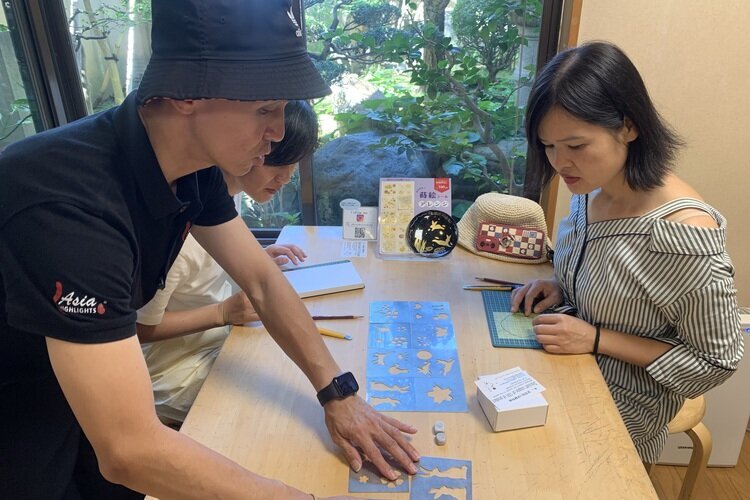 Gold-leafing Experience in Kanazawa
Gold leaf production in Kanazawa can be traced back 400 years, and today it is one of the city's many flourishing traditional crafts, with gold-leaf-decorated goods featuring heavily in the city's souvenir stores.
The production of gold leaf started in Kanazawa at the end of the 16th century, when the Maeda family, who ruled the Kaga clan in feudal times, invited many artisans to Kanazawa.
Gold leaf is made by tirelessly beating out and stretching an alloy of pure gold with minuscule traces of silver and copper. Thin sheets of alloy are then sandwiched between thin sheets of paper, one sheet at a time, beaten and stretched, gradually becoming thinner and thinner, via this multi-stage process.
Best Time to Visit Kanazawa
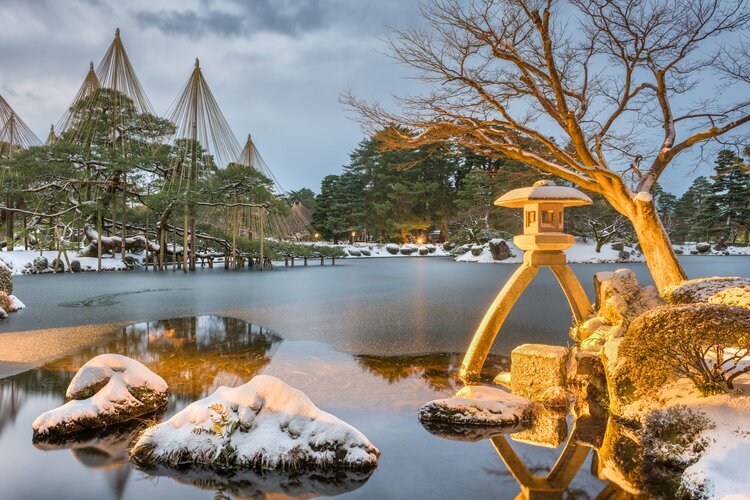 Kenrokuen in winter, Kanazawa
Kanazawa offers a pleasant climate with distinct seasons, making it a popular tourist destination all year round. You can savor the unique scenery and enjoy different activities each season in Kanazawa.
In the mild and pleasant spring, visitors can plan a cherry blossom trip in April to experience the full bloom at Kanazawa Castle Park and Kenrokuen Garden.
Summer is hot, but Kenrokuen Garden's lush greenery provides an ideal escape from the heat.
During fall, the maple leaves in Kanazawa are vibrant, and spots such as Nagamachi Takeshi Yashiki and Omi-machi Market are great for leaf-peeping.
In winter, Kanazawa is covered in snow, and the illuminated Kenrokuen Garden becomes a perfect place to capture snowy scenes.
For more detailed information, check out this article: Best Times to Visit Kanazawa
What to Eat in Kanazawa
Food is a huge draw for many people traveling to Kanazawa, Japan. Since Kanazawa is the capital of Japan's Hokuriku region, enjoying tasty traditional Japanese cuisine can be one of the best things to do in Kanazawa. You can not only taste exquisite kaiseki cuisine, but also fresh seafood and fragrant tea, which can satisfy the needs of all kinds of diners.
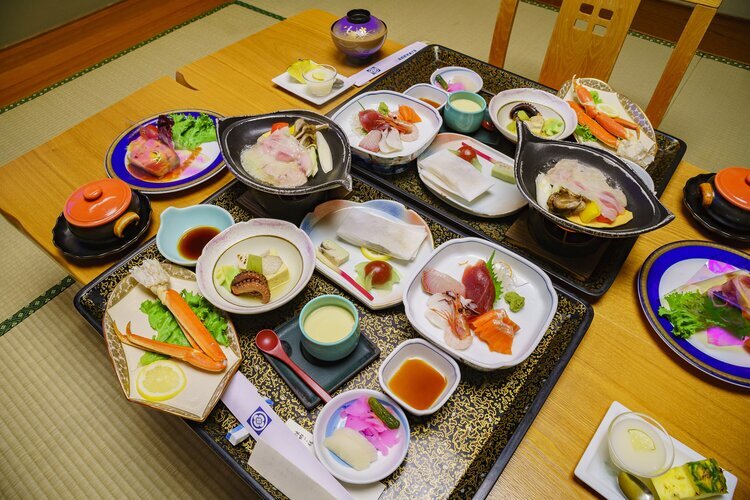 Kaiseki Dinner
Gourmet Kaiseki
Gourmet Kaiseki is a traditional Japanese haute cuisine, known for its exquisite presentation and exquisite dishes. Kanazawa's Gourmet Kaiseki cuisine usually consists of multiple small dishes, each of which is carefully prepared to fully showcase the freshness and original flavor of the ingredients.
Seafood
Kanazawa sits near the Sea of Japan and has rich marine resources, making seafood a must-try food in Kanazawa. Visitors can taste a variety of fresh seafood dishes at Omicho Market, where there are many restaurants serving seafood. Don't miss the local specialty, seafood bowls, made by covering hot rice with various raw seafood.
Tea
Kanazawa is known for its rich tea culture and a unique roasted tea called Kaga Boucha. This tea is made from the finest roasted tea stems, which can give it a rich aroma and full-bodied flavor. Visitors can enjoy authentic Kaga Boucha at the Shima Teahouse and experience the tea culture of Kanazawa.
Best Side Trips From Kanazawa
Kanazawa makes for a great trip out of Tokyo. Its neighbors, Shirakawa-go, Gokayama, and Takayama, are also good destinations. Let's take a look at the attractions in the three neighboring cities before coming to Kanazawa.
Shirakawago and Gokayama
Shirakawa-go, with its neighboring Gokayama, was made a UNESCO World Heritage site in 1995, famous for its traditional gassho-zukuri farmhouses, some of which are more than 250 years old.
Gassho-zukuri means "constructed like hands in prayer", as the farmhouses' steep thatched roofs resemble the hands of Buddhist monks pressed together in prayer. The roofs are made without nails and provide a large attic space used for cultivating silkworms.
The architectural style was developed over many generations and was designed to withstand the large amounts of heavy snow that fall in the region during winter.
There are three villages making up Shirakawa-go, of which Ogimachi is the biggest and the main attraction. This place makes a perfect trip before going to Takayama.
Takayama
Takayama is a city in the mountainous Hida region of Gifu Prefecture that retains a traditional touch like few other Japanese cities, especially in its beautifully preserved old town. It ranks as one of the top candidates for destinations with a rural element.
In Takayama, a lot of places are worth visiting. They include Takayama Jinya, Hida Folk Village, and Matsuri no Mori. If you visit at certain times of year, you may also witness the Takayama Festival, one of Japan's three most beautiful festivals.
Where to Stay in Kanazawa
We recommend staying near Omicho Market or in the Higashi Chaya District.
These areas are within the main sightseeing zone. The Higashi Chaya area offers the most atmospheric stay in Kanazawa, with traditional machiya townhouses converted into boutique guesthouses and small ryokan.

How to Plan Your Kanazawa Itinerary
Below, we list two sample tour itineraries for Kanazawa to help you plan your own itinerary.
A typical one-day itinerary covers the highlights of Kanazawa:
Start the morning at Kenroku-en Garden, then experience Kaga Yuzen dyeing nearby.
Have lunch at Omicho Market with fresh seafood, and spend the afternoon strolling through the Higashi Chaya District.

Half-day Kanazawa Traditional Crafts Experience
In this tour, you will experience making two of the crafts that Kanazawa is famous for.
The first is gold leaf. Try your hand at decorating a small lacquer plate or a pair of chopsticks with this thin, sparkling, precious product.
Next, try experiencing the kaga yuzen, a form of kimono-cloth dyeing that is an exquisite Kanazawa specialty. You will decorate a handkerchief using this traditional technique. You get to keep your creations as souvenirs of this memorable day.
Explore Kanazawa with Japan Highlights
With Japan Highlights, we will pay attention to every detail in order to help you have an unforgettable experience in Kanazawa.