
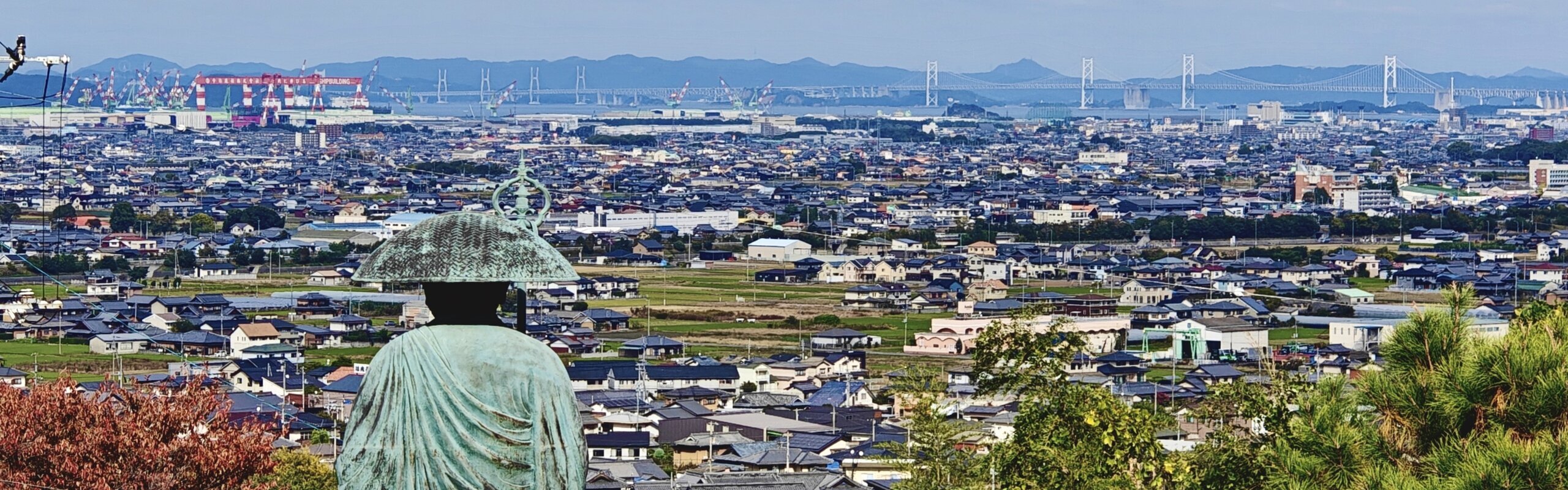
Shikoku shows a more authentic side of Japan. It is shaped by deep religious traditions, distinctive local culture, ancient hot springs, and world-class contemporary art. It is also far less crowded.
It is an off-the-beaten-path destination well suited for travelers who prefer a slower pace while still engaging with genuine Japanese culture.
I spent six days exploring Shikoku in autumn 2025, and it changed how I see Japan travel. Before this trip, I associated Japan mainly with neon-lit Tokyo and the crowded, temple-lined streets of Kyoto. Shikoku, by contrast, feels quieter and more genuine.
This guide covers Shikoku's key destinations, transportation options, suggested itineraries, and practical tips to help you plan your visit.
Is Shikoku Right for Your Travel Style?
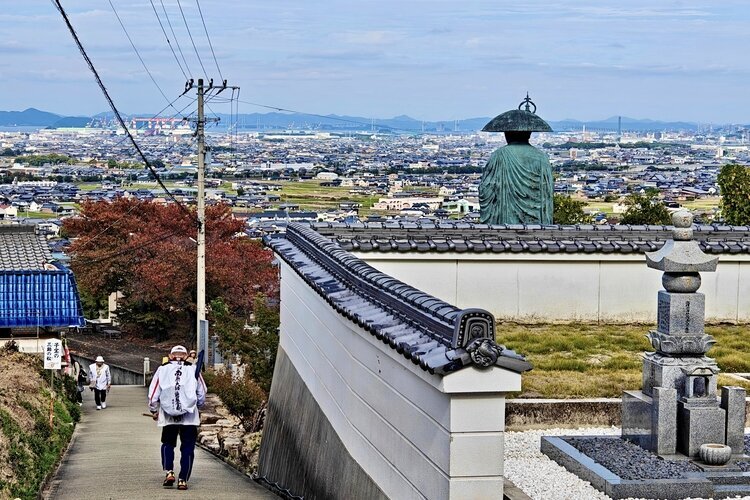 The panorama from Shusshakaji Temple in Shikoku
Shikoku is best suited for travelers who have visited Japan multiple times or have more time to explore beyond Japan's iconic destinations.
It appeals to couples seeking a slower pace, contemporary art, and hot spring towns.
It also suits families who want to explore nature, local culture, and lesser-known regions beyond the major cities.
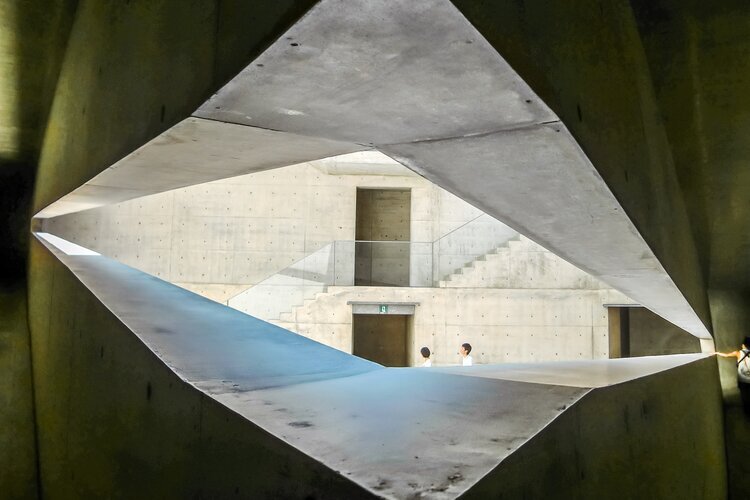 Chichu Art Museum on Naoshima Island
It may not be a good choice for first-time visitors with very limited time. It is also less suitable for travelers who rely entirely on frequent public transportation, or whose trips focus on nightlife, shopping districts, and large cities.
Which Prefectures to Visit in Shikoku
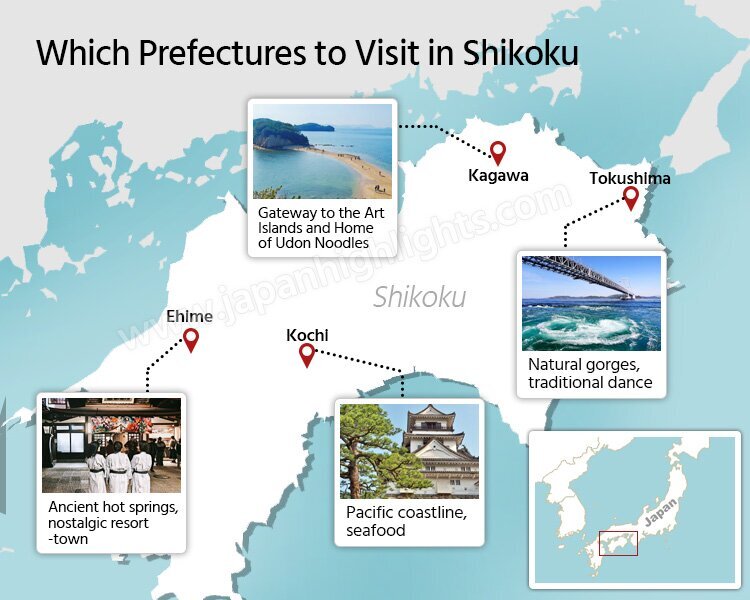 Four Prefectures in Shikoku
Shikoku is Japan's smallest main island, located south of Honshu. It is divided into four prefectures: Tokushima, Kagawa, Ehime, and Kochi. Each has a distinct character.
Tokushima is known for dramatic natural scenery and traditional performances. Kagawa is home to many art islands. Ehime is defined by its ancient hot spring culture. Kochi is known for its beautiful Pacific coastline.
Tokushima
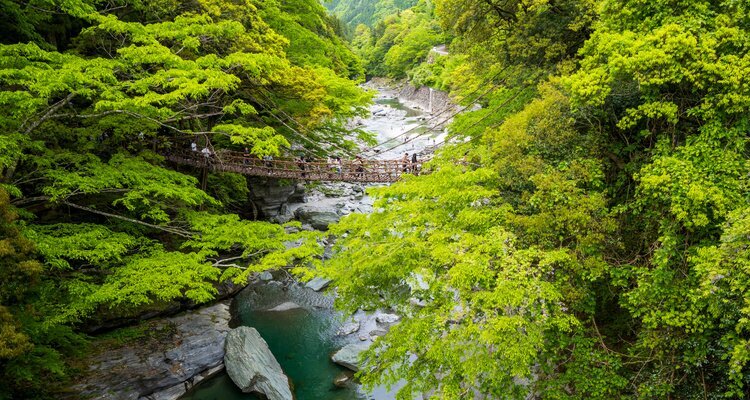 Iva Valley
Tokushima stands out for its dramatic gorges, and lively traditions.
You can venture into the remote Iya Valley, cross traditional vine bridges suspended over deep gorges, and experience the infectious energy of the Awa Odori dance.
Tokushima lies near Awaji Island, where you will find a large anime-themed park. The drive takes about one hour, making the two easy to visit together.
Kagawa
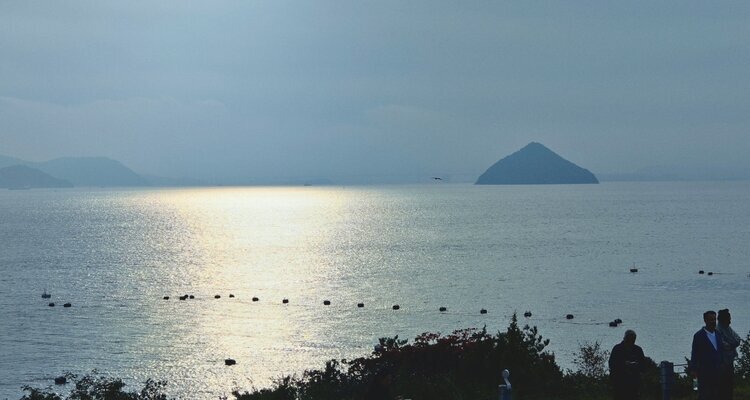 View of the sea we saw from Naoshima Island in Kagawa
Kagawa is best known for the most classic section of the 88-temple pilgrimage trail and art islands. It is Shikoku's most accessible region from Osaka in about 2 hours.
It is also the accessible place to experience pilgrimage walking, with the most scenic routes, the highest concentration of temples, and well-maintained paths.
Kagawa is the main gateway to the Seto Inland Sea art islands, including Naoshima and Teshima, where modern art and architecture blend with island scenery.
For more information about traveling to Naoshima, please check out Naoshima Island Travel Guide.
Ehime
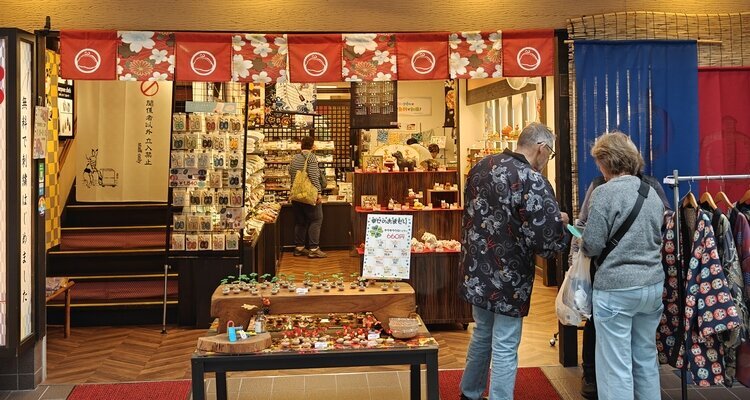 Visit a Shop in Dōgo Onsen Street
Ehime is best known for its historic hot springs and nostalgic atmosphere. The heart of the experience is soaking at Dogo Onsen, one of the oldest hot springs in the country.
You can stroll through old-fashioned shopping streets, sample local citrus-based sweets, and even ride retro-style trains.
Kochi
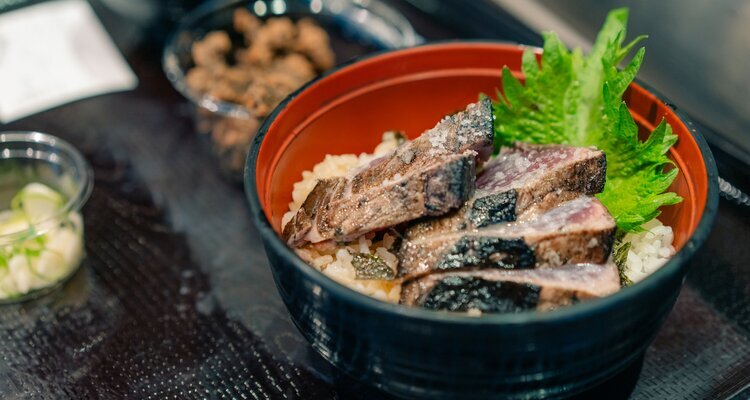 katsuo no tataki
Kochi is shaped by wild Pacific coastlines and a strong food culture. It is especially known for its seafood, best experienced at the region's most popular local markets.
You can sample fresh catches, casual Japanese dishes, and local specialties such as grilled bonito in a lively, local setting.
If you want to know more about planning your Shikoku's attractions, please read: Shikoku Travel Map.
Top 7 Things to Do in Shikoku
You can witness natural wonders like walk across ancient vine bridges in hidden valleys, join one of Japan's most energetic dance festivals, and soak in the oldest hot spring in the country.
Here I will show you the experiences that made my trip unforgettable, so you can plan your own Shikoku adventure.
1. Hike the Shikoku 88-Temple Pilgrimage Trail
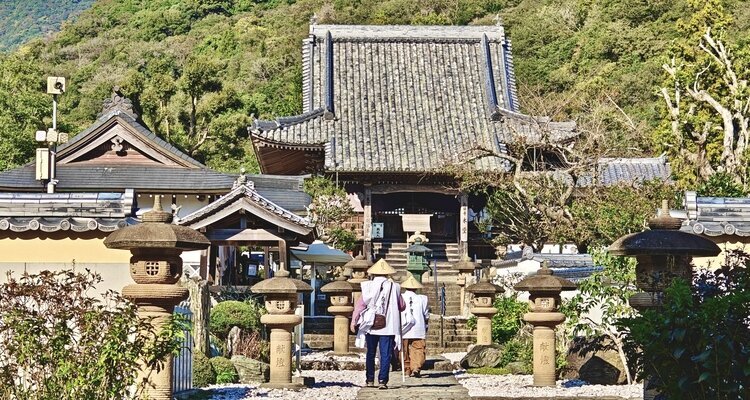 Pilgrims visit Dainichi-ji Temple, the First Stage of the Shikoku Pilgrimage
The Shikoku 88 Temple Pilgrimage is a historic circular route linking 88 Buddhist temples across the island.
Pilgrims have followed this path for over 1,200 years, honoring Kobo Daishi, the founder of Shingon Buddhism.
For a classic experience, we recommend a 4–5 day trip. You can cover key highlights of the 88 Temple Pilgrimage across four prefectures.
This way, you can experience all four stages of Kobo Daishi's pilgrimage.
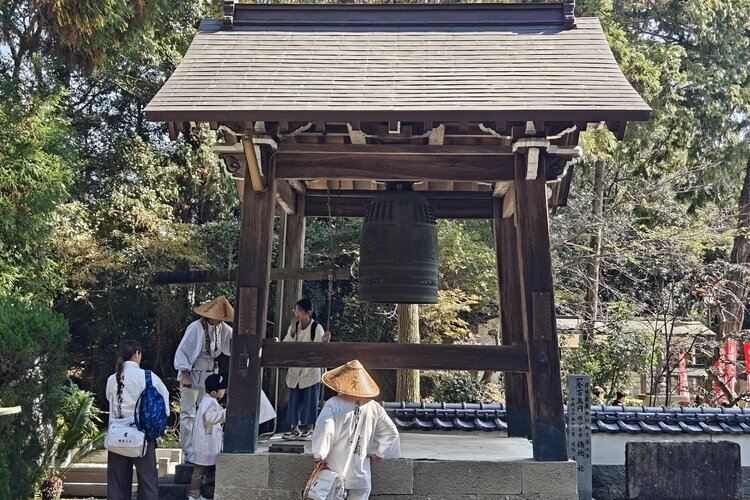 A local family prepares to ring the bell for blessings on the First Stage of the Shikoku Pilgrimage
This journey allows you to immerse yourself in the pilgrimage rituals, visit iconic temples, walk through serene forest paths, and enjoy coastal views along the traditional route.
It offers a meaningful glimpse into Kobo Daishi's spiritual journey and life story. During this journey, you will walk about 10 km per day, which keeps the pace comfortable.
2. Soak in Japan's Oldest Hot Spring in Ehime
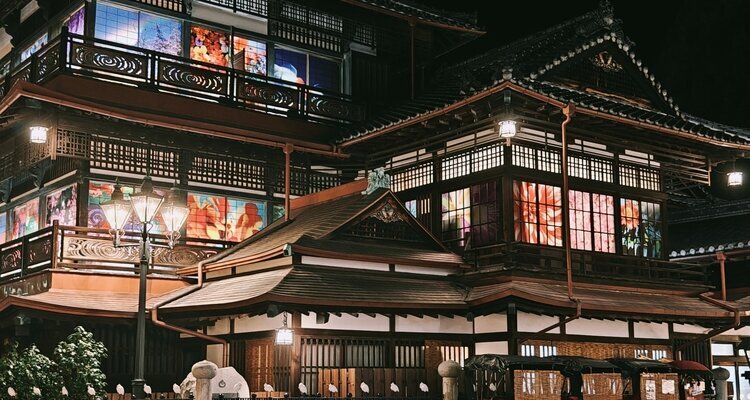 Dōgo Onsen
Dogo Onsen is a charming hot spring town with a strong retro atmosphere. It is home to one of Japan's oldest and most iconic hot springs.
Dogo Onsen is very easy and comfortable for international visitors, including families, couples, and guests with tattoos.
For more privacy, you can visit Asuka-no-Yu of Dogo Onsen and book a Special Private Bath.
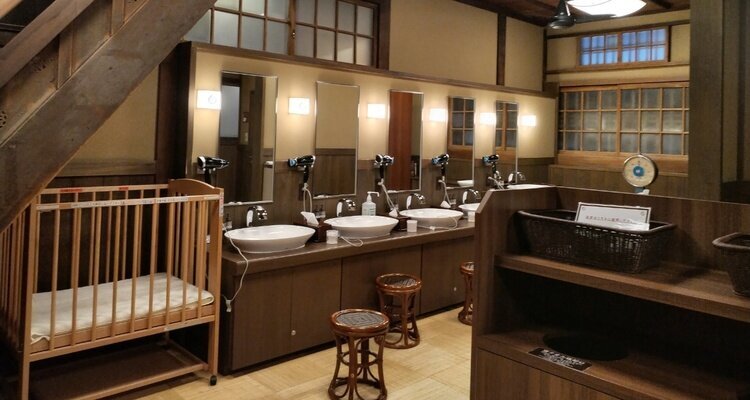 The changing room at Dogo Onsen
In the private bath, you can wear a Yutabira, a traditional bathing outfit, which helps those who are not comfortable bathing fully unclothed.
There is a public foot bath next to the town clock tower, perfect for a short break while exploring.
If you want a change from Japanese food, the area also has several good Western-style restaurants.
3. Step into Art Island Naoshima in Kagawa
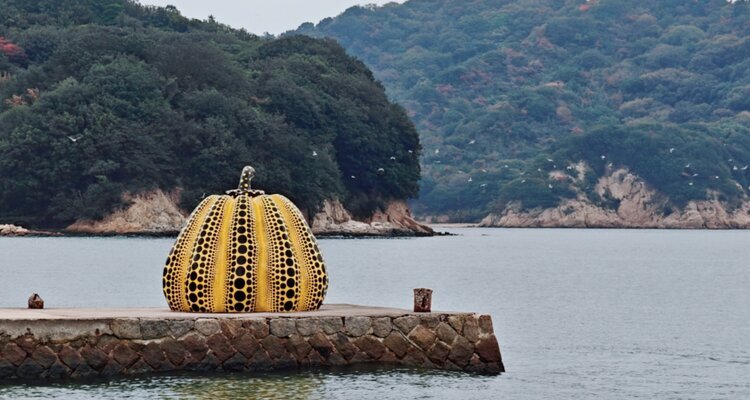 Yellow Pumpkin by Yayoi Kusama
Naoshima is one of Japan's most famous art islands. As you explore, you can see museums built into the mountains and along the coast, where art, architecture, and nature come together.
The island is home to museums designed by renowned Japanese architect Tadao Ando, as well as Monet's paintings and Yayoi Kusama's iconic pumpkin installations.
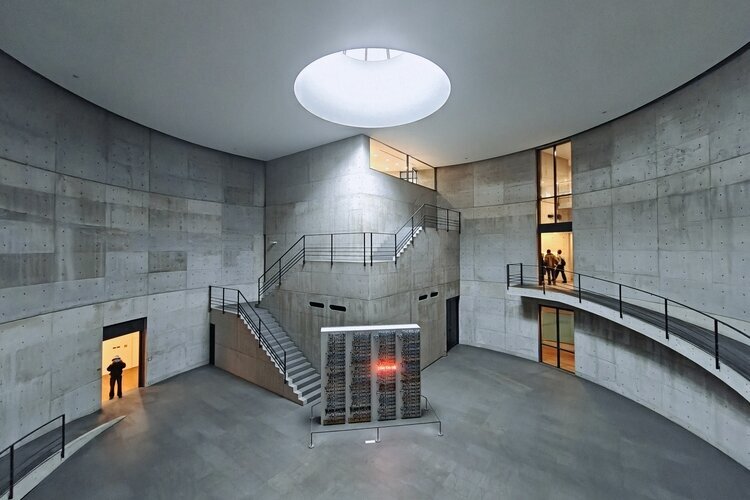 Benesse House Museum designed by Tadao Ando
Public transportation on the island is limited, often with long waiting times, and rental cars are in high demand.
For a smooth visit, we recommend traveling with a private guide and vehicle. You could take the large ferry together from Takamatsu Port, and continuing the tour by private car on the island.
Tips:
- Naoshima is reached by ferry from Takamatsu Port, with a crossing time of about 50 minutes.
- If you plan to visit other nearby islands, you will need to return to Takamatsu Port, which serves as the main hub for island hopping in the Setouchi area.
4. Watch and Join the Awa Odori Dance in Tokushima
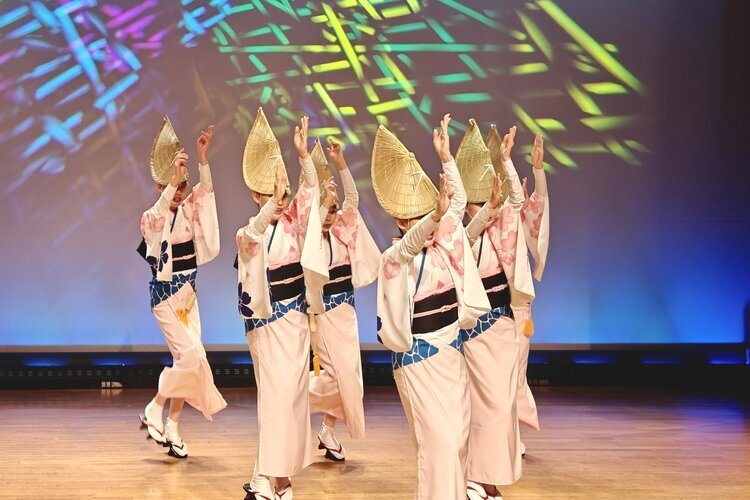 Awa Odori Performance
Tokushima is the birthplace of Awa Odori, a traditional dance with over 400 years of history, and the best place in Japan to truly experience this lively art form.
Here, you are not just a spectator—you are invited to take part in the dance yourself.
If you want to see Awa Odori in daily, we recommend visiting the Awa Odori Kaikan. Through live performances, you can learn about the dance's cultural background and traditional instruments.
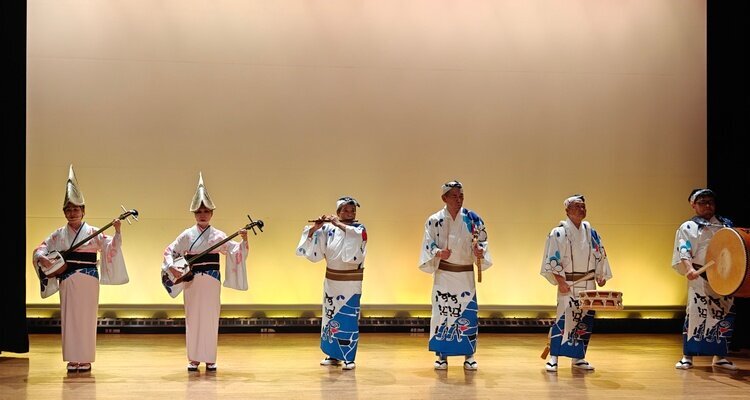 Instruments used in Awa Odori music performance
The most memorable is the interactive part, where you are invited on stage to learn the basic steps and dance together with the performers.
From August 12 to 15 each year, Tokushima City hosts the famous Awa Odori Festival. During these days, streets around the city center turn into open-air stages, filled with energetic parades, music, and nonstop dancing.
5. Explore the Remote Iya Valley in Tokushima
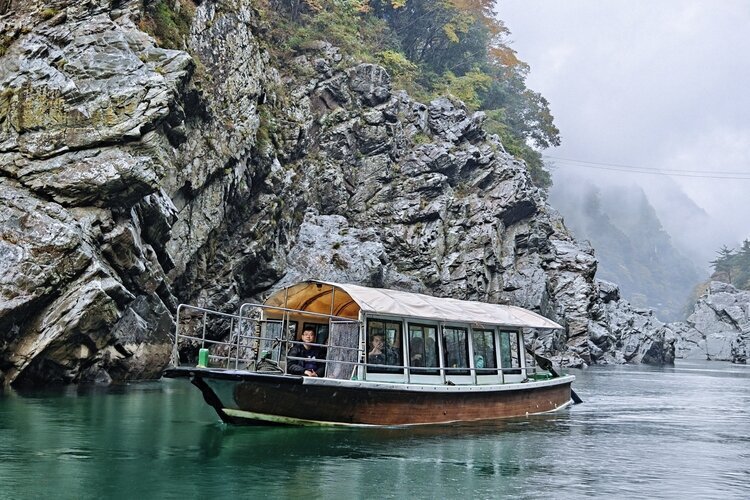 Take a Oboke Gorge Sightseeing Boat
The Iya Valley is considered one of Japan's three great hidden valley and is suited for visitors seeking quiet, nature-focused destinations. Even during the autumn foliage season, the valley remains peaceful and uncrowded.
A good way to start is with a traditional boat ride through Oboke Gorge. The ride lasts about 20–30 minutes and offers clear water, dramatic rock formations, and different seasonal scenery.
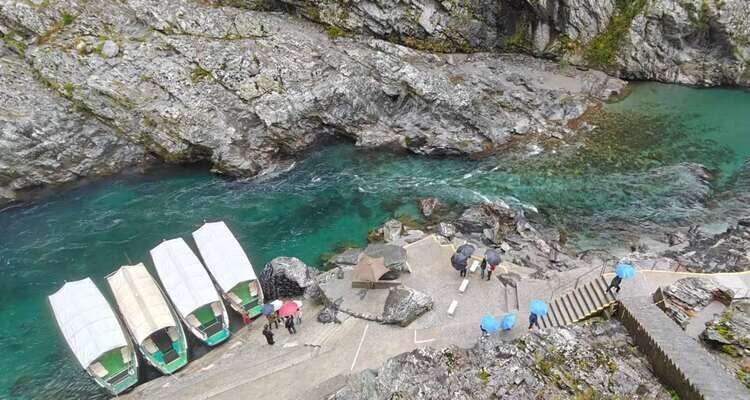 Oboke Gorge Sightseeing Boat
From there, the famous vine bridge is about a 30-minute drive away. You can walk across the vine bridge in deep gorges, enjoy short waterfall walks, and stop at a riverside restaurant to try fresh-grilled river fish.
Tips:
- The mountain roads leading to Iya Valley are winding, so motion sickness medicine is recommended.
- Public transportation is limited, and traveling by private car with a guide makes the journey easier and more enjoyable.
6. Eat a Bowl of Udon You Made Yourself in Kagawa
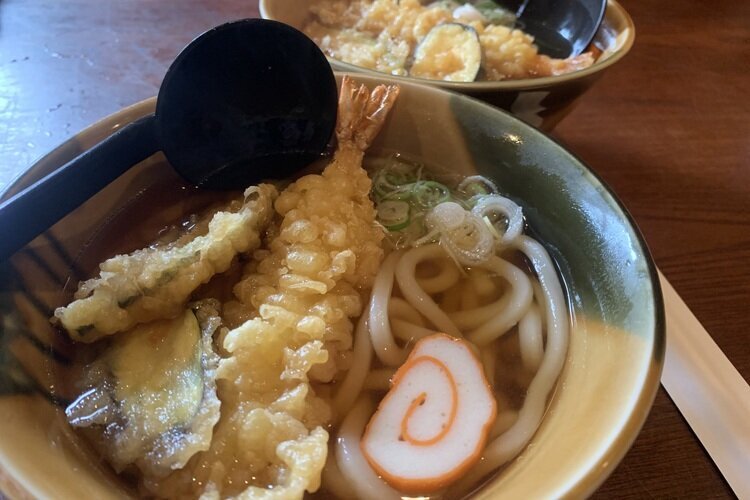 Eat a Bowl of Udon
Kagawa is known throughout Japan for its udon noodles, and eating udon here is more than just a meal. It is a cultural experience.
In Kagawa, we arrange an authentic, hands-on udon-making class at a local udon school. In just one hour, you will learn how to make traditional udon and receive a graduation certificate.
You will learn in a fun way while kneading the dough to music. At the end of the class, your udon is cooked and served for tasting.
You can take home a pack of the udon you made. You'll also receive a graduation certificate. The certificate includes the full process and doubles as a rolling mat. This makes it easy to try again at home.
7. Taste Fresh Seafood at Hirome Market in Kochi
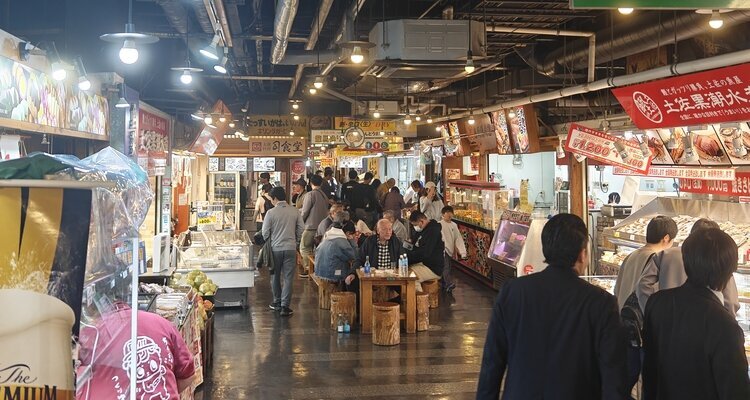 The scene we experienced at Hirome Market in November.
- Weekdays: 8 am–11:00 pm
- Sundays: 7:00 am–11:00 pm
Hirome Market is a great place to experience everyday Japanese food culture, not the polished version you see in restaurants.
It is lively food hub, with over 60 stalls packed into a shared dining space. You could buy dishes from different vendors, grab a seat at one of the communal tables, and enjoy your meal surrounded by locals.
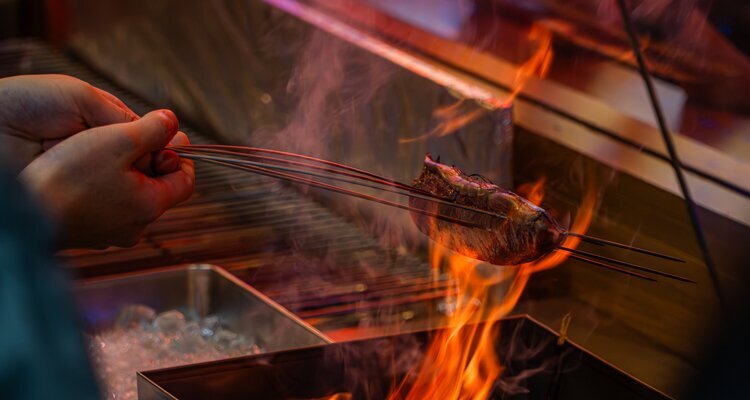 The chef is grilling bonito fish
The market is famous for its fresh seafood. Try katsuo no tataki (seared bonito), a Kochi specialty served with garlic, ginger, and ponzu sauce. You will also find grilled fish, sashimi, tempura, and local sake.
How Many Days Do You Need in Shikoku?
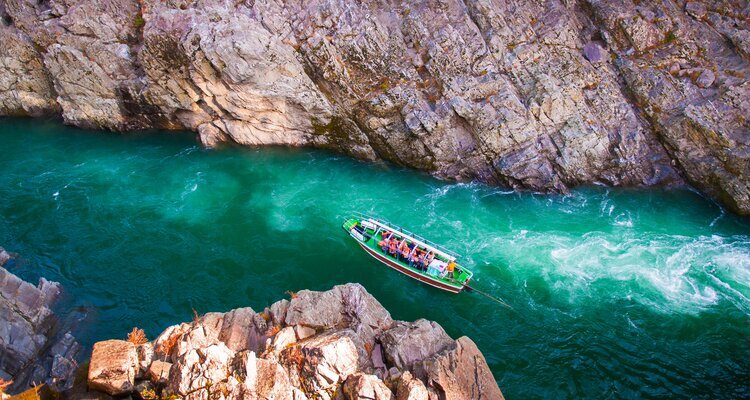 A cruise on the Oboke Gorge
For most first-time visitors, 5–6 days is a practical choice. This timeframe allows you to explore Shikoku's three classic prefectures, Tokushima, Ehime, and Kagawa, at a comfortable pace, with roughly 2–3 days in each area.
In Tokushima, you can experience traditional Awa Odori dance and explore some of Shikoku's most beautiful gorges and valleys.
Ehime is famous for historic hot springs. Enjoy a a slower rhythm of travel and taste region's sweet, juicy local citrus.
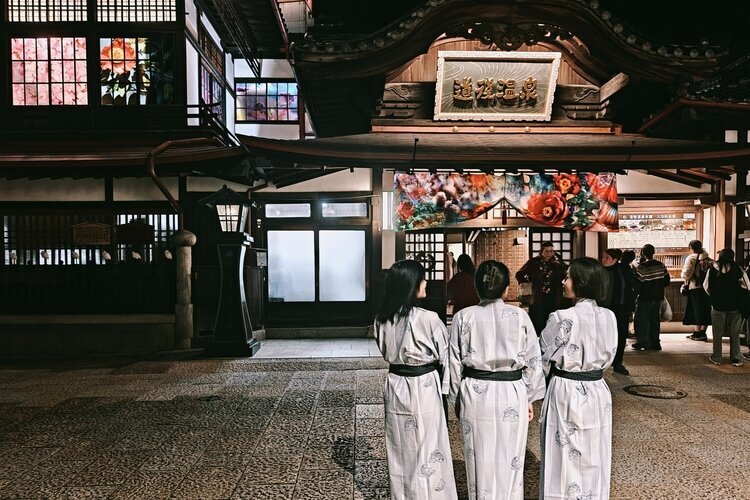 The Entrance of Dōgo Onsen
In Kagawa, take a short hike along a section of the 88 Temple Pilgrimage. You will get a meaningful introduction to the pilgrimage route. On the way, don't miss the prefecture's famous udon noodles.
Otherwise, choose to visit nearby art islands to see art works by Yayoi Kusama and architectural designs by Tadao Ando.
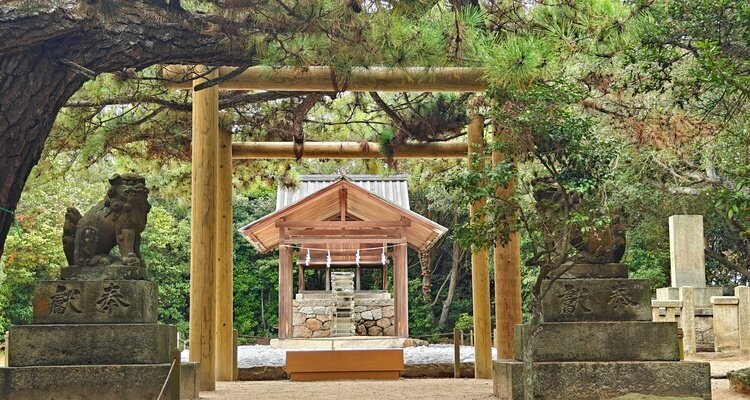 Art House Project on Naoshima Island
If you only have 2–3 days, choose Tokushima or Kagawa. Focus on one region for a deeper experience.
For an immersive 88 Temple Pilgrimage, allow alone takes 4–5 days, covering four trail sections that represent Kobo Daishi's four stages of spiritual training.
You can visit the most significant temples and complete the pilgrimage's most ritual-rich walks alongside local pilgrims.
If you want to combine walking with local sightseeing and cultural experiences, allow 8–9 days or more.
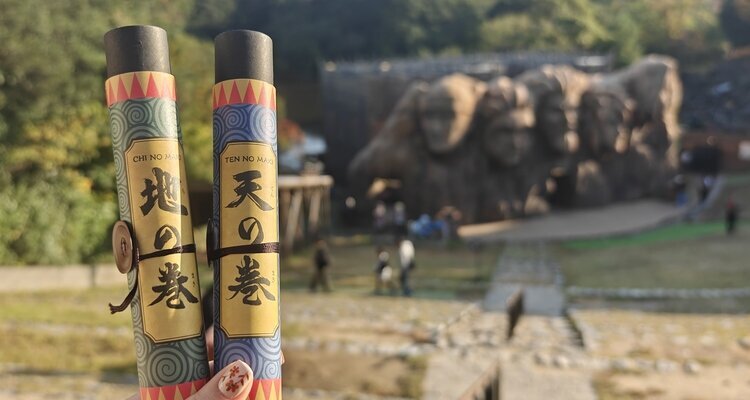 Naruto Village on Awaji Island.
If you travel with children, plan 3-4 days to visit Tokushima, and Awaji Island.
Tokushima offers dramatic landscapes, vine bridges, and lively local dancing, while Awaji Island adds anime- and game-themed attractions.
For couples and art-focused travelers, allow 4–5 days to visit Kagawa and Ehime. You can explore Naoshima and nearby art islands, enjoy coastal scenery, and end the trip in Ehime with a relaxing stay at Dogo Onsen.
Best Shikoku Tour Itinerary
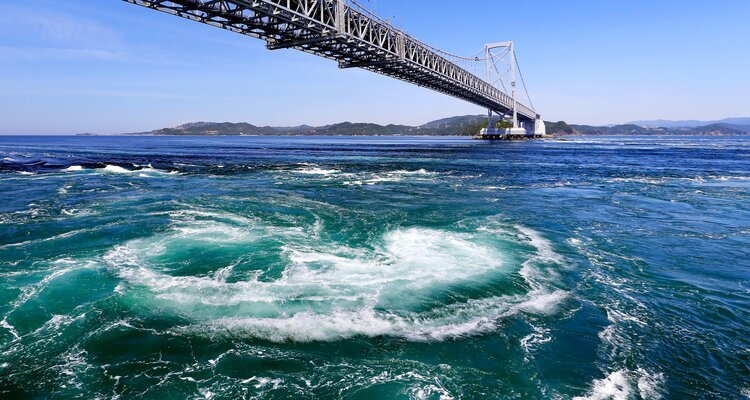 Naruto Whirlpool
This itinerary takes you beyond Japan's golden route into Shikoku's hidden treasures, Tadao Ando's art museums on Naoshima, sacred pilgrimage temples, Japan's oldest hot spring, ancient vine bridges in remote valleys, and hands-on traditional crafts.
Traveling from Osaka, the route smartly connects Naruto's whirlpools and Kurashiki's canal district at natural transit points for smooth travel.
Visit the Water Temple (Mizumido) by Tadao Ando, take a 30-minute Wander Naruto cruise to see the whirlpools, experience Awa Odori dance performance and learn the steps at Awa Odori Kaikan Hall, and try Awa-Ai indigo dyeing workshop.
Boat ride through Oboke Gorge, cross the Iya Kazurabashi vine bridge, visit Biwa Falls and folklore museum, then explore Hirome Ichiba Market for katsuo no tataki, Kochi Castle, and Katsurahama Park with Sakamoto Ryoma statue.
Participate in Tosa Washi papermaking workshop, enjoy a yakatabune cruise on Niyodo River, stroll Dogo Haikara Street for local sweets and Imabari towels, and soak in a private bath at Dogo Onsen Annex Asuka-no-Yu.
Cable car up to Matsuyama Castle and walk down through gardens and pine forests, then ride the nostalgic Botchan Ressha steam train to Dogo Onsen district.
Visit Zentsuji Temple (Kobo Daishi's birthplace), take a Sanuki udon-making workshop, explore Ritsurin Garden by boat and on foot, and browse Takamatsu Marugamemachi Shopping Arcade.
50-minute ferry from Takamatsu to Naoshima, visit Chichu Art Museum (Tadao Ando's underground museum lit by natural light), Benesse House Museum with hilltop sea views, Art House Project in Honmura district, Lee Ufan Museum, and photograph Yayoi Kusama's Yellow and Red Pumpkin sculptures.
Stroll Kurashiki Bikan Historical Quarter's willow-lined canal and white-walled storehouses, visit Ohara Museum of Art featuring works by Monet and Matisse, then transfer to Kansai International Airport.
Where to Stay in Shikoku
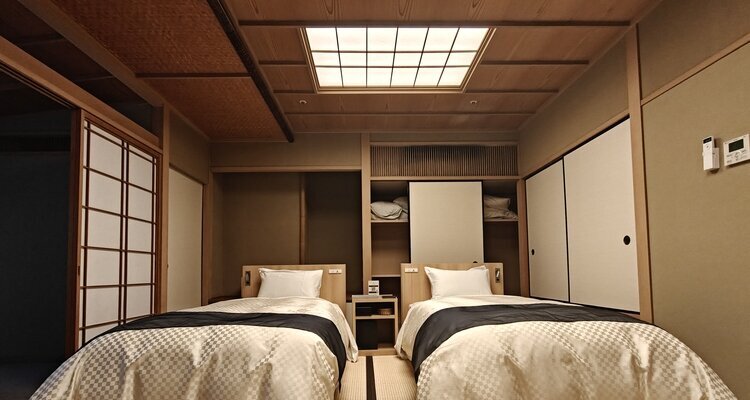 A Western Room in Dōgo Onsen Town
Shikoku is made up of four prefectures spread across the island,so most itineraries require 2-3 hotel changes. However, first-time visitors can reduce hotel changes by using certain cities as convenient bases.
Best Base Cities for First-Time Visitors are
- Takamatsu City: Ideal for exploring Kagawa, the Seto Inland Sea art islands, and nearby northern Shikoku.
- Matsuyama City: Perfect for visiting Ehime, including Dogo Onsen, and Matsuyama Castle.
- Tokushima City: Best for planning to explore Iya Valley, Naruto Whirlpools, and Awa Odori sites.
The Best Time to Visit Shikoku
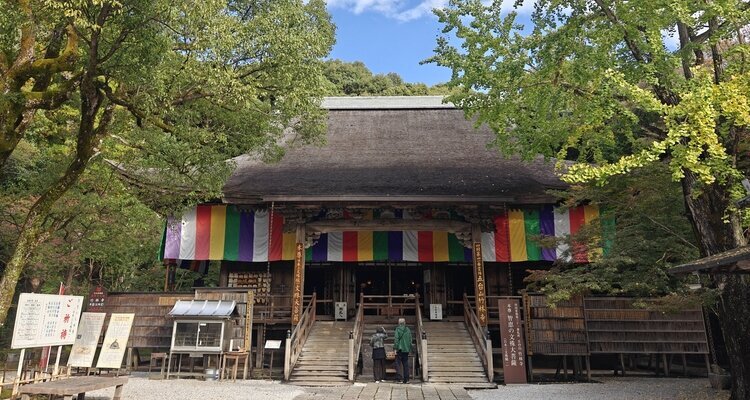 Chikurin-ji Temple
Spring and autumn (March–May and October–November) are the most comfortable times to visit Shikoku. Daytime temperatures usually range from 15–23°C. Both seasons are great for hiking, temple walks, and ferry trips to the art islands.
Spring brings cherry blossoms. In autumn, the mountains, including Iya Valley, turn vibrant shades of red and gold.
Avoid the rainy season (mid-June–mid-July). Rain can make mountain trails slippery, outdoor walks and pilgrimage sections more difficult.
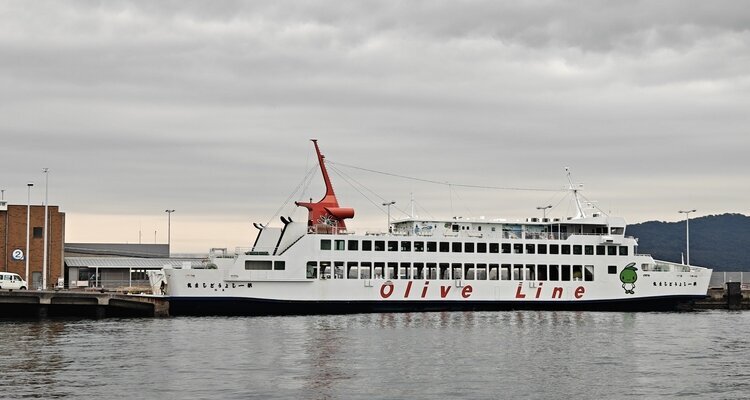 The ferry docked at Takamatsu Port
Watch out for Typhoon season (July–August, especially in the Seto Inland Sea). Strong typhoons may cancel ferries to islands such as Naoshima and nearby destinations.
Winter (December–February) can bring snow to Shikoku's highland areas, making mountain travel challenging. If you plan to visit places like Iya Valley, keep an eye on weather alerts and be prepared with snow chains.
How to Travel to Shikoku From Tokyo/Osaka/Kyoto
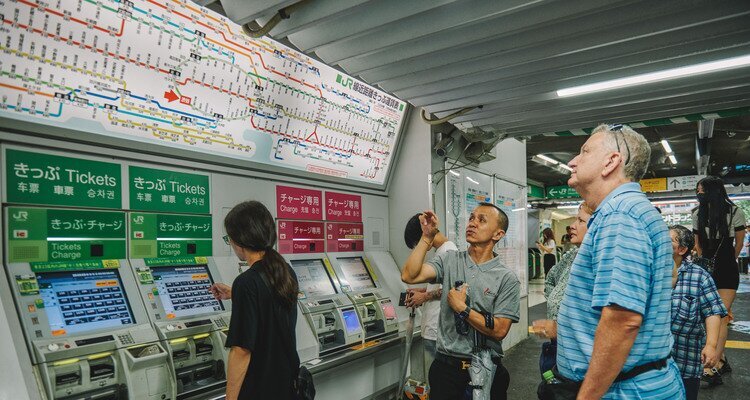 The tour guide is explaining how to take the subway
Among Shikoku's four prefectures, Takamatsu in Kagawa is the most convenient gateway, with Tokushima coming in second.
From Osaka or Kyoto, Takamatsu is only about a 2.5-hour drive, while using the Shinkansen plus JR trains takes roughly six hours due to transfers.
From Tokyo, the most efficient option is flying, with a two-hour flight to Takamatsu Airport.
Tokushima is the second most convenient entry point to Shikoku.
From Osaka, you can take a highway bus or drive, which takes about 2 hours.
From Kyoto, the journey takes around 2.5 hours.
How to Get Around Shikoku
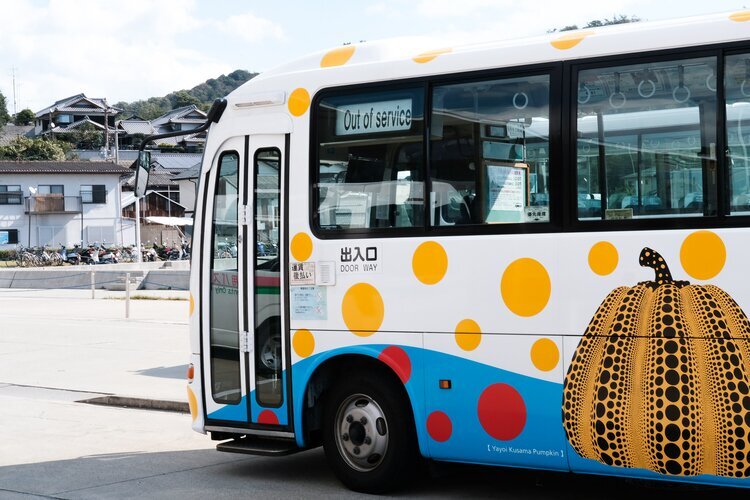 Public bus with pumpkin artwork on Naoshima Island
We strongly recommend traveling with a private guide and car, which saves time, eliminates transfer stress, and ensures you can reach remote highlights efficiently and comfortably.
Public transportation works, but it can be exhausting.
Here is the reality I wish someone had told me before my first trip to Shikoku:
JR trains between major cities run at very different frequencies, usually every 30 minutes to two hours (not every 15 minutes like in Tokyo).
Local buses to rural areas or sightseeing spots are infrequent, such as Iya Valley, Oboke Gorge, or some pilgrimage temples sometimes running only a few times per day, and many places are difficult to reach without a car.
If you want to know more, pleace check Shikoku Travel Map.
FAQ
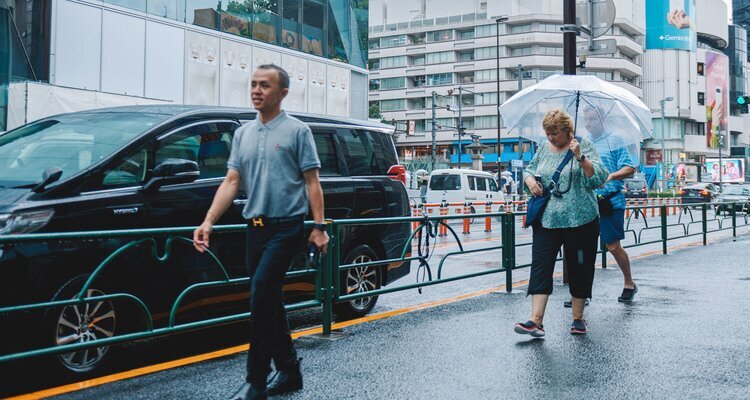 Japan, Guided Tours with Driver
1. Do I need a guide or driver in Shikoku?
It is highly recommended.
Public transport with kids or luggage is exhausting, especially in rural areas. English signage is limited, and locals may not speak English. From experience, touring with a private car and guide makes a huge difference.
2. Can I drive myself?
You can, but it is not recommended, as self-driving carries potential risks.
Unless you can read at least some Japanese, are well-prepared for mountain and remote routes, and have experience driving on narrow, winding roads, you may face difficulties. Mobile signals are weak in the mountains, navigation may not work everywhere, and unfamiliar roads can be dangerous.
3. Where should I stay: base cities or countryside?
Base cities (Takamatsu, Matsuyama, Tokushima) are convenient for first-time visitors. Countryside ryokan offer deeper cultural immersion but require more planning.
4. Should I focus on one region of Shikoku?
If you have 5-6 days, focus on 2-3 prefectures (e.g., Kagawa + Ehime). If you only have 3 days, stick to one region for a deep experience.
Plan Your Shikoku Trip in 2026 with Us
Shikoku offers a side of Japan most travelers never see—quieter, more authentic, and deeply rewarding. If you want help planning a Shikoku trip that fits your pace and interests, just contact us.