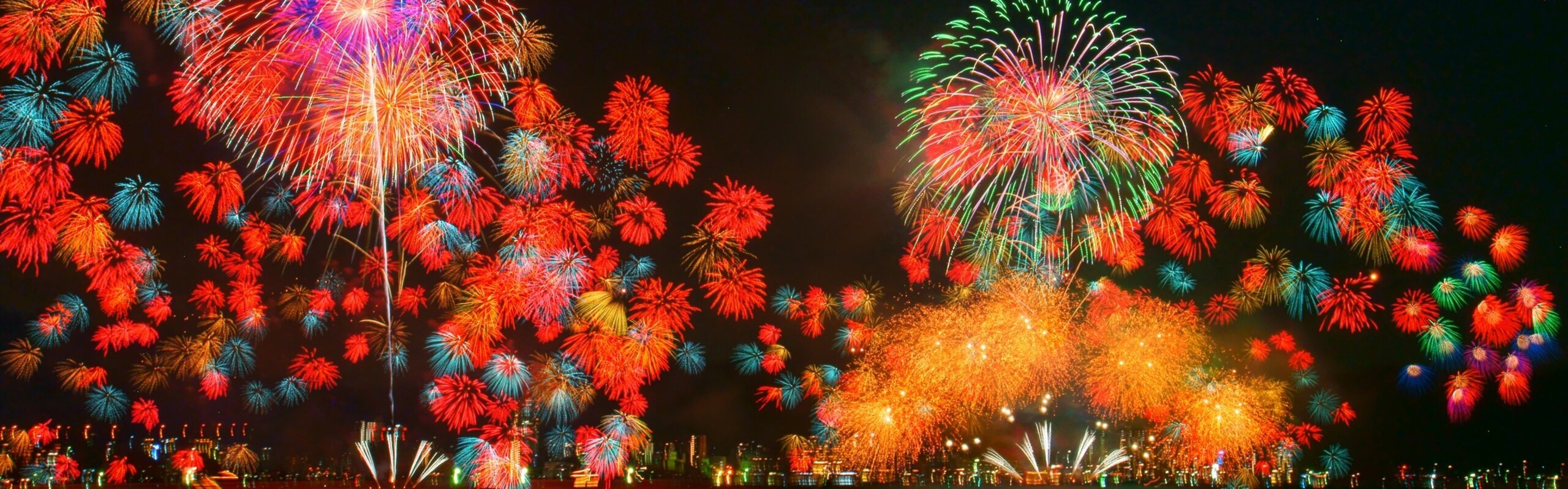

The Japanese fireworks festival is a grand celebration of fireworks artistry. Each event reflects the artisans' perfect pursuit of "momentary beauty," blending centuries-old traditions with nature and modern technology.
The firework festivals in Japan are held multiple times throughout the year. Along with information about the schedule and dates, we will recommend the best viewing spots and itinerary suggestions for nearby activities to enhance your experience.
2026 Japan Fireworks Festival Schedule
| Date | Festival | Location |
|---|---|---|
| April 25 | The Zekkei Fireworks at Mt. Fuji | Lake Kawaguchi, Mt Fuji area |
| July 5 | Bentenjima Fireworks Festival | Hamamatsu, Shizuoka (about 45 min from Tokyo) |
| Early-Jun | Yokohama Port Future Smart Festival | Yokohama, Kanagawa |
| Mid-July | Kamakura Fireworks Festival | Yuigahama Beach, Kamakura |
| July 20 | Adachi Fireworks Festival | Adachi, Tokyo |
| July 25 | Osaka Tenjin Matsuri Fireworks Festival | Osaka (Tenmangu Shrine) |
| The last Saturday of July | Sumida River Fireworks Festival | Sumida/Taito, Tokyo |
| July 26 | Atami Fireworks Festival | Atami Bay, Shizuoka |
| August 1-3 | Nagaoka Fireworks Festival | Shinano River, Nagaoka, Niigata (1.5 hours from Tokyo) |
| August 5 | Atami Fireworks Festival | Atami, Shizuoka |
| August 15 | Lake Suwa Fireworks Festival | Suwa, Nagano |
| August 8, 18 | Atami Fireworks Festival | Atami, Shizuoka |
| August 15 | Lake Suwa Fireworks Festival | Lake Suwa, Nagano |
| Fourth Saturday of August | Omagari Fireworks Competition | Omono River, Daisen, Akita (1.5 hours from Tokyo) |
1. Sumida River Fireworks Festival (Tokyo)
 Firework Festival in Tokyo at Sumida River near Tokyo Sky Tree
Date: July 25
This is Tokyo's oldest fireworks festival. It is also one of the most convenient fireworks events to watch in Tokyo, lasting about 1.5 hours.
You could see a giant "sky chrysanthemum" with a diameter of 600 meters, set against the backdrop of the Tokyo Skytree, lighting up the night sky.
For a truly authentic experience, dress the way locals do and wear a yukata to the fireworks festival.
Head to a yukata rental shop around noon or early afternoon to get dressed and styled. Many rental stores are located in the Asakusa area of Tokyo, within walking distance of popular fireworks viewing spots, so it's convenient and easy to find a shop with plenty of designs to choose from.
If you want a truly unique experience, have dinner at Sky Restaurant 634 inside the Tokyo Skytree. From the restaurant, you can watch fireworks burst over the city with Tokyo's night skyline as the backdrop. Reserve your Skytree ticket and a window seat at the restaurant about two months in advance.
Best Viewing Spots: The riverbank between Kototoi Bridge and Sakurabashi Bridge (reserved paid seats available through the official website).
Itinerary Tip: The fireworks festival takes place near Tokyo Tower and Sensō-ji, so you can visit them on the same day. Arrive early around 4:00 to 5:00 PM to secure a good viewing spot. After the fireworks, you can still enjoy the night view of Tokyo Skytree.
2. Nagaoka Fireworks Festival (Niigata)
Nagaoka FireworksDates: August 1-3
One of Japan's top three fireworks festivals and among the most spectacular in the country.
It began in 1945 as a revival event after the Nagaoka air raid. Later, prayers for earthquake recovery were added. At the festival, you can see the 2-kilometer-wide Phoenix fireworks, symbolizing hope and rebirth. It is one of the widest fireworks displays in Japan and creates a stunning, immersive view that seems to surround the entire sky.
Best Viewing Spots: Paid seats on Chōsei Bridge and paid riverside area facing the direct view. A slightly elevated free slope on the opposite bank provides excellent river reflections for photography.
Itinerary Tip:
Book a hot spring hotel in Niigata in advance. During the day, relax at a nearby seaside beach before the event. You can also explore Aore Nagaoka Plaza near Nagaoka Station, where the largest cluster of festival food stalls (yatai) gathers.
After the fireworks, stay overnight in Nagaoka. It is over three hours by car from Tokyo. Last trains sell out quickly, and stations become extremely crowded. Road traffic is also heavily congested.
Ready to personally experience the unique charm of a fireworks festival? Wherever you wish to go, we can craft a customized itinerary just for you!
3. Omagari Fireworks Competition (Akita)
Date: Fourth Saturday in August
Known as the "Fireworks Olympics," this event features Japan's top pyrotechnicians competing with creative and fast-firing fireworks. You can enjoy a spectacular show that combines traditional fireworks with modern technology, including performances by international teams. Although the location is a bit remote, it is considered one of Japan's largest and most impressive fireworks festivals.
Itinerary Tip: Book your accommodation a month in advance to avoid late-night travel. Enjoy the beautiful sights of Akita, visit the Kakunodate Samurai Residences, bike around Lake Tazawa, and spend the night at a nearby hot spring town after the fireworks show.
Best Viewing Spot: Paid seating on the right bank of the Omono River (tickets available in English on the official website). If you can't get official seats, there are open areas for viewing.
4. Edogawa Fireworks Festival (Tokyo)
Date: August 1, 2026
Location: Edogawa River (in front of Shinozaki Park, Edogawa-ku)
One of Tokyo's largest and most dynamic fireworks festivals. Each year features new large-scale fireworks designs, creative themes, and music collaborations. In 2025, the festival unveiled a giant Mt. Fuji–shaped firework that set a Guinness World Record.
Best Viewing Spots:Tokyo (Edogawa) side offers the best views. The Fireworks Festival has viewing areas on both sides of the Edogawa River, the Tokyo (Edogawa) side is less likely to be affected by drifting smoke. Paid seats provide the closest and most direct views.
Itinerary Tips:
The venue is close to central Tokyo. Arrive at least 2–3 hours early (around 4:00–5:00 PM) to secure a good spot. After securing your viewing spot, you can explore the many yatai food stalls gathered around Shinozaki Park and along the riverbank.
Another fireworks event near Tokyo in late July is the Adachi Fireworks Festival. In recent years it has faced a higher risk of cancellation due to weather conditions. The Edogawa Fireworks Festival is usually more stable and is generally the better choice.
5. Osaka Tenjin Matsuri Fireworks Festival (Okawa River)
Osaka Tenjin Matsuri FireworksDate: July 25
Experience a spectacular show with 300 lantern boats and 5,000 fireworks. This festival combines a shrine celebration with riverside fireworks, boasting over a thousand years of history. The red plum fireworks symbolize good fortune, and the reflection on the river creates a stunning "fire tapestry."
If you are staying in Osaka for two days, don't miss the pre-festival events on July 24 at Osaka Tenmangu Shrine and the surrounding area. You can watch portable shrine processions, with lively yatai food stalls filling the streets (around 4 pm the day before).
Best Viewing Spots: Riverside dining seats (starting at ¥15,000 per person) or cool boats (¥8,000 per person) where you can enjoy Japanese cuisine while watching the fireworks.
Itinerary Tips: Visit Osaka Castle in the morning, then enjoy the float parade and beautifully decorated boats on the river in the afternoon. After the fireworks, head to Dotonbori for a night out.
Besides the fireworks festival, summer festivals are also major celebrations in Japan. If you're interested, you can check out Japan Summer Festivals.
6. Lake Biwa Fireworks Festival (Kyoto)
Date: around Aug, 8th
This long-running summer tradition has illuminated the shores of Lake Biwa for over 40 years. Music-synchronized fireworks burst over Japan's largest lake, enhanced by dramatic water jets and wide-open lake views that create spectacular reflections on the water.
Best Viewing Spots:
Reserved seats near Otsu Port offer the most direct views. Alternatively, book a lake-view room at a nearby hotel for a more private and comfortable experience.
Itinerary Tip:
The venue is just a 20-minute train ride from Kyoto or Osaka, making it easy to visit as a half-day and evening excursion. You can also pair the festival with a Lake Biwa cruise for a more complete experience. After the event, late-night buses run to Kyoto until around 11:30 PM.
7. Yokohama Port Future Smart Festival (Kanagawa)
Yokohama PortDate: Mid-July
Enjoy a stunning combination of modern city skyline, Ferris wheels, and landmark buildings with fireworks. Over a 20-minute period, 20,000 fireworks are launched in a spectacular display, creating a beautiful scene as the Yokohama night skyline lights up.
Best Viewing Spot: Yokohama Red Brick Warehouse lawn (free seating). For a hidden gem, check out the observation deck of the Yokohama Landmark Tower (¥3,000 per person).
Itinerary Suggestion: Spend the day visiting Yokohama's Chinatown or the Cup Noodles Museum, then enjoy the fireworks festival in the evening and experience the nightlife in Shinjuku.
Recommended for: Visitor seeking an efficient and immersive experience, as well as shopper.
8. Lake Suwa Fireworks Festival (Nagano)
Lake Suwa FireworksDate: August 15 (part of the "Suwa Lake Festival")
Set in the backdrop of the anime film "Your Name," the fireworks reflect on the lake's surface with views of Mount Fuji. The grand finale features the "Fire Waterfall," launching 40,000 fireworks from an island in the lake, creating a stunning 300-meter-wide waterfall of light.
Best Viewing Spot: Free viewing areas along the lakeshore and Takashima Park observation deck (arrive by noon for free seating).
Itinerary Tip: Spend the day visiting Matsumoto Castle or hiking in the Kamikochi area, and consider staying at a hot spring near Mount Fuji.
Recommended for: Anime fans and those seeking breathtaking views and a romantic atmosphere.
9. The Zekkei Fireworks at Mt. Fuji
Fireworks at Mt. Fuji- Date: 25 April
- Location: Lake Kawaguchi
The firework festival features Mount Fuji as a backdrop, coinciding with cherry blossom season. In April, you can enjoy the beautiful sight of cherry blossoms alongside the remaining snow on Mount Fuji, creating a unique scene of "Spring Snow, Cherry Blossoms, and Fireworks."
Best Viewing Spots: The northern shore of Lake Kawaguchi offers a free viewing area where you can capture classic shots of Mount Fuji, cherry blossoms, and fireworks together, or you can opt for paid seating in the center of the venue.
Itinerary Tip: On the morning of the event, consider visiting Lake Kawaguchi or Lake Yamanaka, as well as the Oshino Hakkai springs. After the fireworks, public transportation options may be limited, so it's advisable to choose a hot spring hotel by Lake Kawaguchi and book a shuttle in advance.
Add the fireworks to your Japan tour
Japan's firework festivals are unforgettable, but they can also be crowded and hard to navigate. Let us help you choose the best one for your travel dates and arrange a smooth, custom itinerary with great views and local charm.
10. Bentenjima Fireworks Festival (Shizuoka)
Bentenjima FireworksDate: July 5
Continuing a tradition that began nearly a century ago to honor the Bentenjima Shrine, the festival features a stunning backdrop of a massive red torii gate on Lake Hamana. As fireworks light up the night sky, their reflections dance on the water, creating a magical visual effect known as "water fireworks.
Best Viewing Spots:
- Paid Seating: Available in the park (tickets should be purchased in advance).
- Free Area: Arrive 3-4 hours early to secure a spot along the rocky coastline, where you can enjoy fewer crowds and capture amazing photos of the fireworks and their reflections on the water.
Itinerary Tip: Start your day at Bentenjima Island Seaside Park, where you can take in the ocean views and sample fresh seafood. The torii gate with the sunset creates a breathtaking sight, perfect for photography. The rocky coastline is also great for a peaceful stroll away from the crowds.
11. Atami Fireworks Festival (Shizuoka)
Atami FireworksDates: Multiple summer dates (July 26, August 5, 8, 18)
Fireworks launched over Atami Bay create a stunning spectacle, enhanced by the surrounding mountains. The reflections on the water and the "Silver Niagara Falls" effect add to the visual wonder.
Best Viewing Spot: Paid seating at Atami Sun Beach (tickets available on-site).
Itinerary Suggestion: Enjoy a boat ride on Lake Ashi or visit Kamakura before heading to the Atami Fireworks Festival.
Recommended for: Couples and visitors looking to avoid crowds.
12. Kamakura Firework Festival (Yuigahama coast)
Yuigahama coastDate: Mid-July
Every year, the Kamakura Firework Festival takes place at Kamakura Kaihin Park on the beautiful beaches of Kamakura. This smaller-scale festival is famous for its unique "underwater fireworks," where shells are launched from fast-moving boats and explode 30 centimeters underwater, creating massive "water sparks" with a diameter of up to 250 meters. As the fireworks shoot into the sky, they leave stunning reflections on the ocean's surface, delivering a breathtaking visual experience.
Best Viewing Spots: The beach at Kamakura is lively with many nearby dining options, while Zaimokuza Beach tends to be less crowded, providing a more relaxed atmosphere for viewing the fireworks.
Itinerary Tip: In the morning, take a stroll around Enoshima and visit the iconic "Kamakura High School" station, a famous location from the anime Slam Dunk. After the fireworks, the return trip to Tokyo takes about 2 hours, so it's recommended to stay overnight in Kamakura.
If you'd like to include a fireworks festival in your itinerary, I can recommend:
How to Buy Tickets for Firework Festivals
Paid Seating
You could usually purchase tickets for paid seating through the official website of the firework festival you plan to attend. Tickets are available 3 to 4 months in advance, while the Nagaoka Fireworks Festival requires booking 6 months ahead. Seats are assigned automatically based on the order of purchase.
Free Viewing Areas
If you prefer a free viewing spot, arrive 2 to 3 hours early. Bring a picnic blanket or folding chair to mark your place.
What to Wear to a Japan Fireworks Festival
YukataThere is no formal dress code for Japan fireworks festivals, but many visitors choose traditional clothing for a more authentic experience. Yukata rental shops are widely available in city centers near major festival venues.
Spring & Summer
A yukata is the classic outfit for summer fireworks festivals in Japan. It is lightweight, breathable, and designed for hot weather.
Autumn & Winter
For cooler evenings, wear a thicker kimono and layer with thermal innerwear or a jacket to stay warm.
Shoes for Fireworks Festivals
Traditional geta sandals match yukata but can be uncomfortable for long walks or crowded areas. Comfortable walking shoes are often a better choice.
Where to Rent a Yukata for Fireworks Festival
Yukata rental shops are widely available in major cities hosting large fireworks festivals.
Tokyo: Asakusa area (ideal for the Sumida River Fireworks Festival and Edogawa Fireworks Festival)
Osaka: Namba and Shinsaibashi (for Tenjin Matsuri Fireworks Festival)
Kyoto: Gion and Kiyomizu area (easy access to Lake Biwa Great Fireworks Festival)
Yokohama: Minato Mirai district
Kamakura: Around Kamakura Station
Smaller cities like Nagaoka or Daisen have limited options. Book early or rent in Tokyo before traveling.
Food & Yatai Stalls at Japan Fireworks Festivals
Nearly all major fireworks festivals in Japan feature yatai (festival food stalls) around the venue.
Food stalls are usually concentrated along riversides, nearby parks, and station approach streets near the festival venue. This makes it easy to find snacks before heading to the fireworks viewing areas.
You can enjoy popular street foods such as takoyaki (octopus balls with mayonnaise and bonito flakes), yakisoba (fried noodles with savory sauce and vegetables), and grilled seafood.
Other popular festival sweets include kakigori (shaved ice with flavored syrup), okonomiyaki (Japanese savory pancake), chocolate banana, and candied fruits such as strawberries or grapes.
How to Attend a Japan Fireworks Festival
Reserving a Spot
- Plan to arrive in the early afternoon (around 2:00–4:00 PM), depending on the festival's size.
- Use a waterproof picnic sheet.
What to Bring
- Waterproof ground sheet for reserving a viewing spot
- Clear tape for securing corners
- Drinks and light snacks
- A small trash bag
- Pack mosquito repellent in summer and a small fan to stay cool
- Avoid to bring Large suitcases or bulky luggage
Proper Conduct
- Do not stop on bridges to watch (strict safety rule).
- Do not cut in line or move another group's picnic sheet.
- Keep noise levels moderate; avoid loud shouting.
- Do not push in crowded areas.
- Take all trash with you and leave the area clean.
- Most viewing areas do not allow tripods; if you want to use one, you'll need to purchase a reserved seat.
Tips
Book Accommodation: For major venues (like the Sumida River or Nagaoka), book your accommodation at least six months in advance.
Avoiding Crowds: Opt for paid seating options (like the unique boat experience in Osaka) or attend events on weekdays. The biggest advantage of the paid riverside sections is that you don't need to arrive several hours early to claim a spot in the heat. However, due to heavy crowd congestion and traffic restrictions, it's still advisable to arrive at least one hour in advance.
Let's Help You Arrange Your Tour in Japan
If you find it difficult to book fireworks festivals or plan an itinerary that includes them, feel free to contact us. We'll help you create your Japan itinerary based on your preferences.