
You've been scrolling hotel sites for an hour. The rooms look nice… until you see the size. One suitcase barely fits. Family rooms are sold out. Most hotels allow only three guests per room. Now you're wondering: Do we book two rooms? Will the kids be on another floor?
Booking a family hotel in Japan can feel much harder than it should be.
In this guide, you'll learn the best accommodation options for families and the key details to confirm, so you can book with confidence instead of frustration.
1. Choose apartment-style hotels for a family of 4+ people
If you travel with a big family and don't want to split into several rooms, this is the best option.
And you will have big rooms. Think 39–68 ㎡ or more, so you can actually move around without stepping over suitcases.
There's a small kitchen for easy breakfasts, late-night snacks, or heating up food that picky eaters will actually eat. Many even have a washing machine in the room.
Brands like Mimaru specialize in this style. They're not just a place to sleep, but are designed for families to live
Where to find them: Mostly in big cities like Tokyo, Osaka, and Kyoto. Mimaru has multiple locations in Tokyo (Shinjuku, Ikebukuro, and Asakusa).
2. Choose Family Rooms or Connecting Rooms for a family with less than 4 people
If you prefer the familiar service, and your travel group is less than 4 people. Family rooms or connecting rooms are the best choice for you.
In Japanese hotels, twin and triple rooms are common. Quad rooms (four real beds) exist but are limited.
But expect the small rooms. Most are 25–35 m² and usually come with two regular beds plus one or two extra beds or a sofa bed.
If you want connecting rooms, be aware that they are required only!
3. Request If you want Connecting Rooms
Except for some Hiltons (Hilton Tokyo, for example), connecting rooms in most Japanese hotels are requested only.
That means the hotel notes your request, but it's not guaranteed. You'll only know for sure at check-in.
The best way to improve your chances
- Book as early as possible, best around 6 months in advance.
- Email or call the hotel right after booking to request connecting rooms.
- Or use a local travel expert (like us)—we know which hotels actually work for families and can help secure the best rooms. Contact Us Now!
If you cannot book connecting rooms, don't worry. You can ask for adjacent rooms or rooms on the same floor. Not quite connected, but close enough to keep the family together.
4. Check Before Booking if You Want Rooms on the Same Floor
If you couldn't get family rooms or connecting rooms, you might still want your rooms on the same floor.
Keep in mind: some hotels put different room types on different floors. If you book a king bed for the parents and a twin for the kids, you could end up on separate floors.
Pro tip: Booking two rooms of the same type (like two twin rooms) makes it much easier to get rooms on the same floor—or even next to each other
It's a good idea to email or call the hotel to check before you book.
5. Try Traditional Ryokan for the Experience
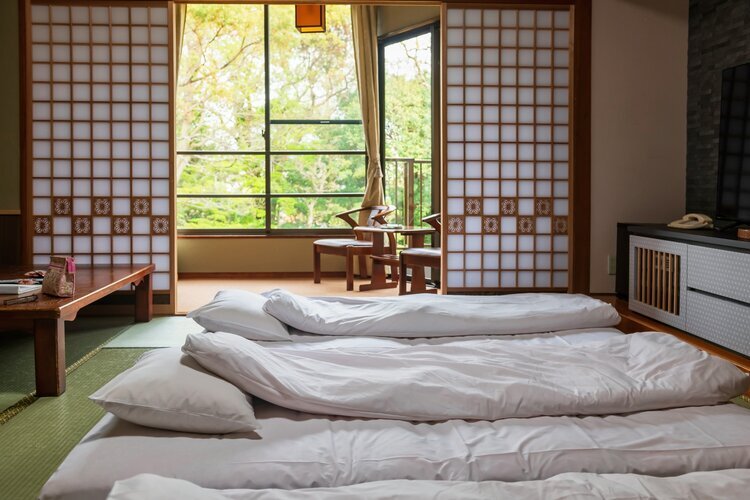 Japanese ryokan
You may think of staying at a Japanese ryokan, but I suggest you treat it as a cultural experience instead.
A night in a ryokan is not about where you sleep. It's a chance to live Japan's timeless charm.
You will stay in a tatami room with sliding paper doors. Your kids slip into little yukata robes (yes, child sizes exist!), you will soak in the steamy hot springs, and enjoy a multi-course kaiseki dinner. For adventurous kids, it can also be a fun tasting journey.
For families, ryokans can actually be very flexible. One tatami room often fits 4–5 people comfortably, so everyone sleeps together in one cozy space.
Things to keep in mind, especially with young kids or picky eaters:
- One night is usually enough to enjoy the atmosphere.
- Check if the ryokan accepts children; some high-end ones are quiet and may have age restrictions.
- Prepare kids for new foods; small kids or picky eaters may not enjoy traditional Japanese dishes.
- For the most authentic experience, try Hakone or Kyoto. Both have scenic onsen towns, a relaxed vibe, and beautiful surroundings.
6. Provide the Accurate Number of Guests When Booking
Hotels in Japan charge by the number of guests. The hotel room price may vary depending on how many people are staying.
So when you book, make sure you enter the exact number of guests, including children and infants. This affects both the price and which room types are available.
When you check in, the hotel will register everyone staying in the room and ask to see passports or IDs (this is standard in Japan).
If the number of people doesn't match your booking, things can get awkward. The hotel may ask you to pay extra, require you to book another room, or, in some cases, even refuse check-in because of occupancy and safety rules.
7. Check the Child Policy before Booking
Japanese hotels treat kids differently depending on their age, so it's worth checking before you book.
If your child is over 6, many hotels count them as an adult. You may pay 50–80% of the adult rate, or even the full adult price at some business hotels. Usually, kids will share a bed with you rather than getting their own.
For children aged 0–2 years: Most hotels won't charge, but you'll need to pay extra if you want a crib.
For children aged 2-3 years: many hotels still don't charge, but meals like breakfast may cost extra.
Always check the child policy before booking. This helps you avoid surprises at check-in and makes sure your family has the beds and space you need.
8. Always Check if the Hotel Accepts Children
Before you book, make sure your hotel actually welcomes kids. Some high-end ryokans and boutique hotels don't accept children under 12. They do this to maintain a quiet and luxurious experience.
If you arrive with children without checking, the hotel might ask you to cancel or change your stay. Definitely not what you want on vacation!
Always read the fine print. Look for phrases like "children allowed" or "children not permitted," and check any age restrictions carefully.
9. Choose Machiya Townhouses for a Big Family Group
If you travel with a big family of 8-9 people, and you want to stay together. A machiya townhouse is a good choice.
These are traditional two-story wooden townhouses. You'll mostly find them in Kyoto and Kanazawa.
You'll find tatami rooms, sliding paper doors, and sometimes a tiny inner garden, but also modern bathrooms, heating, Wi-Fi, and a proper kitchen.
The whole house is yours. No worrying about noisy kids, tight hotel rooms, or splitting into separate rooms.
It's like living in old Japan—but with modern comfort.
10. Verify room size & layout (aim 35㎡+ for 4+ people)
Japanese hotel rooms can feel surprisingly small, especially when you walk in with kids and luggage.
A typical four-star room (around 23–30 m²) often has just enough space to open one 26-inch suitcase comfortably. Once all the bags are out, floor space disappears fast.
Check the room size and bed layout before booking to avoid surprises.
11. Handle breakfast & picky eaters smartly
In most Western-style hotels, breakfast is a mix of Japanese and Western food. You'll usually see rice, bread, fried eggs, bacon, sausages, salad, fruit, cereal, and coffee.
So don't worry too much. Most kids can find something familiar to eat, even picky ones.
But if you stay at a Japanese ryokan, prepare breakfast to be Japanese: rice, miso soup, grilled fish (often with bones), and small side dishes
And what if your child still refuses hotel breakfast? No stress. In Japan, you're almost never far from a convenience store. Within a 3–5 minute walk, you'll usually find a 7-Eleven, FamilyMart, or Lawson. They sell soft bread, pastries, yogurt, fruit cups, milk, and snacks that kids love.
If you travel with us, just tell your guide if your kids want to grab snacks, and they'll plan convenient stops on the way.
12. Book Early, then Follow Up
Family rooms, connecting rooms, bunk-bed options, and hotels like Mimaru sell out the fastest. It is especially so during peak seasons like cherry blossom, summer vacation, and major holidays.
Look for international chains for more family-friendly room types, such as Hilton, Hyatt, and Prince.
After booking, it's always a good idea to email the hotel directly. You can confirm your room type, request adjacent rooms, and note any special needs such as a crib, children's meals, or an accessible bath.
For ryokans especially, confirm children's meals or simpler breakfast options when you book—not after you arrive.
13. Location Tip for Tokyo Families
In Tokyo, areas like Asakusa and Ueno usually work better for families. You'll find more spacious rooms there and several options from Mimaru.
Both areas are also close to the Yamanote Line. This makes it easy to get around the city for sightseeing and shopping.
Many travelers first think of Shinjuku. But hotel rooms there are often very small.
Last year, we stayed in a triple room at a three-star hotel there. We could barely open our suitcases.
Higher-end hotels offer slightly bigger rooms. But even those can feel tight for families.
14. Check Pool Rules in Advance
Some 4-star-plus hotels have pools, but many only allow guests aged 12+ or adults only.
Hotels in Japan are more than just a place to sleep. They are part of the whole experience.
No one wants their trip ruined by the wrong hotel. Yet choosing the right one in Japan can be confusing and time-consuming.
Leave the hassle to us. Our travel specialists design tailor-made Japan trips and help families find hotels that truly work for their group size and travel style. Contact us Now!
FAQ on Japan Family Hotels
Can a Family of 4–5 Share One Room in Japan?
Yes, a family of 4–5 can stay together, but you need the right room type.
For Western-style hotels, look for family rooms, quad rooms, connecting rooms, or apartment-style hotels like Mimaru. These rooms are designed for families, with proper beds and enough space to move around.
Quad rooms are limited, and rooms for five or six people are rare. Some higher-end hotels — like Hilton Tokyo or Hyatt properties — offer family suites that fit 5–6 guests. So book early, around 6 months in advance, to get a better chance.
You can also try a Japanese ryokan. One tatami room usually sleeps 4–5 people on futons laid directly on the floor. But make sure your family is comfortable sleeping on futons, and that your kids are open to trying Japanese-style breakfasts.
How to Book a Room for 5+ People in Japan
Finding a room for a family of five (2 adults and 3 kids) can be a real challenge in Japan. Most standard hotels don't have rooms that fit five people, and booking for larger families can feel overwhelming.
But don't worry, here are some options:
Look for Apartment-style Hotels like MIMARU or & Here, which offer spacious family accommodations, including kitchens and living areas. These can comfortably house 5 or more.
Consider High-End Chain Hotels: Booking connecting rooms at hotels like Hilton, where they are more likely to accommodate larger families.
Booking Adjacent Rooms: If your budget allows, you can book two adjacent rooms. Sometimes it's easier to split up the kids and the adults, but this option can be pricier.
As a general rule, book as early as possible (6 months in advance) to secure the best options for your family.
Does the Hotel Provide Extra Beds for Kids?
Most standard hotel rooms in Japan don't have extra beds. If you book a room for two adults and bring a child, your child will usually sleep in the same bed with you. This is very common in Japan and is called co-sleeping (添い寝 / soine).
For babies and toddlers (under 2), you can request a crib. Many mid-range or higher-end hotels provide one for free. Always ask in advance to be safe.
Kids under 6 often share beds for free. Japanese beds are narrower than Western beds, so it can feel crowded. If you want more space, book an extra bed.
What About Ryokan Meals? Will Kids Like Them?
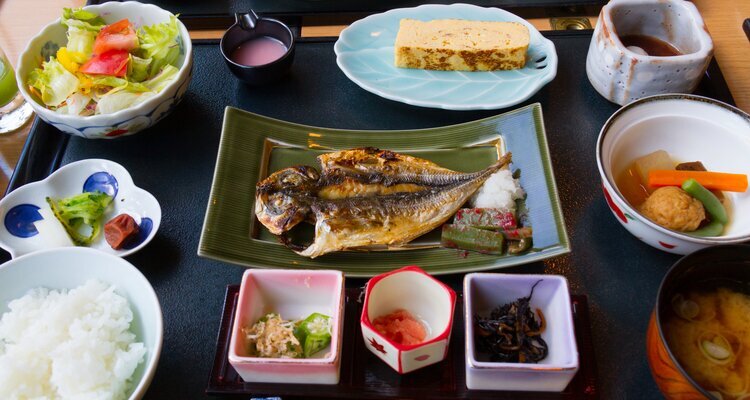 Ryokan Japanese breakfast
For most Western kids, or picky eaters, Japanese-style meals can be a bit challenging.
Most children do not like the Japanese breakfast: raw fish (sashimi), miso soup, unusual seafood, or veggies. They only stick to plain rice, boneless grilled fish, tempura, or dessert.
Some ryokans offer kids' meals with familiar favorites like hamburg steak, fried shrimp, chicken, or cute-shaped rice balls. Always call ahead to check if they provide this option.
Pro tip: Bring a few favorite snacks from a convenience store just in case. It keeps kids happy and stress-free.
What If We Can't Get One Room? Will the Kids Be on Another Floor?
Yes, this can happen.
In many Japanese hotels, different room types are on different floors. If you book a twin room for the parents and a triple room for the kids, you might end up on separate floors.
Try to book connecting rooms first. After booking, email the hotel and ask them to note your request for adjacent rooms. Follow up again about 1–2 weeks before arrival. It's not guaranteed, but it improves your chances.
You can also prioritize family-friendly hotel chains such as Prince Hotels or Richmond Hotels.
Another easy option is an apartment-style hotel like Mimaru. These are designed for families and usually keep everyone in one larger room.
Ready to Plan Your Family Adventure to Japan?
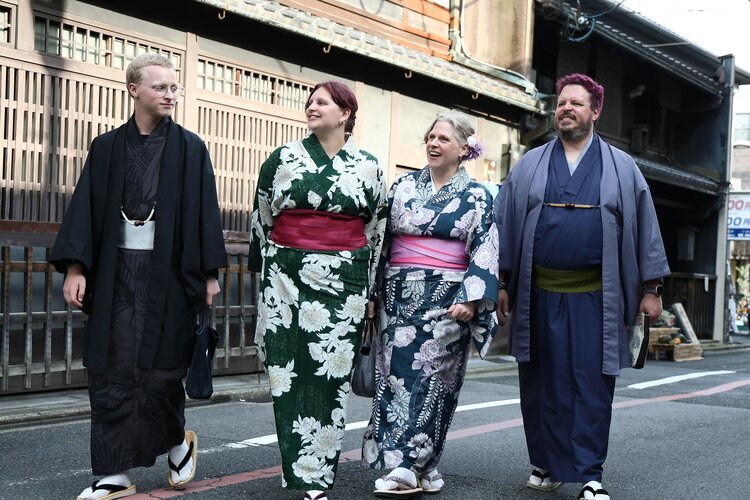 Family enjoys wearing Japanese kimono in Kyoto
Don't worry about picking the right hotels, planning the best activities, or balancing everyone's interests. We've got it all covered. We know what your family needs, even the little things you might not think of.
Contact us now to design your tailor-made Japan tour. Just tell us your requirements, and we'll make it happen!