
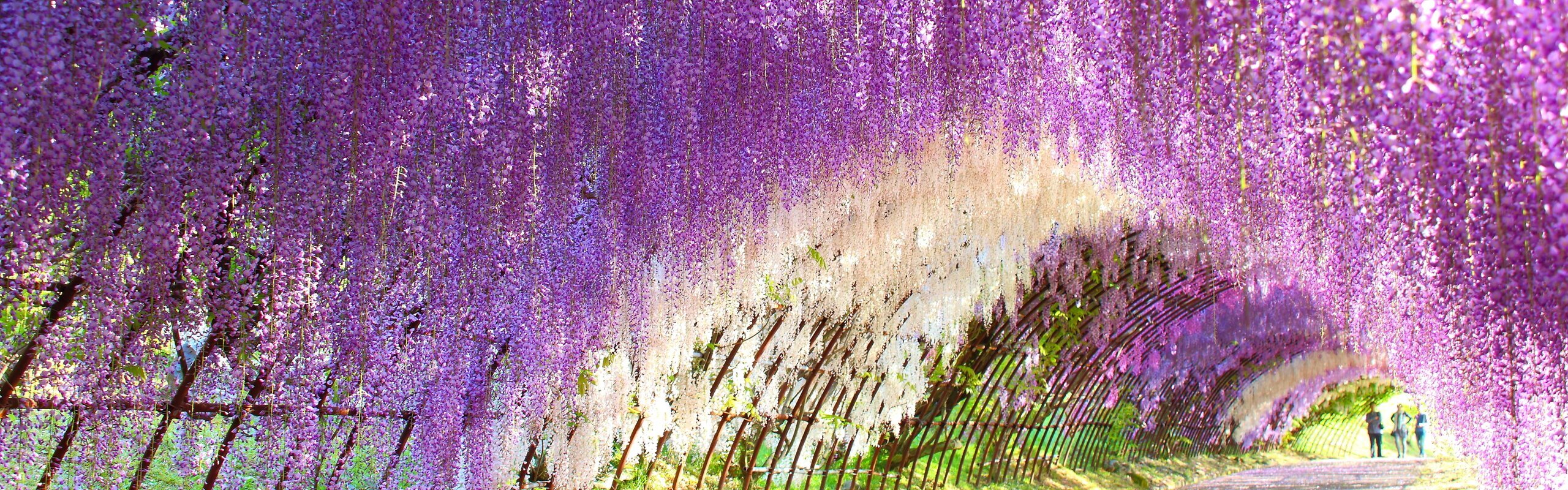
After the cherry blossoms fall in Japan, wisteria season begins shortly after. It typically runs from around mid-April to early May, with peak bloom lasting about one week.
This article covers the best places to see wisteria in Japan, the exact timing, and practical viewing tips.
When Is Wisteria Season in Japan?
Large-scale wisteria gardens in Japan are mainly concentrated in the central and southern regions, with blooms starting earlier in the south.
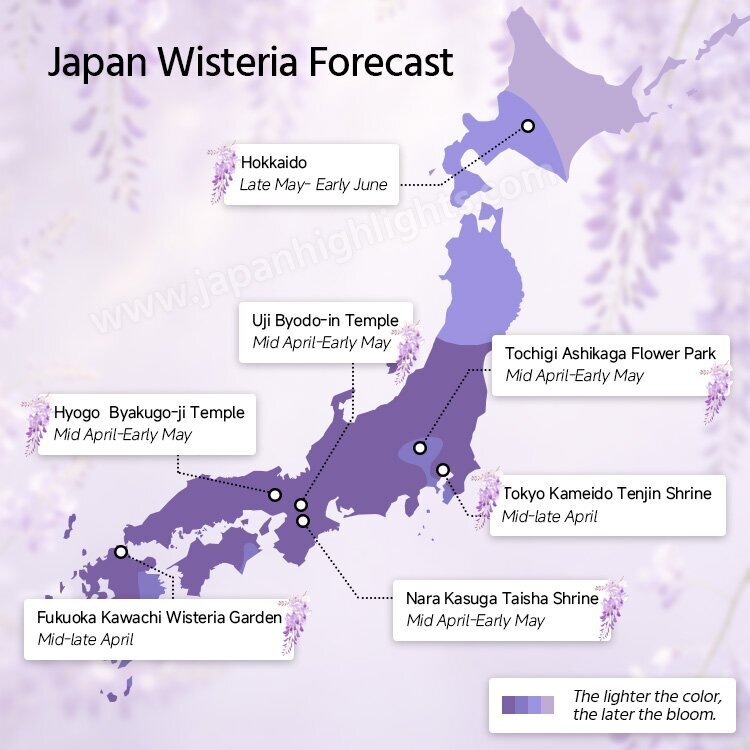
Wisteria typically blooms from late April to early May. In central Japan, the season usually starts around April 20 and peaks for about 5–10 days, depending on weather conditions.
Tokyo / Kyoto / Osaka: April 20 – May 5
Kyushu (Fukuoka): around mid to late April
Bloom timing varies each year, and we will keep this information updated based on seasonal changes.
Best Places to See Wisteria in Japan
We've selected spots that combine stunning wisteria with easy access, so you can easily add them to your itinerary, along with a few less-crowded options that offer truly unique, dreamlike scenery.
1. Tokyo Kameido Tenjin Wisteria
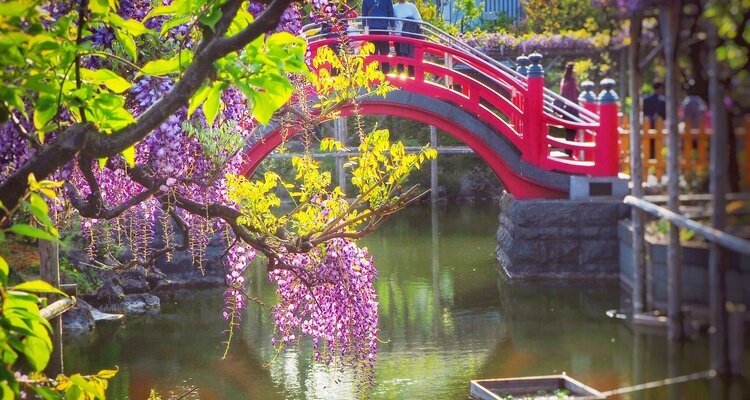 Wisteria flower in tranquil scene of Kameido Tenjin Shrine-Tokyo
- Location: Kameido Tenjin Shrine
- Best Time: Apr. 15-25
The wisteria blooms around the iconic red bridge within the shrine grounds. This scene is famously depicted in the ukiyo-e prints One Hundred Famous Views of Edo, which is why it draws large crowds during peak bloom.
You can also enjoy a distant view of Tokyo Skytree from here. Illuminations usually begin around 6:00 PM in the evening.
During the wisteria season, the area around the shrine fills with yatai food stalls selling Japanese street foods like yakisoba and okonomiyaki. Shops also offer limited-edition wisteria-themed sweets, charms, and small souvenirs.
If you're exploring around Senso-ji Temple, it's an easy and worthwhile stop to add to your itinerary.
2. Near Tokyo: Ashikaga Flower Park Wisteria
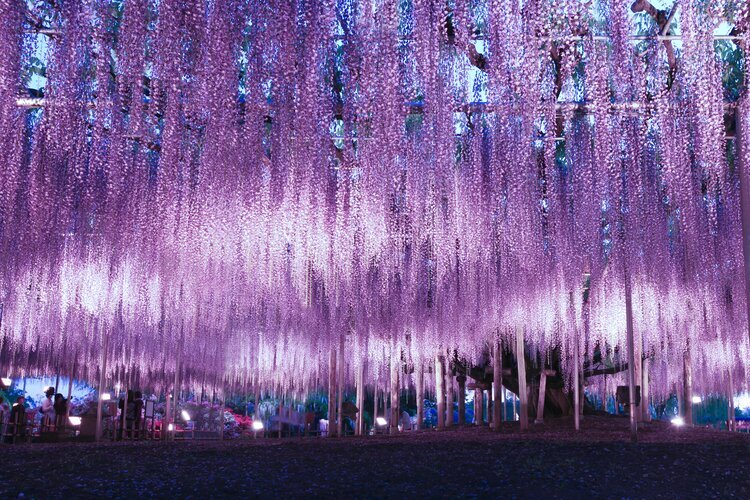 Beautiful wisteria illumination in Ashikaga Flower Park, Tochigi prefecture
- Best Time: April 11 to May 1
- Access: about 1 hr by car from Tokyo
At Ashikaga Flower Park, the most iconic wisteria tree is over 160 years old. In full bloom, it forms a massive purple canopy with rich, dreamlike feel.
Walk through the 80-meter tunnel of white and yellow wisteria, where colors shift and light filters softly.
This is one of the most popular wisteria spots, so expect heavy crowds that may not match the scenes you've seen online. Arrive before 8:00 AM for a quieter, more immersive experience.
If you want to see the illuminations, visit in the late afternoon and stay until after dark, when the lights turn on.
The park has restaurants and snack areas, along with original wisteria-themed desserts, ice cream, and souvenirs.
3. Fukuoka Kawachi Wisteria Garden
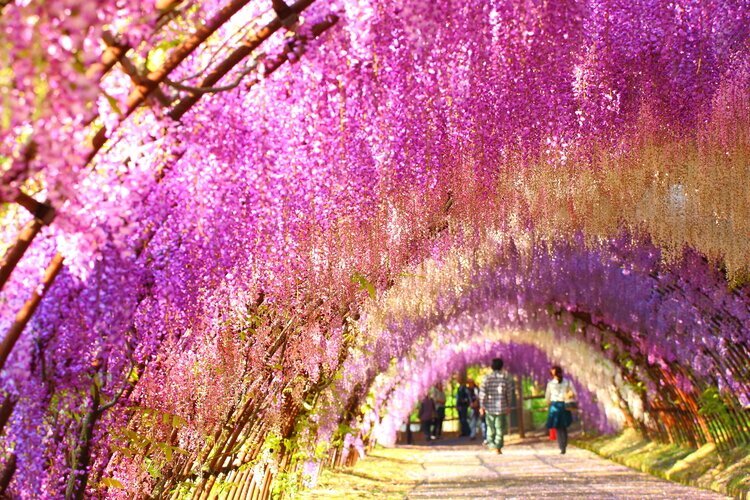 Kawachi Wisteria Garden in Kitakyushu City
- Location: Kawachi Wisteria Garden
- Best Time: April 18 – 28
- Access: 1 hr from Fukuoka
As soon as you enter, you will see a 100-meter-long wisteria tunnel. It feels like walking straight into a painting. Around the park you will also find several dome-shaped wisteria that you can wander through and explore.
Advance tickets are required. You can usually reserve your entry date and time slot one day in advance on the official website.
Kawachi Wisteria Garden is not easily accessible by public transportation. For convenience, it's best to visit while exploring Fukuoka, and we recommend traveling by private car.
If you're looking for a more traditional Japanese atmosphere, consider Nakayama Daifuji in Mitsuhashi, Yanagawa, as an alternative.
Popular shrine wisteria spots get crowded easily during bloom season. Planning transportation and itinerary in advance can save you lots of time and trouble.
Let our professional team help you arrange a smooth spring trip with hassle-free travel arrangements.
4. Uji Byodo-in Temple Wisteria
- Best Time: April 20-May 1
- Access: 40 min from Kyoto or 1h from Osaka by car
Elegant wisteria draping over a UNESCO-listed temple creates a refined, almost painterly scene. This is best for culture-focused visitors who prefer a quieter, more traditional setting.
After visiting the temple, you can easily continue exploring nearby experiences such as: Uji tea experiences (matcha tastings, traditional tea houses) and walks along the Uji River.
Everything is within a walking distance, so it fits well into a half-day trip.
5. Nara Kasuga Taisha Manyo Botanical Garden
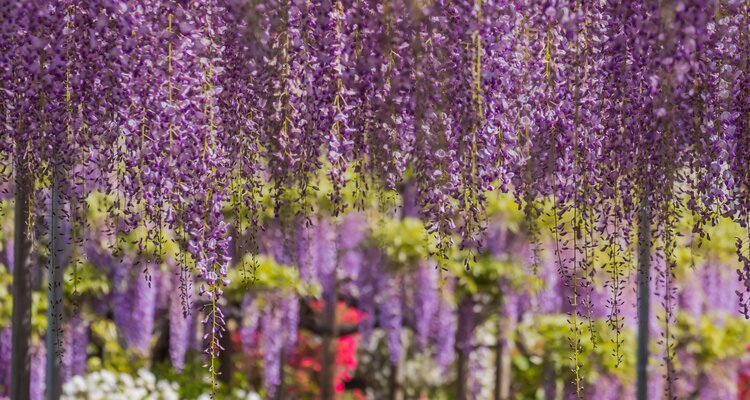
- Location: Kasuga Taisha Shrine (Manyo Botanical Garden inside)
- Best Time: Apr. 25 – May 5, 9:00–16:00
- Access: 1h from Kyoto by car
You will see different types and colors of wisteria that you may have never seen before, including pale pink, white, and deep violet.
Some of the wisteria here are over 100 years old, and in full bloom, they create a spectacular "wisteria waterfall" effect.
It can easily be combined with a visit to Nara Park and Todai-ji Temple, which are all within walking distance.
6. Near Osaka: Byakugo-ji Temple Wisteria
- Best Time: April 29 – May 10
- Access: 1.5h from Osaka
The temple itself is a historic and scenic site. Its wisteria are especially impressive in both length and density.
You can see a cascading wisteria "waterfall," and it's usually far less crowded than more famous spots.
However, access isn't very convenient. If you're traveling from Osaka to Kobe during this period, visiting here would require a detour, adding about 2 extra hours of driving time round trip.
Plan Your Japan Spring Trip
Late April to early May is peak wisteria season, which also overlaps with Japan's Golden Week holidays. While it's not as crowded as cherry blossom season, domestic travel increases significantly.
It's best to book your itinerary at least 3–6 months in advance.
Want help building a custom spring itinerary that combines more highlight experiences? Please contact us. We would love to plan it with you.
Continue to read: 9-Day Highlights Tour You Should Not Miss in Japan