
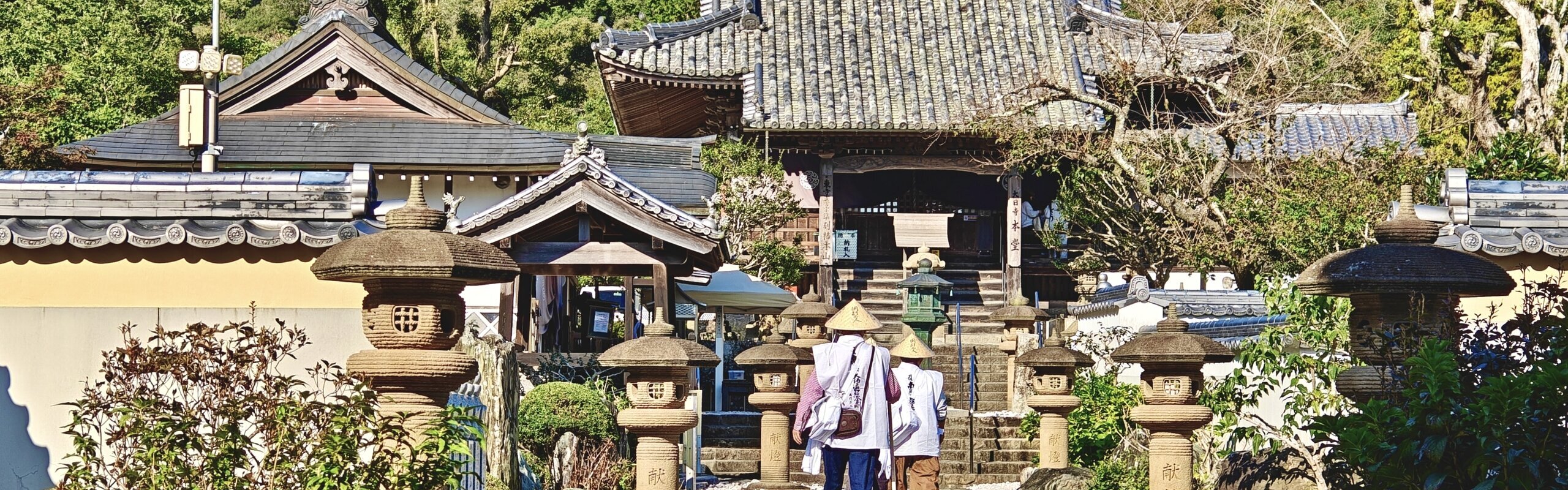
Shikoku is Japan's smallest main island, but it is rich in authentic culture and spectacular nature. The region is best known for its 88-temple pilgrimage, dramatic gorges, hot springs, and stunning coastal scenery. To make your trip easier, we've created practical Shikoku maps that cover major travel routes, top attractions, and sample itineraries.
Where is Shikoku in Japan?
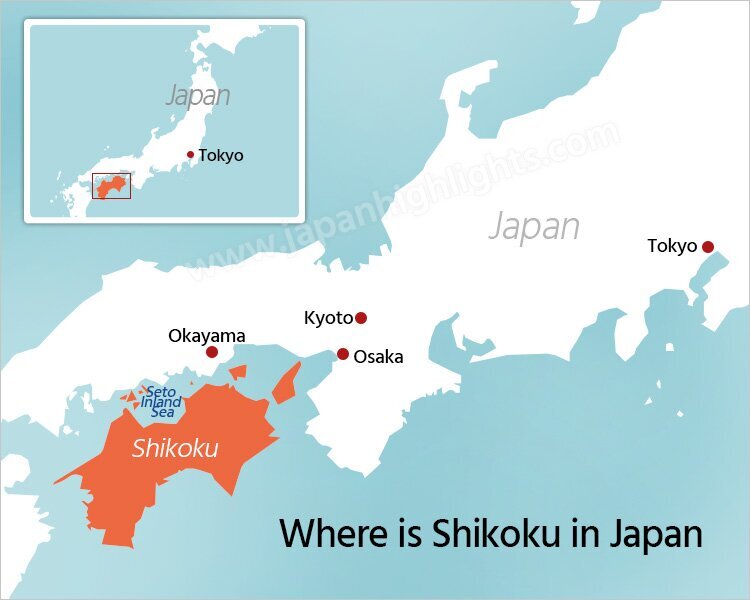 Where is Shikoku
Shikoku is located in southern Japan, just south of Honshu. It is the smallest of Japan's four main islands and sits across the Seto Inland Sea.
The closest major city to Shikoku is Osaka. From Osaka, it takes about 2.5–3 hours by car.
Shikoku Regional Map with Cities
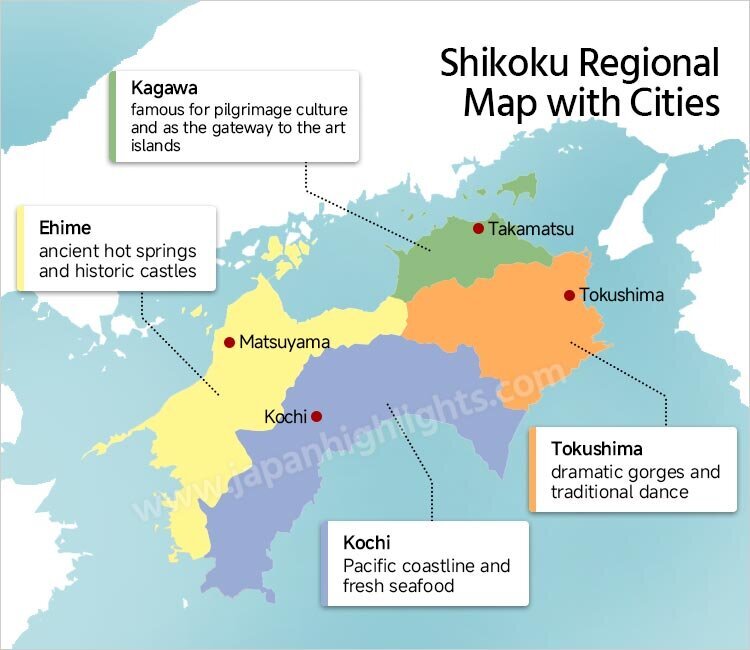
Shikoku contains four prefectures, each parts with its unique character:
- Tokushima - dramatic gorges and traditional dance
- Kagawa - famous for pilgrimage culture and as the gateway to the art islands
- Ehime - ancient hot springs and historic castles
- Kochi - Pacific coastline and fresh seafood
Tokushima and Takamatsu are the easiest to reach from Japan's three major cities such as Osaka/Kyoto- about 3 hours away by drive. While Matsuyama (Ehime) and Kochi are further 2 hours away.
Shikoku Attractions Map
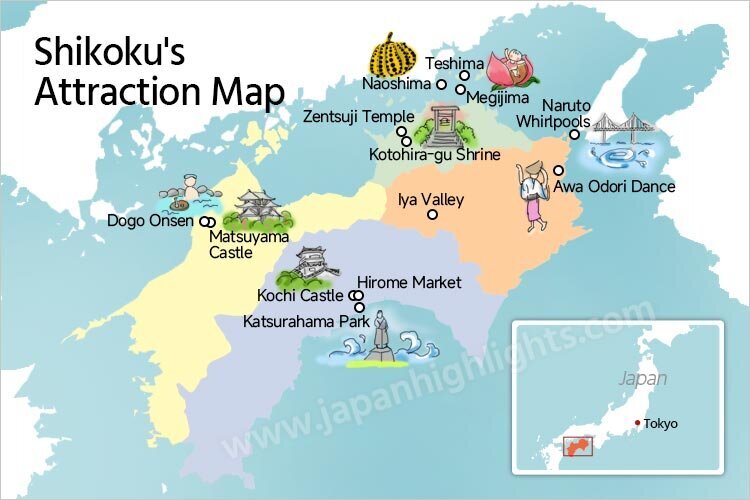
Shikoku's attractions focus on nature, religion, and traditional culture. From the powerful Naruto Whirlpools and the legendary 88 Temple Pilgrimage, to world-renowned hot springs and cutting-edge contemporary art islands, this is where Japan feels most authentic and untouched.
For first-time visitors, focus on these iconic sights. They perfectly capture the essence of Shikoku and are absolute must-sees:
Kagawa
If you have just 1-2 days in Shikoku, spend them in Kagawa. If you're interested in culture and art, this prefecture meets all your needs. It has Japan's most famous gardens and shrines, as well as pilgrimage temples located along scenic routes.
Zentsuji Temple: Visit Kobo Daishi's birthplace and begin a short 5km section of the 88-temple pilgrimage. Follow his life story from birth to adulthood along the route.
Art Islands: Base in Takamatsu, ferry to any art island like Naoshima, Teshima, or Inujima. Spend a day hopping between creative outdoor installations and contemporary art galleries.
Kotohira-gu Shrine: It is famous for its long stone staircase. Climb the 1,368 steps and enjoy panoramic views from the main hall.
Tokushima
Tokushima is best known for nature wonder and one of Japan's most energetic folk dances.
Naruto Whirlpools: One of the three largest whirlpools in the world. Join a boat cruise to get close to the powerful currents.
Iya Valley: Enjoy a scenic boat ride on the Yoshino River, then cross the swaying Iya Kazurabashi vine bridge for sweeping valley views.
Awa Odori: Tokushima's most famous dance tradition. At the Awa Odori Hall, watch lively performances and learn about the history and instruments behind the dance.
Ehime
Ehime is rich in history and relaxation, with onsen and castles as highlights. Immerse yourself here for a nostalgic vibe.
Dogo Onsen: Japan's oldest hot spring in Matsuyama, with historic waters and the nostalgic Dogo Haikara Street for local sweets.
Matsuyama Castle: One of Japan's few remaining original castles.
Kochi
Kochi is known for its dramatic coastline, with rugged cliffs and sandy beaches. It is also famous for fresh seafood, especially katsuo no tataki (seared bonito), a local specialty you should not miss.
Katsurahama Park: Scenic coastal park with seafront walking paths and home to the famous Sakamoto Ryoma statue, one of Kochi's most important historical figures.
Hirome Market: This lively market is the best place to try katsuo no tataki and other local dishes.
If you're unsure how to plan your day, we're here to help. Our customized itineraries ensure you see the best of Shikoku, tailored to your interests, pace, and travel style.
Shikoku 88 Temple Pilgrimage Map
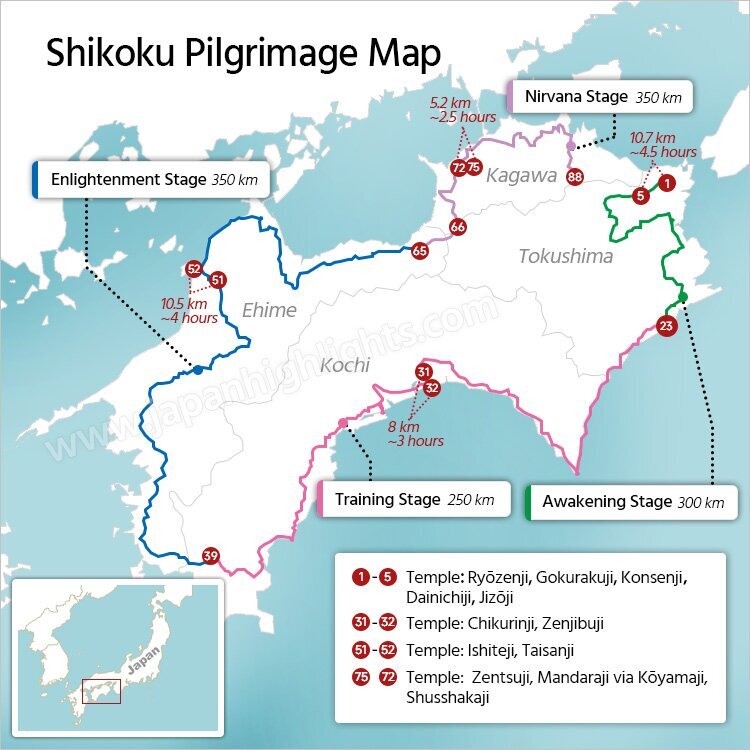
The Shikoku Pilgrimage is one of Japan's most iconic pilgrimage routes, a 1,200-kilometer circular route connecting 88 temples associated with master Kukai, the monk who helped shape Japanese Buddhism.
We recommend walking it in stages like the locals do. Here are our handpicked routes for you:
Recommended Routes
Route 1: Temple No.1 Ryōzenji → No.2 Gokurakuji → No.3 Konsenji → No.4 Dainichiji → No.5 Jizōji — 10.7 km / 4.5 hours
Route 2: Temple No.31 → No.32 (Chikurinji → Zenjibuji) — 8 km / 3 hours
Route 3: Temple No.51 → No.52 (Ishiteji → Taisanji) — 10.5 km / 4 hours
Route 4: Temple No.75 → No.72 (Zentsuji → Mandaraji via Kōyamaji and Shusshakaji) — 5.2 km / 2.5 hours
You can complete the four key segments shown on the map in about 5–6 days. Or choose either the Kagawa or Tokushima and hike one of the shorter local routes for a one-day pilgrimage experience.
Shikoku Itinerary Maps
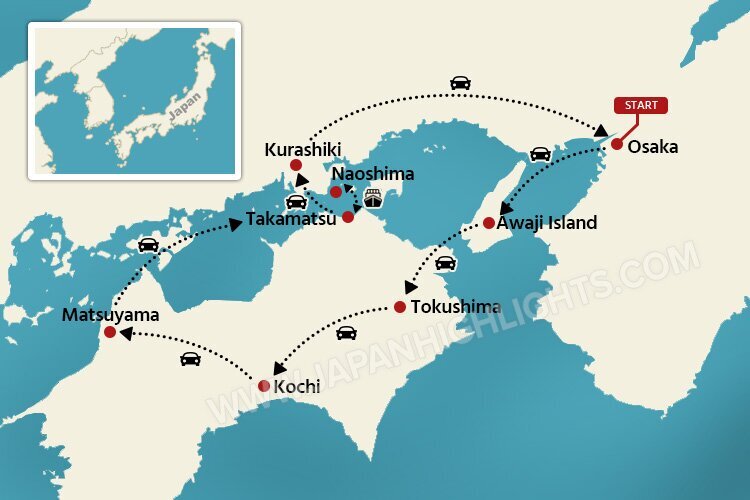 7-Day Shikoku Itinerary Map
Shikoku's attractions are scattered across the island. Here are itinerary suggestions to help you make the most of your time and see the best of Shikoku.
7-Day Shikoku In-Depth Tour
Day 1: Osaka to Tokushima
Attractions: Naruto Whirlpools sightseeing cruise, Awa Odori Kaikan Hall
Overnight: Tokushima.
Day 2: Tokushima to Kochi
Attraction: Iya Valley, Kōchi: Hirome Ichiba Market, Kōchi Castle and Katsurahama Park.
Overnight: Kōchi.
Day 3: Kōchi to Ehime
Attraction: Hands-on Tosa Washi papermaking, Yakatabune cruise along Niyodo River, Dogo Onsen
Overnight: Matsuyama (Dogo Onsen area).
Day 4: Ehime
Attraction: Matsuyama Castle, ride a vintage tram to the Dogo Onsen
Overnight: Matsuyama.
Day 5: Ehime to Kagawa
Attraction: Zentsuji Temple, Sanuki udon-making workshop, Ritsurin Garden
Overnight: Takamatsu.
Day 6: Naoshima
Ferry from Takamatsu to Naoshima (50 minutes).
Attractions: Chichu Art Museum, Benesse House Museum, Art House Project, Lee Ufan Museum. Yellow Pumpkin and Red Pumpkin. Overnight: Takamatsu.
Day 7: Kagawa to Okayama and Departure
Attractions: Kurashiki Bikan Historical Quarter, Ohara Museum of Art.
If you want to know more details, you can check Hidden Western Japan: Shikoku & Naoshima Island
This itinerary is just an example. Depending on your interests, you can focus on art islands, temple pilgrimages, or coastal drives. Just tell us what you're interested in, and we'll adjust the route to match your travel style.
Map of Transportation to Shikoku
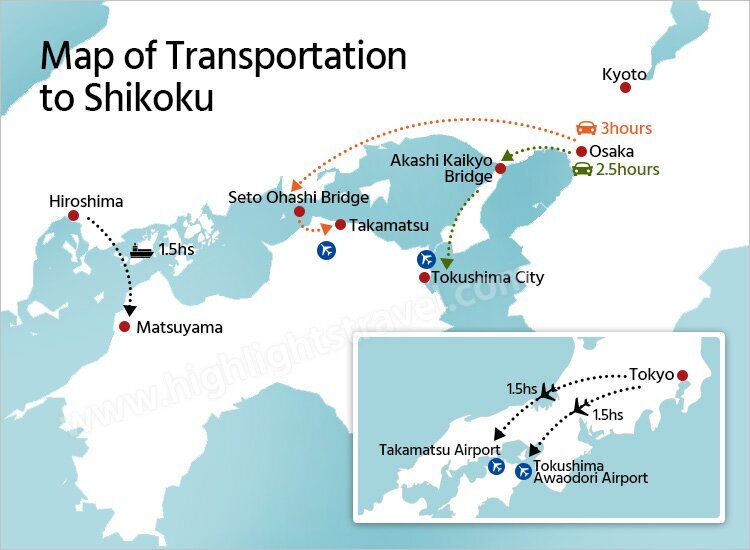
There is no direct Shinkansen to Shikoku. You need take the Shinkansen to Okayama, then transfer to a limited express train.
Kagawa is the easiest prefecture in Shikoku to reach. Tokushima is also fairly convenient, while Ehime and Kochi take about 2 more hours to access, with Kochi being the farthest.
Tokyo to Shikoku
The fastest way to reach Shikoku from Tokyo is by plane.
Tokyo to Shikoku by Plane: Narita International Airport (NRT) -Takamatsu Airport (Kagawa) / Tokushima Awaodori Airport: 1.5 hours
Tokyo to Shikoku by Shinkansen: 5–6 hours, tranfer at Okayama
Osaka/Kyoto/Kobe to Shikoku:
The most convenient option is a private car. There is no direct Shinkansen to Shikoku; if traveling by Shinkansen, you must transfer at Okayama. If you are on a budget, a direct highway bus is also a good option.
By Highway Bus
Osaka: Osaka Station Bus Terminal / Namba OCAT Bus Terminal → Tokushima Station: about 2–2.5 hours
Kyoto: Kyoto Station Hachijo Bus Terminal → Tokushima Station: about 2.5–3 hours
Kobe: Sannomiya Station Bus Terminal → Tokushima Station: about 2–2.5 hours
By Train
Osaka/Kyoto/Kobe to Okayama Station (Shinkansen): 1-2 hours
Okayama Station - Takamatsu or Tokushima (local train): 1-2 hours
Total travel time is usually no less than 3 hours.
From Hiroshima:
Take a ferry to Matsuyama. The fastest journey takes about 1.5 hours.
Map of Getting Around Shikoku
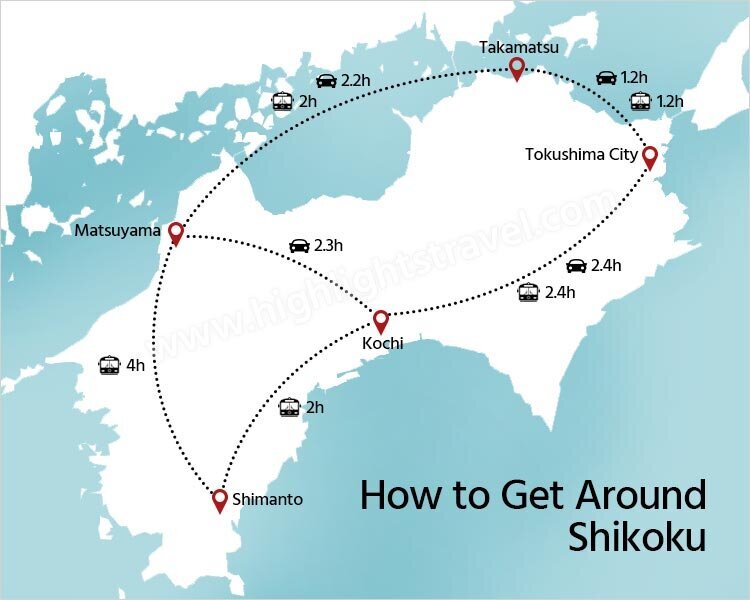
We strongly recommend traveling with a private guide and car, which saves time, eliminates transfer stress, and ensures you can reach remote highlights efficiently and comfortably.
Public transportation works, but it can be exhausting. JR trains between major cities run at very different frequencies, usually every 30 minutes to two hours (not every 15 minutes like in Tokyo).
Local buses to rural areas or sightseeing spots are infrequent, such as Iya Valley, Oboke Gorge, or some pilgrimage temples sometimes running only a few times per day, and many places are difficult to reach without a car.
Where to Stay in Shikoku?
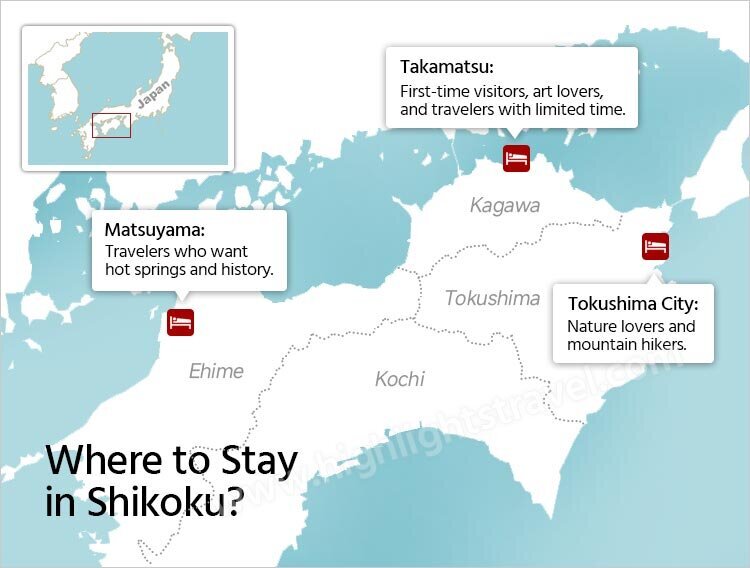
It's hard to use just one base in Shikoku, since attractions are widely scattered and travel distances are long. Most itineraries require staying in two or three different cities.
Most visitors choose Takamatsu and Matsuyama as their main base, then move to one or two other cities depending on their itinerary.
Takamatsu (Kagawa)
If it's your first visit, stay in Takamatsu. It's the gateway to the art islands of the Seto Inland Sea, including Naoshima. It's also well-connected to Osaka and Kyoto (about 2.5 hours by train).
Around the city, you'll find island ferries, udon restaurants, and shopping streets.
Best for: First-time visitors, art lovers, and travelers with limited time.
Matsuyama (Ehime)
If you want to relax in hot springs, stay in Matsuyama. The city is home to Dogo Onsen, Japan's oldest hot spring, and Matsuyama Castle. It's a great base for exploring western Shikoku.
You'll find historic bathhouses, traditional ryokans, and castle views nearby.
Best for: Travelers who want hot springs and history.
Tokushima City
If you're heading to Iya Valley, stay in Tokushima. The city is the gateway to Iya Valley, one of Japan's most dramatic mountain gorges. It's about 1.5-2 hours by car to the valley.
Best for: Nature lovers and mountain hikers.
Plan Your Shikoku Trip with Japan Highlights
All the maps and tips above are designed to help you explore Shikoku with ease. But if you want to skip the planning stress and enjoy a truly seamless experience, our private, tailor-made tours are here for you.
With our private tour, you won't need to worry about transportation or language barriers. If you want help planning a Shikoku trip that fits your pace and interests, just contact us.