Summer in Japan runs from June to August. It is hot and humid, and in major cities like Tokyo, Osaka, and Kyoto, the temperature can feel close to 40°C (104°F). The humidity also makes the air feel heavy and sticky.
So is it still worth visiting? "yes", but timing and planning matter. It is better to visit in June for the relatively cool weather. It also helps to plan a slower itinerary, spend more time indoors during the hottest hours of the day, and prepare ways to stay cool.
How Hot is Japan in Summer—Japan's Summer Weather
 Kifune Shrine in Kyoto in the summer
Summer in Japan is very hot, especially from July to August. In major cities like Tokyo, Kyoto, and Osaka, temperatures can reach around 40°C (104°F). The high humidity of around 85% makes the weather feel even hotter and sticky.
Kyoto is the hottest and most humid because the city sits in a basin surrounded by mountains, which traps the heat. Tokyo is also hot in summer but generally feels a little easier thanks to more sea breeze and plenty of indoor attractions where you can escape the heat.
Mountain areas such as the Mt. Fuji Five Lakes region and Kamikochi in the Japanese Alps are much cooler and more comfortable in summer. Hokkaido, in northern Japan, also enjoys mild summer weather, with temperatures in the low 20s °C (around 70°F).
See below for the average temperatures in Japan's major cities in July and August, so you can get a clear sense of how hot it really gets.
| City | Avg High Temp | Feels Like Temp | Humidity |
| Tokyo | 33–35°C (91–95°F) | 38–42°C (100–108°F) | 70–80% |
| Osaka | 34–36°C (93–97°F) | 39–43°C (102–109°F) | 70–80% |
| Kyoto | 35–37°C (95–99°F) | 40–45°C (104–113°F) | Highest |
| Fukuoka | 33–35°C (91–95°F) | 38–41°C (100–106°F) | High |
| Hokkaido | 25–28°C (77–82°F) | 27–30°C (81–86°F) | Low |
| Okinawa | 31–33°C (88–91°F) | 35–38°C (95–100°F) | Very High |
Is It Worthwhile to Visit Japan in Summer?
I wouldn't give a simple "yes" or "no" answer. It really depends on your travel style and the kind of experiences you want.
If your schedule is flexible, I recommend visiting in another season or in June when the weather is usually more comfortable. But if you are interested in Japan's traditional culture, especially lively summer festivals (matsuri), summer is the best time to visit.
If summer is your only chance to visit Japan, don't worry — you can still have a great trip. The key is to plan a slower and more relaxed itinerary. Spend the hottest hours around midday indoors, and consider staying longer in Tokyo. The city provides many air-conditioned museums, shopping malls, themed cafés, aquariums, and hands-on cultural activities.
However, if you prefer fast-paced trips with packed sightseeing schedules and long outdoor days, summer is not the time for you. The heat and humidity can exhaust you very quickly, especially in cities like Kyoto and Osaka.
Thinking About a Summer Trip to Japan?
Take a look at our most popular summer itinerary: 8-Day Essential Japan Family Trip with Culinary Delights.
It is designed for families who want a relaxed pace, fun cultural experiences, and great food without feeling rushed in the summer heat. The itinerary can also be customized for free based on your travel style, interests, and preferred pace.
How to Travel Comfortably in Japan in Summer
Don't worry. Japan's summer is easier to handle than many people expect.
In cities like Tokyo, Kyoto, and Osaka, there are plenty of indoor places to escape the heat. You can easily fill your day with museums, indoor theme parks, covered food markets, cafés, shopping malls, and cultural workshops without staying outside for too long.
Here are some practical tips for enjoying Japan in summer:
1. Slow down your itinerary: Don't try to do too much in one day. Plan a slower pace. Take breaks during the hottest hours around midday.
2. Plan your day around the heat: head out by 8 am when it's still cool, and hit the outdoor spots first—temples, parks, and morning markets. By 11 am, shift indoors: teamLab, Nintendo World, aquariums, and food workshops. Come back outside after 5 pm when the temperature drops and the city changes gear—night markets, festival stalls, and fireworks.
3. Escape to cooler mountain areas: Add a day trip to cooler places for a break from the heat. For first-time visitors, the areas around Mount Fuji or Hakone are easy and refreshing options.
4. Visit in June if possible: June is much cooler and more comfortable than July and August. It is also less crowded. Keep in mind that July and August are peak summer holiday months across much of Asia, so popular destinations can get very busy.
4. Bring essentials like a cooling spray, a small towel, and plenty of water to handle the summer heat.
5 Recommended Places to Visit in Japan in Summer
Here are some recommended destinations that offer a blend of cultural experiences, historical buildings, natural wonders, and family-friendly activities.
1. Tokyo: Modernity and Anime Center
Tokyo is the best destination in Japan for the hot summer months. The city has many places where you can escape the heat. Think world-class museums, huge shopping malls, anime centers, gaming arcades, cafés, and indoor attractions everywhere.
You can easily spend 3 full days exploring museums, multi-level arcades, themed attractions, and incredible food spots, and never feel like you're hiding from the weather.
If it is your first trip to Japan, you can spend most of your time in Tokyo during the summer.
2. Kyoto: Enjoy Traditional Festivals
Kyoto in summer is more than geishas, ryokans, tea ceremonies, etc. It's a city that lives and breathes tradition in real time. The highlight is the month-long Gion Matsuri in July.
See the lantern-lit floats, colorful parades, and locals in yukatas filling the streets every evening. This is not a tourist event. It has been happening every July for over 1,000 years.
To cool yourself, enjoy cool breezes in Arashiyama's bamboo forest in the morning, and, in the evening, dip your feet into the Kamogawa River, just like the locals do.
We could arrange for you to have an afternoon tea with geishas, which would help you to have a deeper understanding of Japanese culture while avoiding the hottest sun in the afternoon.
Contact our travel advisors, and we can arrange it for you.
3. Osaka: One Reason Alone: Super Nintendo World
Super Nintendo WorldOsaka is Japan's second-largest city and a prosperous port city, famous for its authentic street food.
Osaka has the only Super Nintendo World theme park in Japan, which is located at Universal Studios. It's a great place for a family with kids: not only can you see the surreally wonderful game world, but you can also play interactive games in the motion-sensing facilities in the park.
To get away from the summer heat, you could head to Osaka's family-friendly and air-conditioned places. For example, see a great variety of marine life in Osaka Aquarium Kaiyukan and make bespoke cup noodles based on your preference in Cup Noodle Museum.
4. Mt Fuji: A Challenge Worth Taking Only in Summer
Summer is the only time Mount Fuji is open for climbing — from early July to early September. For teenagers who want a real physical challenge, this is it.
Climbing Mount Fuji might be challenging for beginners, but you can choose how high you want to climb. If you get to the top of the mountain, you'll see amazing scenery, particularly if you climb for a sunrise/sunset.
Even if you do not plan to climb the mountain, the Mt. Fuji area is still worth visiting in summer. The weather is much cooler than in the cities, making it a perfect place to relax and escape the heat for a day or two.
5. Kamakura — See Japan's Beautiful Summer Hydrangeas
If you want to see Japan's famous summer flowers, hydrangeas, plan a day trip to Kamakura in June. This is hydrangea season in Kamakura, when temple paths and quiet streets are covered with colorful blooms.
The combination of hydrangeas, old temples, and rainy-season atmosphere feels incredibly photogenic and very "Japan." Besides the flowers, Kamakura is also famous for its Great Buddha, small local streets, cafés, and relaxed coastal vibe.
Kamakura is only about one hour from Tokyo, making it one of the easiest and most rewarding day trips from the city.
6. Hokkaido: Escape Japan's Summer Heat
While the rest of Japan is pushing through 38°C humidity, Hokkaido sits at a comfortable 20–24°C with low humidity and clear skies. Summer is when Furano's lavender fields hit peak bloom.
Beyond Furano, Hokkaido, in summer, is built for being outside. Cycling through farmland, kayaking on lakes that reflect the mountains above, and hiking trails in Daisetsuzan National Park, where you might go two hours without seeing another person.
Hokkaido is far from Tokyo and Japan's main Golden Route cities. If you want to combine Hokkaido with Tokyo, Kyoto, and Osaka, plan at least two weeks. Otherwise, it is better to focus mainly on Hokkaido for about 7 days, especially for a second trip to Japan.
Top Unique Things to Do in Japan in Summer
1. Step Into a Matsuri
Gion MatsuriSummer in Japan means colorful festivals, and not the kind you watch from behind a barrier. At Kyoto's Gion Matsuri, the streets close to traffic and the whole city becomes the venue.
Teenagers in yukata watch illuminated floats passing by, food stalls lining the street, and traditional music filling the air.
In Osaka, Tenjin Matsuri on July 25 adds river parades and fireworks to the mix — a different energy from Kyoto, louder and more chaotic in the best way.
2. Watch Fireworks on a Scale You've Never Seen
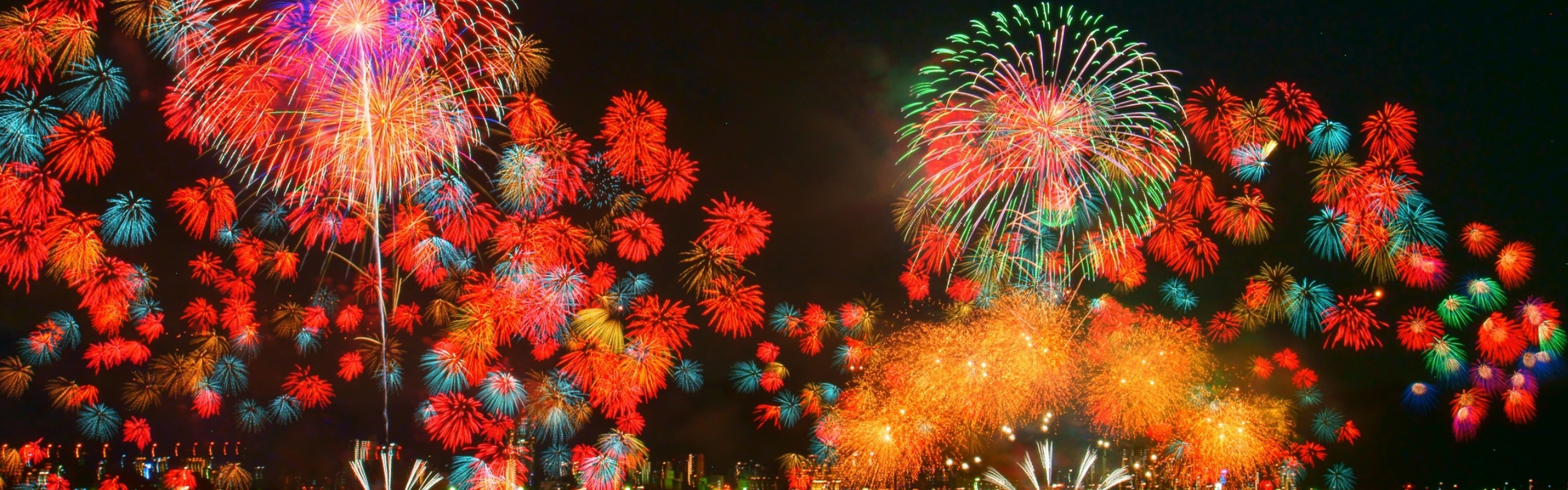
Fireworks in Japan aren't just something happening in the background; they're the reason you go.
The Sumida River Fireworks in Tokyo, held on the last Saturday of July, lasts about 90 minutes and launches around 20,000 shells. Even teenagers who think they've seen it all usually fall silent in the first ten minutes.
3. Chase Fireflies After Dark
From late May to early July, fireflies appear along rural rivers and forest streams across Japan. Along the Kamogawa River in Kyoto, stand quietly by the river after dusk, and within minutes, hundreds of green lights begin drifting through the dark. This will be one of those experiences that stays with children for years.
4. Cool Down the Kyoto Way — Kawadoko Dining on the Kamogawa
Every summer, restaurants along the Kamogawa River build wooden platforms directly over the water—called kawadoko. You eat above the river with the breeze coming up from below, lanterns reflecting on the surface, and the heat of the day finally gone.
This is one of those experiences that exists nowhere else in Japan, not Tokyo, not Osaka. Only Kyoto, only in summer.
If you travel with us, we will help you book a riverside restaurant in the Pontocho or Kiyamachi area.
6. Eat kakigori—the Japanese summer delicacy
Japanese shaved ice so fine it dissolves before you bite, in matcha, strawberry condensed milk, or mango. Nothing like the ice cones back home.
Top 3 Summer Itineraries in Japan
Here are three suggested summer itineraries that are well-organized and ideal for family holidays with three popular lengths of holidays (9, 14, and 17 days). We could arrange more hands-on fun activities for children, such as sushi making, ninja craft, and participating in a tea ceremony.
All the cities in the following itinerary are conveniently connected by Shinkansen bullet trains.
1) 9-Day Classic Route: Major Highlights of Japan and a Ryokan Experience
- Tokyo – Lake Kawaguchi – Kyoto – Osaka
This itinerary covers the main highlights of Japan: experience its old-vibe in Asakusa, visit the samurai museum in Tokyo, try on kimonos for a memorable family photo and participate in a classical tea ceremony in Kyoto, visit Mount Fuji or enjoy it from a great vantage point at Lake Kawaguchi, and sample street food in Osaka.
Here is a hand-picked itinerary of classics for you to consider:
- Days 1–3: Tokyo (make sushi, discover samurai, anime, and Disneyland)
- Days 4–5: Lake Kawaguchi (Mount Fuji, stay at a ryokan with an onsen)
- Days 6–8: Kyoto (geishas, Fushimi Inari Shrine, sample sake, and feed deer in Nara)
- Day 9: Osaka (Dotonbori district and Osaka Castle)
Suggested reading: The Top 5 Itineraries for One Week in Japan>>>
2) 14-Day Private Family Route: Learning Through Fun
- Tokyo – Takayama – Hiroshima – Kyoto
With this itinerary, you could visit the major attractions of Japan's cities and breathe in the fresh mountain air. Experience anime elements and have a full view of the city at Tokyo Tower in Tokyo, enter a traditional folk village in Takayama, cherish peace at Hiroshima Peace Memorial Park, stay at a cozy ryokan, stroll through the bamboo groves in Kyoto, and have fun at Universal Studios in Osaka.
Here is the summary itinerary for you:
- Days 1–3: Tokyo (Meiji Shrine, Tsukiji Market, Pokémon Center, and Akihabara)
- Days 4–5: Takayama (Hida Folk Village, sample sake and Hida beef)
- Days 6–7: Hiroshima and Miyajima (Peace Memorial Park and the 'Floating Torii Gate')
- Days 8–11: Kyoto (geisha, ryokan, Nijo Castle, feed deer in Nara, and wander through the lush bamboo groves in Arashiyama)
- Days 12–14: Osaka (Cup Noodle Museum, Super Nintendo World, and Universal Studios)
Suggested reading: 2-Week Japan Itineraries for Family/Couple>>>
3) 17-Day Summer Family Vacation: Hands-on Experiences and Outdoor Activities
- Tokyo – Kamakura – Kawaguchiko – Karuizawa – Nagoya – Kyoto – Osaka
To take a good break from work and school, you and your children could spend a wonderful summer trip with the following experiences: immerse yourself in a ninja experience in Tokyo, take a light hike close to nature in Karuizawa, and have fun in lovely Ghibli Park or full-of-technology Nagoya City Science Museum in Nagoya, have a geisha dinner and feed deer in Kyoto, and make cup noodles in Cup Noodle Museum and enjoy the Osaka Aquarium in Osaka.
Here is the itinerary for your inspiration:
- Days 1–4: Tokyo (sushi-making, ninja experience, MORI Building Digital Art Museum)
- Day 5: Kamakura (giant bronze Buddha and Hasedera Temple)
- Day 6: Lake Kawaguchi (Mount Fuji)
- Days 7–8 Karuizawa (national park and light hiking)
- Days 9–11: Nagoya (Ghibli Park, Toyota Commemorative Museum of Industry and Technology, and SCMAGLEV and Railway Park)
- Days 12–14: Kyoto (geisha, Gion District, Kinkakuji Temple, Nishiki Market, Arashiyama, and feed deer in Nara)
- Days 15–17: Osaka (Osaka Aquarium Kaiyukan, Cup Noodle Museum, and Osaka Museum of Housing and Living)
How to Avoid Crowds on a Summer Trip in Japan
Gion district in KyotoJapan's school summer holidays are usually in July and August. So, crowds are predicted then, especially in popular destinations like Tokyo and Kyoto.
To avoid crowds and hotter temperatures, the smarter choice is to travel in June if you have the flexibility to take time off when Japan's summer vacations haven't yet started.
We'd also help you avoid crowds as much as possible, planning a crowd-avoiding itinerary for you, choosing less-crowded times of the day and arranging off-the-beaten-track places. You can just tell us your preferences and requirements and our travel consultant will customize a tour for you.
Planning a trip to Japan in summer 2026/2027?
This is a trip your kids have been dreaming about, and you're worried about the heat. Believe me, with the right itinerary, you won't be fighting the weather. You'll work around it and still have a great trip. Let's help you plan your Japan summer trip now!