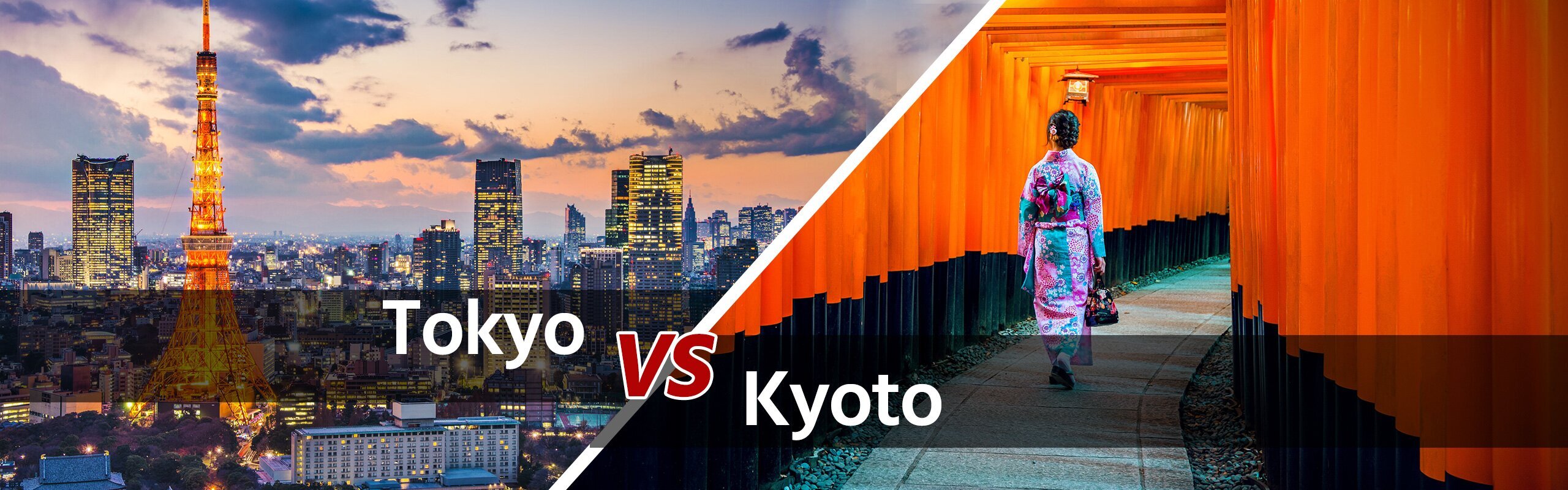
Tokyo and Kyoto are the two cities that best represent Japan. When traveling to Japan, it is recommended to visit both, but if you only have a short time, you may be wondering which one to visit.
Luckily, we have this guide to help you make a decision. We will offer the major differences between Tokyo and Kyoto from our many visits, along with some useful tips.
Tokyo vs Kyoto: A Quick Overview
| Tokyo | Kyoto | |
|---|---|---|
| Vibe | A mix of modern and historic | Full of tradition |
| Best for | First-timers, family with kids | First-timers, cultural lovers |
| Top Things to do | Anime, high-tech museums, shopping, pop culture, nightlife | Shrines, temples, geisha performance, tea ceremony |
| Accommodation | Western-style hotels, luxury brands | Japanese ryokans |
| Food | Local cuisines, Michelin-starred food, international food | Local street food, Kaiseki, Shojin ryori |
| Ideal Length of Stay | 3-5 days | 2-4 days |
If this is your first trip to Japan and you have 7 days or more, it's best to visit both Tokyo and Kyoto.
If you're in Japan for less than seven days, it's best to focus on just one city.
You may enjoy Tokyo more if:
 Tokyo
Tokyo- You prefer big cities, modern technology, nightlife, and a huge selection of shops and restaurants
- You are traveling with kids or young people
You may enjoy Kyoto more if:
Kyoto- You like traditional Japanese culture, like temples, shrines, and authentic experiences
- You are looking for a more relaxing trip
- You want to try typical Japanese foods
1. History and Culture: Modern Tokyo vs Traditional Kyoto
Tokyo: A Mix of Modern and Historical
TokyoTokyo is a perfect blend of modern and traditional. There's something for everyone.
As Japan's capital, Tokyo is a modern metropolis. It's full of high-tech fun and pop culture, including robot restaurants, interactive museums, anime districts, theme parks, and more.
Even though Tokyo is mostly modern, you can still visit historic sites like Meiji Shrine and Senso-ji Temple. There aren't many old buildings, since much of the city was destroyed during World War II.
If you want to explore Japanese history and culture in more depth, Kyoto is the better choice.
Kyoto: Medieval Capital of Japan
Sannenzaka in KyotoKyoto is Japan's ancient capital, offering a rich traditional charm. Here, you can enjoy the classic Japanese vibe you've always imagined.
A highlight of Kyoto is its many well-preserved historic buildings, like Kiyomizu-dera Temple and Fushimi Inari Shrine. Walking through them feels like stepping back in time.
You can also enjoy many authentic experiences in Kyoto. For example, wearing a kimono to visit a shrine, joining in a tea ceremony, staying at a ryokan, or trying pottery. These activities let you fully immerse yourself in Japanese culture.
2. Things to Do: Pop and High-Tech vs Cultural Immersion
Tokyo: Pop Culture Center
Robot Restaurant in TokyoTokyo is famous for its pop culture and high-tech fun, making it especially perfect for traveling with kids or young adults.
Shibuya is the heart of Tokyo's pop culture. You can cross the bustling Shibuya Crossing to feel the city's energy, explore streets lined with trendy shops and anime stores, shop at fashionable boutiques, or enjoy the nightlife at a live house.
If you're interested in technology, we can arrange for you to dine at a robot restaurant, explore the interactive TeamLab Borderless, or visit the National Museum of Emerging Science and Innovation.
Kyoto: Traditional-filled City
Fushimi Inari ShrineKyoto is rich in historic buildings and traditional Japanese culture. It's easy to feel the authentic Japanese atmosphere.
Visiting shrines and temples is a must in Kyoto. Popular highlights include Kiyomizu-dera, Kinkaku-ji, and Fushimi Inari Shrine.
However, we strongly recommend focusing on just 2–3 of Kyoto's top shrines and temples. Trying to see too many in one day can be exhausting.
Kyoto also offers more authentic cultural experiences than Tokyo. These activities help you connect more deeply with Japanese tradition. For example, you can try a ninja experience, enjoy a geisha tea ceremony, or join a Japanese sweets (wagashi)–making class.
3. Food Scene: Diverse Food vs Japanese Cuisine
Tokyo: Food from Around the World
Enjoy a Michelin-starred restaurant in TokyoTokyo wins the title for having the widest variety of food in Japan. It also has more Michelin-starred restaurants than anywhere else in Japan.
The city is filled with dining options from all over the world, like French, Italian, Chinese, Korean, and more. These restaurants are especially easy to find in areas like Ginza, Roppongi, and Shibuya.
Of course, you won't miss local specialties too, like sushi, ramen, unadon, Wagyu beef, and more.
Kyoto: Japanese Food
KaisekiJust like the city itself, Kyoto's food focuses on traditional Japanese dishes.
For a wide variety of Japanese dining options, head to downtown Kyoto, Nishiki Market, or Gion.
Kyoto is also perfect for trying high-end Japanese dishes like kaiseki and shojin (Buddhist vegetarian). The city offers more of these dishes, which you can enjoy in traditional Japanese restaurants.
However, Kaiseki and shojin need to be reserved in advance and can be a bit challenging to book. If you travel with us, we can help you reserve a top kaiseki restaurant or arrange a shojin meal in a peaceful temple.
Join our popular 8-Day Essential Japan Family Trip with Culinary Delights. You can enjoy hands-on Japanese food experiences while exploring the best of Japan. If you want to make changes, we're here to tailor it to your needs.
4. Shopping: Trendy and Branded Goods vs Local Souvenirs
Tokyo: The Shopping Center
ShibuyaTokyo, one of the world's most fashionable cities, offers bigger shops and more options than any other city in Japan.
You can find almost anything here, including limited-edition items. This includes trendy fashion, luxury brands, electronics, anime goods, traditional crafts, and more.
The most popular shopping areas are Shinjuku, Ginza, Shibuya, Harajuku, and Akihabara. Each has its own style: Shinjuku and Shibuya for trendy youth fashion, Ginza for upscale shopping, and Akihabara for anime and electronics.
Kyoto: Perfect for local crafts
Local Japanese craftsLooking for Japanese products? Kyoto is the perfect place to shop. It offers a wider selection of products, often at more affordable prices than in Tokyo.
Many Japanese shops line Shijo (downtown Kyoto), Nishiki Market, and Gion. You can purchase a variety of traditional items, from matcha and chopsticks to ceramics and more.
Kyoto has modern shopping malls too, but they don't offer as many choices as those in Tokyo.
5. Accommodation: Western-Style Hotel vs Japanese Ryokan
Tokyo: Clean and Comfortable Hotel
A Western-style hotel in TokyoIn Tokyo, you'll find many accommodation options, mostly clean and comfortable Western-style hotels. Whether you're on a budget or looking for luxury, there's a place for you.
Shinjuku is the most popular area to stay in Tokyo. It offers a convenient location and plenty of shopping, entertainment, and sightseeing options. Well-known hotels here include Keio Plaza Hotel Tokyo, Park Hyatt Tokyo, and Shinjuku Washington Hotel.
You can also find a variety of places to stay in Roppongi, Ginza, Asakusa, and near Tokyo Station.
>>>Read our guide on how to select a place to stay in Tokyo
Kyoto: Traditional Japanese Inn
Japanese ryokanKyoto also has plenty of Western-style hotels, but for a truly special and authentic Japanese experience, don't miss staying in a traditional ryokan.
You'll sleep on a futon in a tatami room, enjoy a Japanese-style breakfast, relax in a hot spring bath, and admire the courtyard garden.
Kyoto is the best place to enjoy a ryokan. With the largest selection and its rich traditional atmosphere, you'll really feel the essence of Japan.
5. Travel Convenience: Both Cities are Easy to Get around
Tokyo: Best Transportation Systems
Our clients take Tokyo's subway with our private guideThe easiest way to get around Tokyo on your own is by subway.
The JR Yamanote Line is especially useful, connecting Tokyo's major city centers. It stops at top spots like Meiji Shrine, Shibuya, Tokyo Tower, Ginza, and the Imperial Palace.
The signs in the stations are very clear. Just follow them, and you won't get lost.
If you travel with us and want to save on transport, our guide can take you around Tokyo by subway. He will do everything for you, no worries!
However, taking the subway can also mean a lot of walking. Some major stations are large and have many stairs. If you want to save your energy for sightseeing, we can arrange a private car for you.
Kyoto
In Kyoto, buses are the main way to get around and can take you to most of the city's attractions. To reach farther places like Arashiyama or Nara, take the train.
Some of Kyoto's top sights are close together, so you can easily walk between them. For instance, Kiyomizu-dera Temple is just a 20-minute walk from Gion.
7. Travel Cost: Expensive Tokyo vs Cheaper Kyoto
Tokyo: Higher than Other Cities in Japan
Hotels in Tokyo are costlyTraveling in Tokyo is generally more expensive, especially for hotels, which cost about 20% more than in Kyoto.
On average, 3-star hotels cost 100–180 USD per night, 4-star hotels cost 150–250 USD, and 5-star hotels start at over 300 USD per night.
Kyoto: Cheaper Costs
A ryokan in KyotoLike Tokyo, the biggest travel expense in Kyoto is accommodation. Western-style hotels are generally cheaper than in Tokyo, but traditional Japanese ryokans tend to cost more.
Japanese inns usually charge per person. In Kyoto, ryokans are typically divided into three categories:
- Budget: less than 100 USD per person per night
- Mid-budget: around 200 USD per person per night
- Luxury: over 200 USD per person per night
During peak season, especially cherry blossom season, accommodation in Kyoto is much more expensive. As one of the best places to see cherry blossoms, it attracts more visitors than Tokyo. To secure your preferred hotel, we highly recommend booking 3–6 months in advance.
No matter what you want to experience in Tokyo or Kyoto, our Japan travel advisors can create a trip just for you. We take care of everything, so you can relax and enjoy the journey.
Should You Visit Both Tokyo and Kyoto?
Our clients in TokyoIf your trip to Japan is 7 days or longer, you should definitely visit both Tokyo and Kyoto! The Shinkansen gets you from Tokyo to Kyoto in just around two hours.
Tokyo and Kyoto highlight the best of Japan's modern life and traditional culture. Visiting both gives you a complete experience of the country.
For trips shorter than seven days, it's better to focus on just one city.
Which City is Best for a Family with Kids: Tokyo or Kyoto?
Ninja experience in TokyoTokyo is a better choice for families.
It offers more kid-favoured activities, including Tokyo Disneyland, anime cafés, trendy shops, and high-tech museums. Both you and your kids can have a fun and memorable family trip together.
However, this doesn't mean Kyoto isn't good for families. We can arrange engaging activities that help kids experience Japanese culture in an enjoyable way, so they won't feel bored.
For example, you and your kids can dress up as ninjas to learn about ninja culture and techniques, join a tea ceremony while wearing a kimono, or participate in a Japanese cooking class.
Plan Your Japan Trip Now!
Our clients in KyotoJust tell us what you want to experience in Tokyo and Kyoto, and our expert travel advisors and local team will make it happen! We'll take care of everything, so you can enjoy a stress-free trip.
Here are our most-chose Japan tours for your inspiration: