
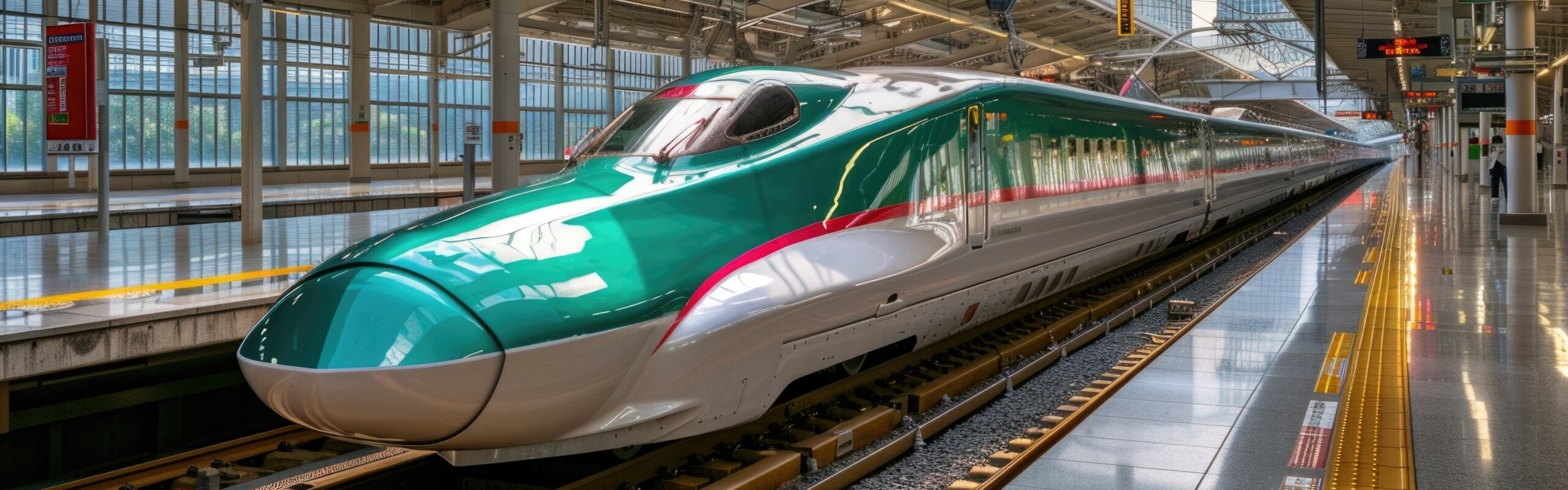
When traveling around Japan, you can't miss taking the Shinkansen (bullet train). It's the fastest and most convenient way to travel to your next destination. That's why it's Japan's most popular mode of transportation.
If it's your first time in Japan, figuring out how to buy tickets, choose seats, or board the train might seem a bit complex.
Luckily, we have this guide to answer your questions about traveling with the Shinkansen. You'll find everything you need to know based on our firsthand experience.
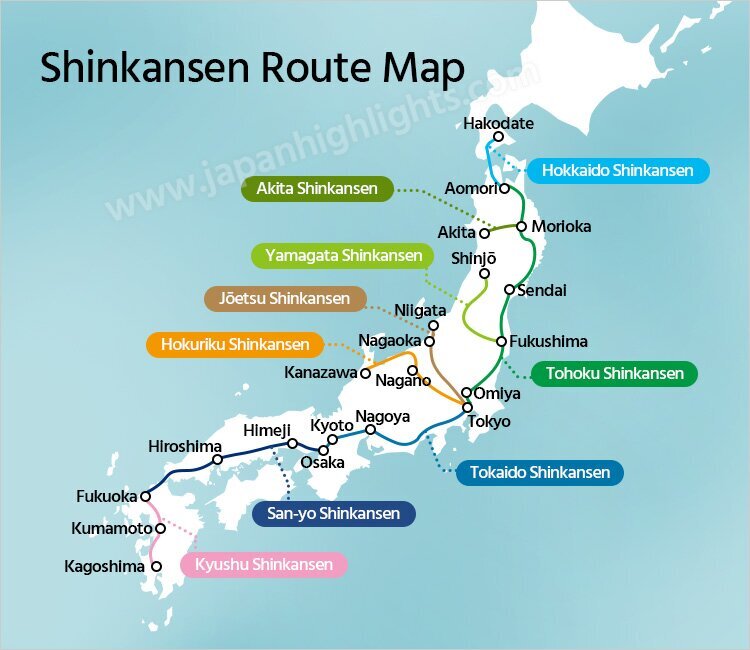
Quick Overview of the Japan Shinkansen Map
Currently, Japan has nine Shinkansen lines that connect major cities. You can reach most parts of Japan by Shinkansen, except for Hokkaido in the north.
The Tokaido Shinkansen, connecting Tokyo, Nagoya, Kyoto, and Osaka, is the most popular one.
How to Choose Your Best Train?
The Shinkansen has three main train types. Each one differs in speed and travel time. Here's a quick introduction.
Fast Trains
It's the fastest option as it only stops at major stations. For example, a trip from Tokyo to Osaka takes just 2.5 hours. But you can't use the JR Pass.
Semi-Speed Trains
It's a bit slower with a few additional stops. For example, it takes 3 hours from Tokyo to Osaka. You can use a JR Pass for this train.
Local Trains
It's the slowest because it stops at every station. A journey from Tokyo to Osaka takes 4 hours.
How to Pick Your Shinkansen Seats?
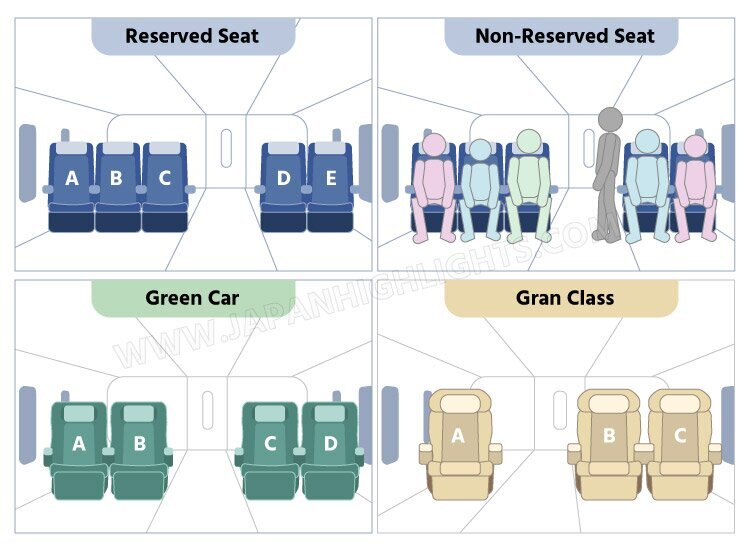
The Japanese Shinkansen has four types of seats: Reserved Seat, Non-Reserved Seat, Green Car, and Gran Class.
A reserved seat is our top recommendation! You can pick a seat according to your interests and sit together with your family. No matter which seat you want, we can help you choose and book it.
1. Reserved Seat: The Most Chosen One
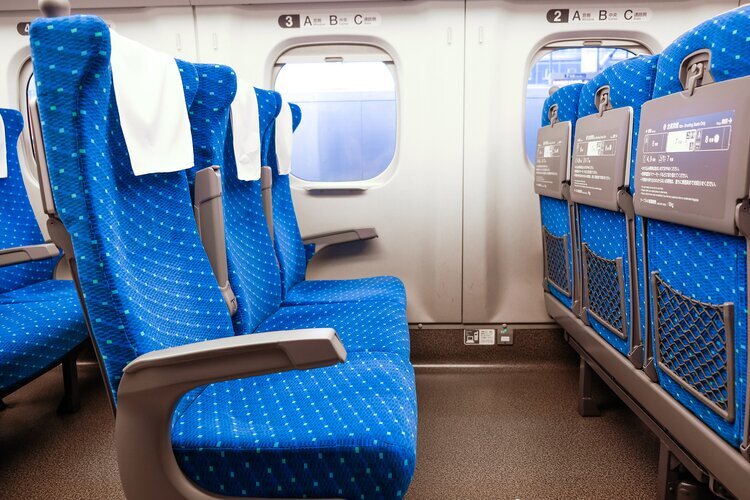 Reserved seats
I always pick the reserved seat! It ensures you have a smooth journey as you have planned.
You can select a seat based on your preferences, like by a window or an aisle. If you want to enjoy views like Mount Fuji from the Shinkansen, it's essential to choose a reserved seat.
Also, you can sit with your family or friends, and there's enough space for your luggage.
However, if you miss your train, you won't be able to change or refund your ticket. You'll need to buy a new one instead.
2. Non-Reserved Seat: Budget and Flexible
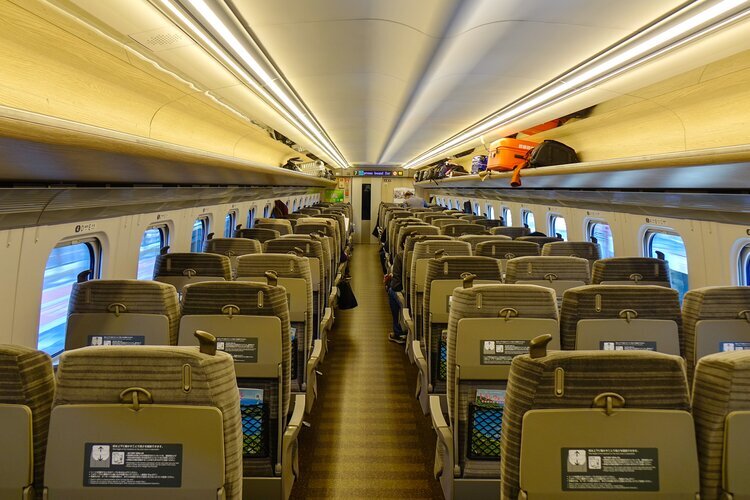 The non-reserved and reserved seats are similar
Looking for a cheaper Shinkansen ticket? Opt for a non-reserved seat. It saves you US$3-7 compared to a reserved seat.
If you're on a sudden trip or a short ride (within an hour), this seat is perfect. Non-reserved seats are more flexible. Even if you miss your train, you can catch the next one of the same type later in the day.
However, these seats are first-come, first-served. This means if there are no seats available, you might have to stand. That's why I don't recommend buying this type of ticket during holidays or weekends.
3. Green Car: The Business Class Section
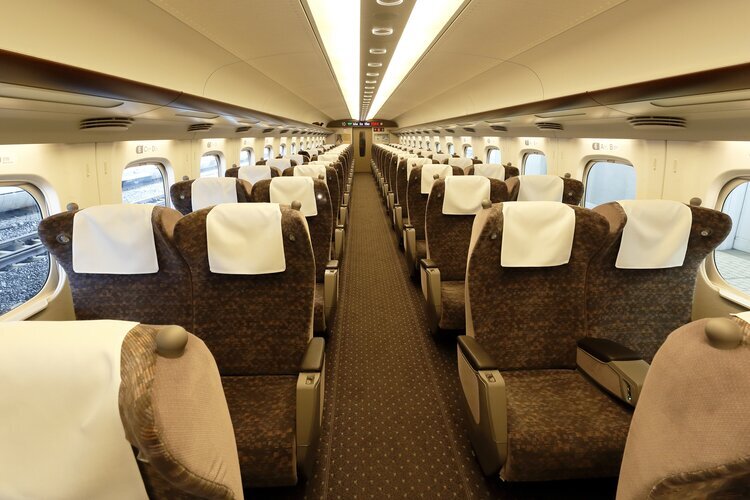 Green Car
Looking for a more spacious seat and a quieter environment? Then the Green Car is your top choice, especially for long trips lasting 3-4 hours.
You'll love the extra legroom, more luggage space, fewer passengers, and added privacy. The Green Car ensures a comfortable seat even for tall passengers.
Plus, the Green Car provides better service. Once you're on board, you'll get a refreshing hot towel and can easily order drinks and snacks by scanning a QR code.
4. Grand Class: The First Class Section
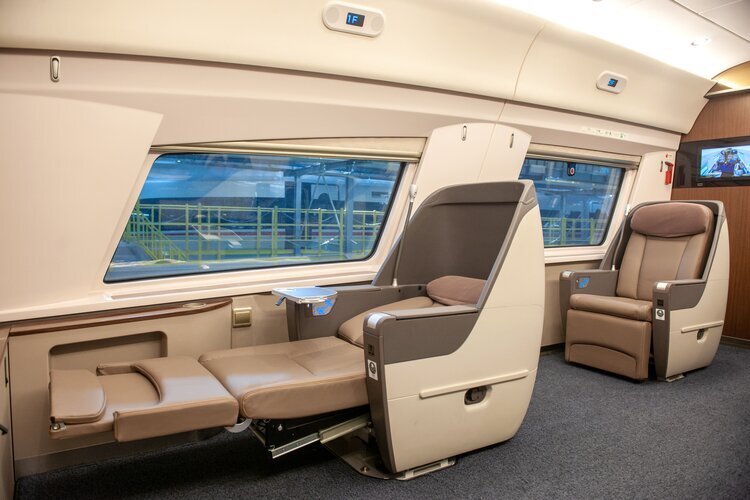 Gran Class
Gran Class offers the most luxurious seating experience on the Shinkansen.
You'll enjoy nearly flat seats, each equipped with a cozy blanket and slippers. The carriage only accommodates a maximum of 20 passengers, creating a peaceful atmosphere and ensuring more privacy.
Moreover, you will experience butler-style service. Throughout the journey, you'll be treated to complimentary drinks, alcoholic beverages, and meals.
However, Gran Class is mainly offered on three main Shinkansen lines: the Tohoku Shinkansen (from Tokyo to Aomori), the Hokuriku Shinkansen (from Tokyo to Nagano and Kanazawa), and the Jōetsu Shinkansen (from Tokyo to Niigata).
Just tell us what you'd like to experience, and our expert Japan travel experts will take care of everything, so you can enjoy a stress-free trip!
How to Buy Shinkansen Tickets
You can buy tickets either on the official website or at the Shinkansen vending machines located in major train stations across Japan.
Buying Tickets Online
I highly recommend buying tickets from the official website. You can choose your preferred seat in advance, such as one with a view of Mount Fuji, get early bird discounts, and reserve a spot for your large luggage.
Tickets can be bought up to one month in advance. Plus, the website offers an English interface and easy-to-follow instructions.
The official website is here: Smart Ex
Buying Tickets at the Station's Vending Machines
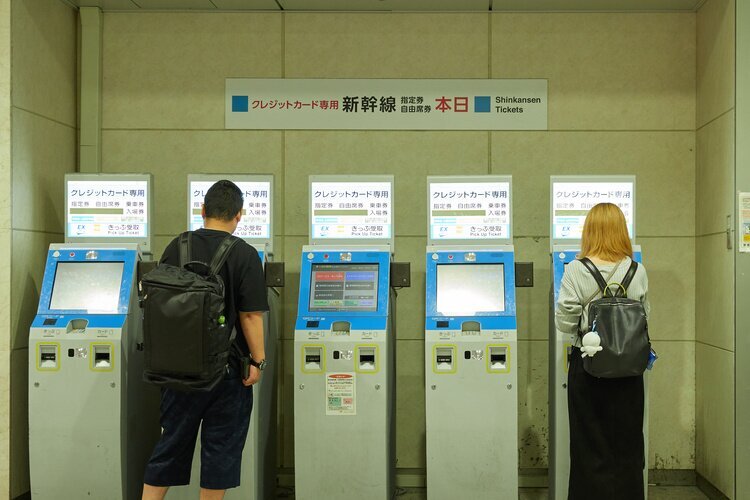 Shinkansen vending machines
If you're planning a sudden trip or a short ride, you can buy tickets directly from the Shinkansen vending machines at stations. There will be staff nearby to assist you.
It's better to buy tickets at least one day in advance. However, during busy travel times like holidays or weekends, be prepared for lines, and tickets might sell out.
>>>Read our How to Buy Shinkansen Tickets for more details.
If you book with us, we will handle booking the tickets for you. Our private guide will accompany you to the station and provide you with the ticket.
How to Read Your Shinkansen Ticket?
No worries about understanding the Shinkansen ticket. The key details are also written in English for easy comprehension. The picture below will help you better understand each part of the ticket.
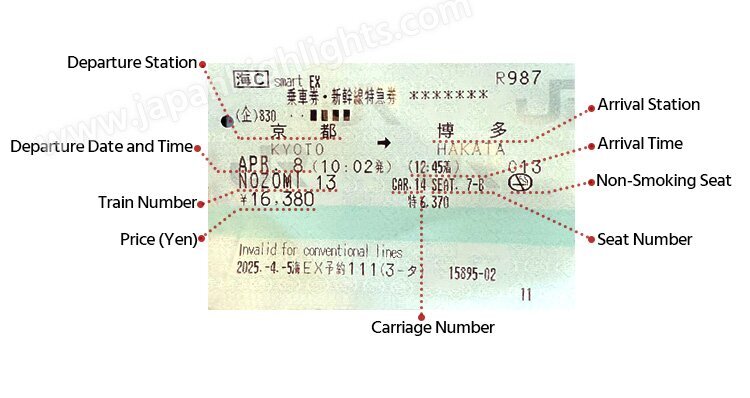
Where to Put Your Luggage on the Shinkansen?
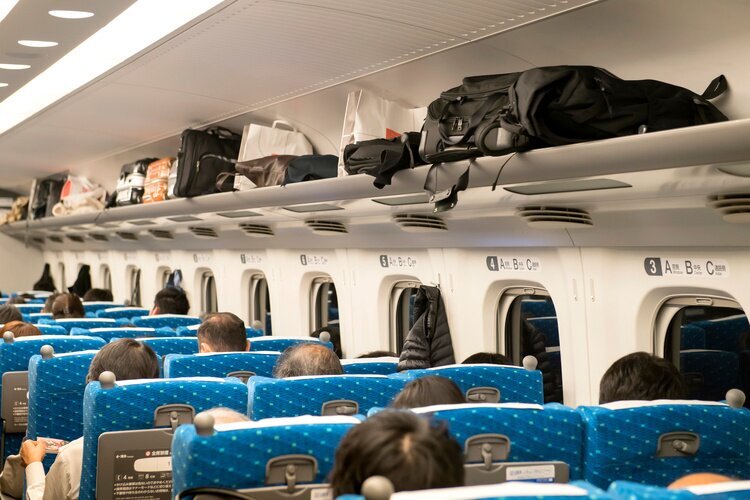 Put your luggage in the overhead rack
The seats on the Shinkansen are spacious. You can bring luggage sized between 20 to 28 inches on board without any issues.
You can easily store your luggage (20-26 inches) in the overhead rack.
If your luggage is too heavy for the overhead rack, you can place it in front of your seat instead. My 26-inch luggage fit comfortably in front of the seat, and I still had enough space for my legs.
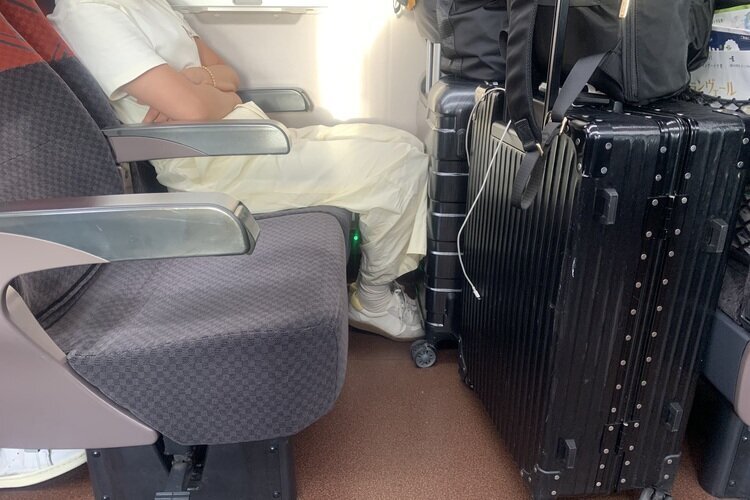 There is still enough legroom in front of the seat after placing our luggage
However, if your luggage is oversized (with total dimensions between 160 and 250 cm), you need to book the designated seat with an oversized baggage compartment.
These seats are situated in the last row of every car. Due to high demand and limited availability, it's wise to reserve your spot at least one month in advance.
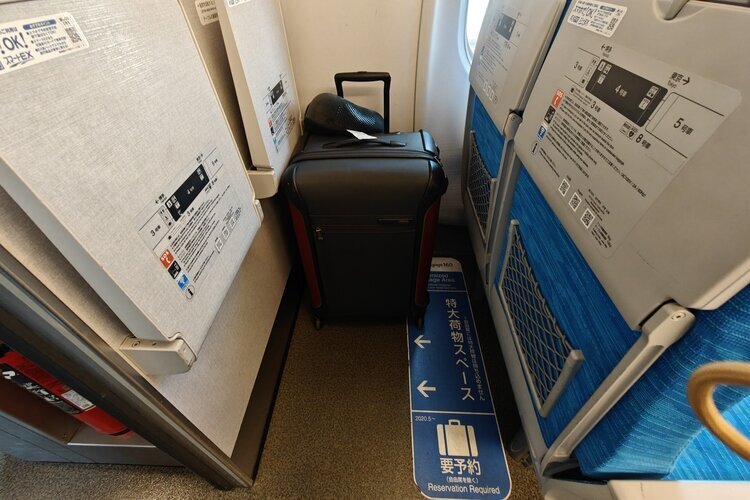 Seat with an oversized baggage compartment
This luggage area is only for passengers who have purchased these specific seats. If you bring oversized luggage without a reservation, you may be charged a $7 (1,000 yen) surcharge.
Wherever you're traveling in Japan, we are here to help you. Join our 11-Day Traditional Japan Tour to explore the best of the country. If you want to make some changes, we can also tailor it to suit your needs.
How to Use the Shinkansen?
Before my trip to Japan, I was concerned about taking the Shinkansen, just like you. But after trying it myself, I found it's much easier than I thought. Here's a step-by-step guide to follow once you've bought your tickets.
1. Pass Through the Shinkansen Ticket Gates
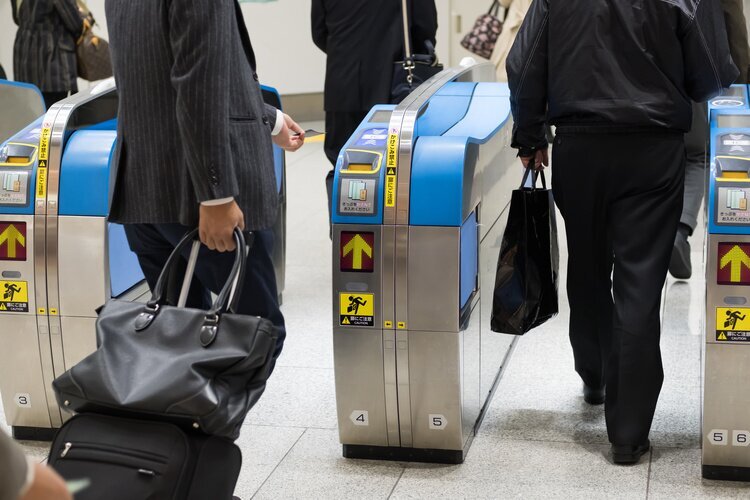 Insert your ticket into the turnstileShinkansen
After you walk into the station, look for those gates marked "Shinkansen." Insert your ticket into the turnstile, and don't forget to take it when it pops out! You'll need it to exit the station.
If you bought your ticket online, you will receive a QR code. Just scan it at the turnstile to enter.
I strongly recommend taking a screenshot of your QR code after buying the ticket. This lets you find it quickly, especially in underground stations where the signal may be weak.
2. Find Your Platform
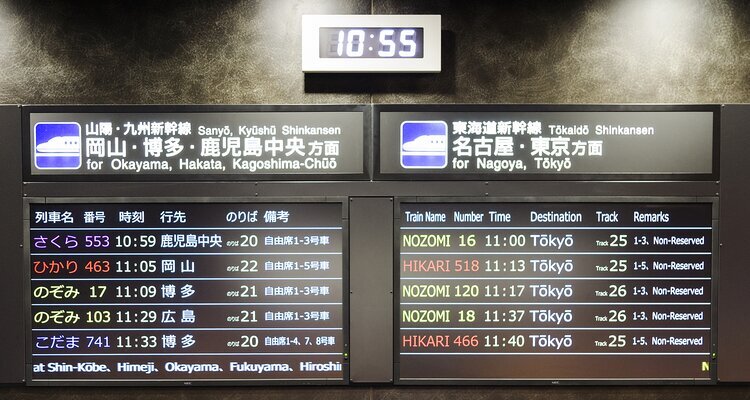 Check the electric screen to find info about your Shinkansen
You can check the electronic screen to see which platform your Shinkansen train is departing from. Next, follow the clear signs along the way to easily locate your train's platform.
Almost all Shinkansen platforms have escalators and elevators, so you don't need to worry about carrying your luggage up or down stairs.
3. Locate Your Carriage and Wait for the Shinkansen
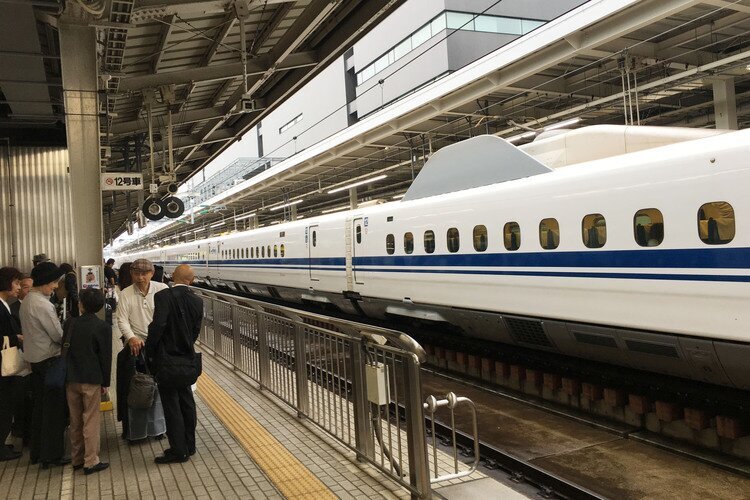 Wait for your Shinkansen at the station
Upon reaching the platform, signs will show which side your train will stop at. Then, look for the marked numbers on the ground to find your carriage, and wait for your train.
A friendly reminder: Line up in the designated boarding area. In Japan, everyone queues up in an orderly manner. If you're in the wrong spot, you might need to queue up again.
Each carriage displays the train number, ensuring you don't board the wrong one. If you're still unsure, here's my trick: Board at the time shown on your ticket, as trains in Japan are incredibly punctual.
4. Find Your Seat
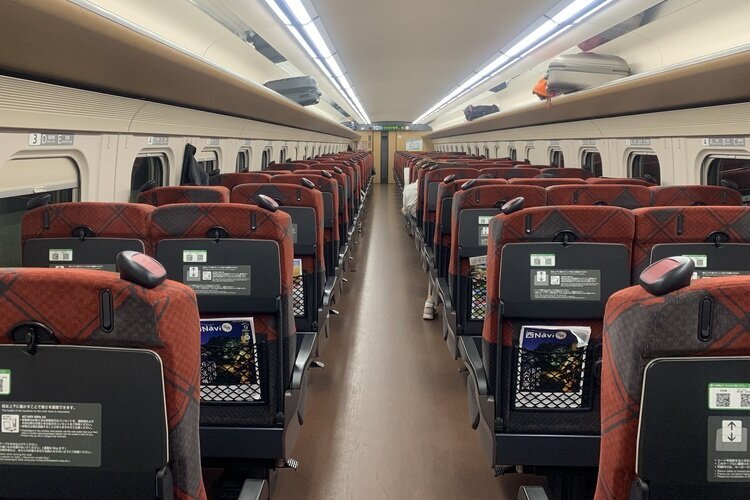 Reserved seats
The seat numbers on the Shinkansen are similar to airplane seat numbers. Just locate the seat number on your ticket and take your seat.
5. Leave the Station
After getting off the train, follow the exit signs to the ticket gates. Insert your ticket into the turnstile to exit. Your ticket won't be returned, so you can just walk out.
If you used a QR code to enter, scan it again to leave. No need to use the paper ticket you got when entering the station.
Dos and Don'ts for Riding the Shinkansen
Before you hop on your ride, here are 4 handy tips for you to have a better trip.
1. Arrive at the Station 30 Minutes Earlier
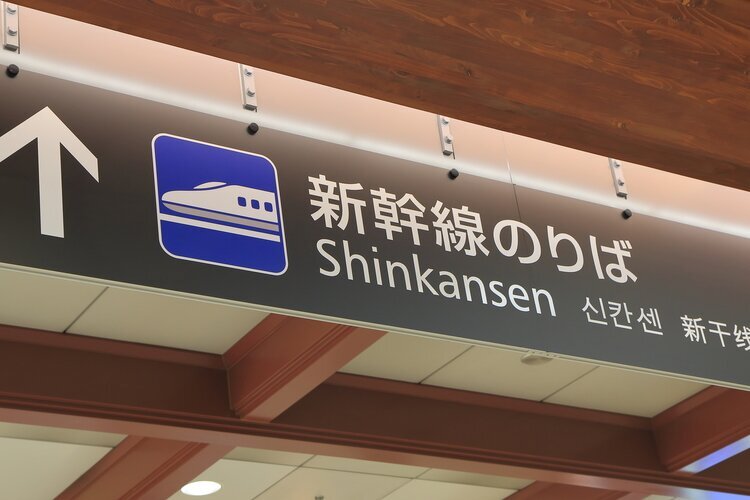 Follow the clear signs at the station
From our experience, arriving at the station 30 minutes early is more than enough, even when heading to larger stations like Tokyo Station or Kyoto Station.
After finding your train, if you still have time, you can stroll around the station and buy some snacks or other Japanese souvenirs.
2. Deliver Your Luggage to the Next Hotel
Got lots of luggage and don't want to drag it around on the Shinkansen? Get your luggage delivered!
Many stations in Japan have many stairs, making it challenging to carry luggage up and down. But using a luggage delivery service lets you skip all that hassle and travel light.
Most three-star and above Japanese hotels offer luggage delivery services. Just keep a small suitcase with your daily must-haves and send the rest ahead.
You can hand over your luggage to the hotel front desk the day before you move to the next city. Normally, your luggage will arrive on the same day or the following day.
3. Don't Eat Foods with Strong Smells on the Shinkansen
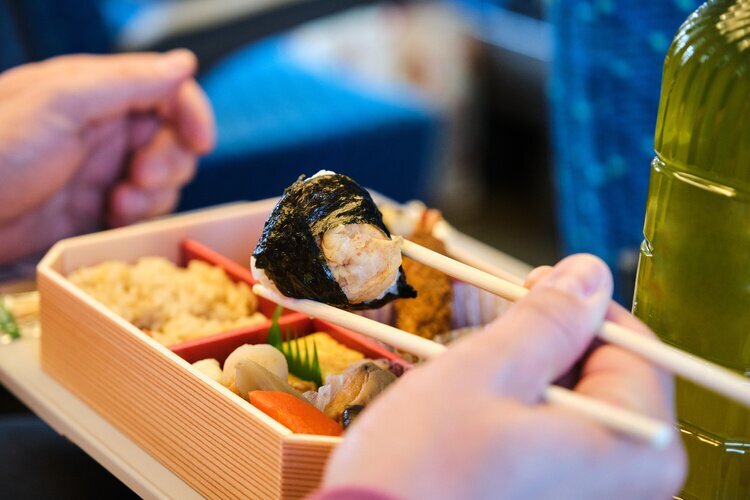 You can enjoy a bento on the Shinkansen
One important etiquette on the Shinkansen in Japan is to avoid eating strongly scented foods. It's because the Japanese think it could bother others on the train.
That's why most food sold on the Shinkansen is not heated, like sushi, rice balls, and bento. Even if you buy a bento from a station convenience store, the staff won't heat it up for you.
4. Don't Make Loud Noises in the Car
Public places in Japan are often quiet because of the social custom. It's like an unspoken rule to respect others' peace.
The same rules apply to the Shinkansen. Most passengers choose to read books, use their phones, or chat softly. If you need to make a phone call, head to the area between the cars.
FAQs about the Shinkansen
1. How Much Does It Cost to Take the Shinkansen?
The Shinkansen ticket is the most expensive among Japanese trains. For example, a reserved seat ticket for the Shinkansen from Tokyo to Osaka costs about $90.
For a better deal, you can buy early-bird tickets in advance, which can save you about 10%.
2. Should I Travel Around Japan by Shinkansen or by Flight?
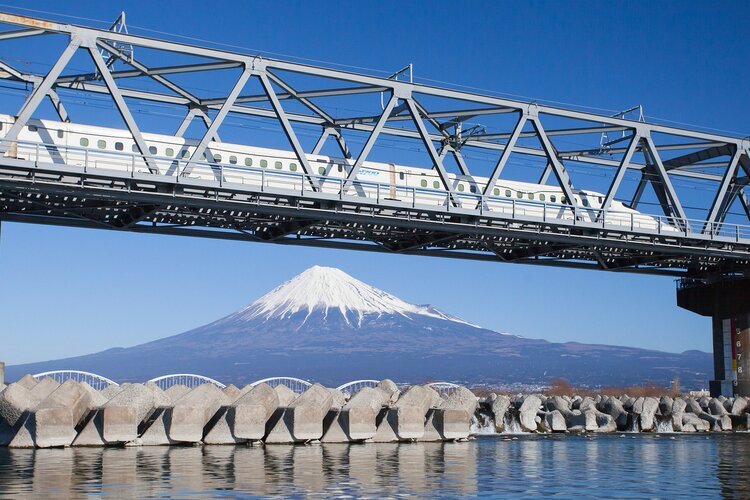 You can see Mount Fuji from the Shinkansen
Generally, traveling by Shinkansen is the most convenient way to get around Japan. You can skip the extra time spent traveling to the airport and waiting for your flight.
However, if you're heading to Hokkaido or Okinawa, it's best to fly. These regions are far from other Japanese cities, and the Shinkansen doesn't reach there.
3. What Should I Do If I Miss the Shinkansen?
If you have a reserved seat or are in a green car, you will need to buy a new ticket.
But if you have a non-reserved seat ticket, you can still board the same type of Shinkansen to your destination on the same day.
4. Does the Shinkansen Offer WiFi?
Yes, you can enjoy free WiFi on most Shinkansen trains on all lines.
Start to Customize Your Japan Trip Now!
 Our clients in Japan
Tell us what you prefer, and we can help customize your Japan trip, answer any questions you may have, and handle everything for you. Contact us to plan your dream trip together!
Here are two Japan tours for your inspiration: