
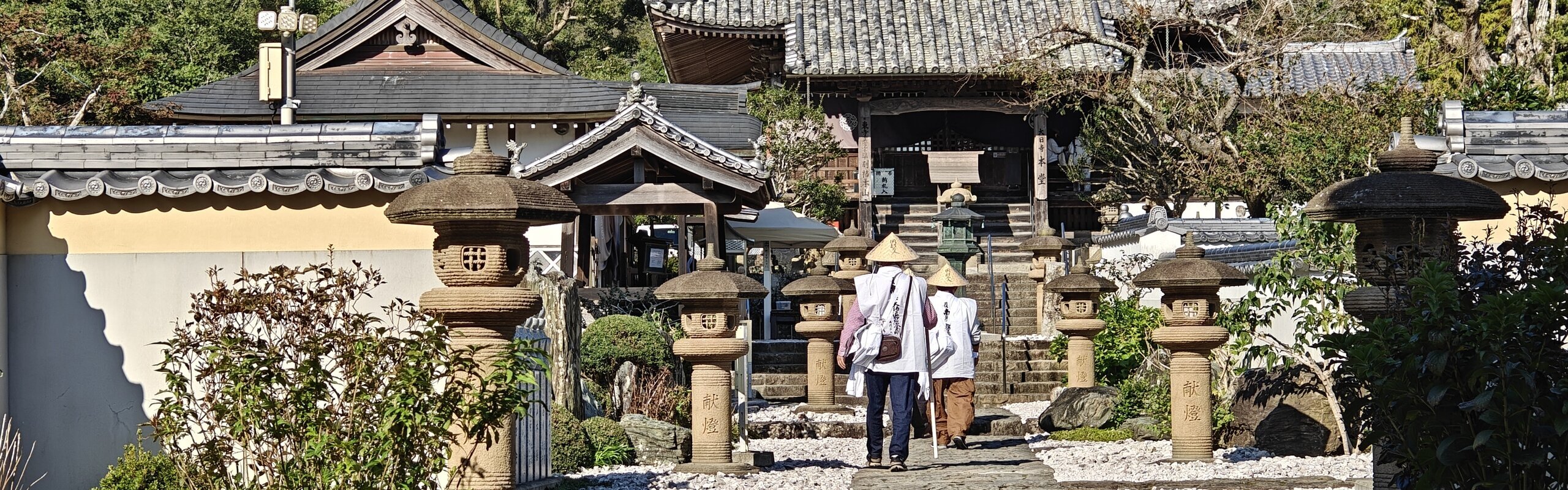
Shikoku Pilgrimage is one of Japan's most iconic pilgrimage routes, a 1,200-kilometer circle linking 88 temples connected to master Kūkai, the monk who shaped Japanese Buddhism.
Though the full pilgrimage is a long trek, most visitors opt for the classic sections, a 3-4 day hike. You will soak up Japan's culture, traditions, and Buddhist rituals along the way.
We hiked the Shikoku Pilgrimage in November 2025. I will share my personal experience here on the best routes, accommodations, sightseeing, temple etiquette, and other practical tips.
What to Expect Along the Shikoku Pilgrimage
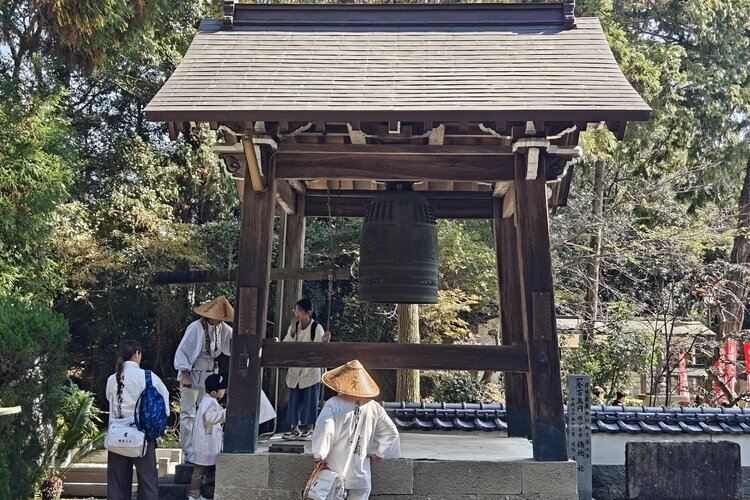 During our hike, we saw many locals engaged in their rituals of worship
The Shikoku Pilgrimage is more than just a walk. It's a journey into the heart of Japanese Buddhism, tradition, and local life.
You'll be tracing the steps of the great master Kūkai, visiting the temples where he once worshipped and following the entire path of Kūkai's spiritual training.
This journey takes you through four stages of Kūkai's spiritual practice: the Awakening Stage, the Training Stage, the Enlightenment Stage, and finally, the Nirvana Stage.
Along the way, you'll meet devout locals on their own pilgrimages, and participate in religious rituals, and pass through quaint Japanese villages and orchards.
How Many Days Do You Need for Shikoku Pilgrimage?
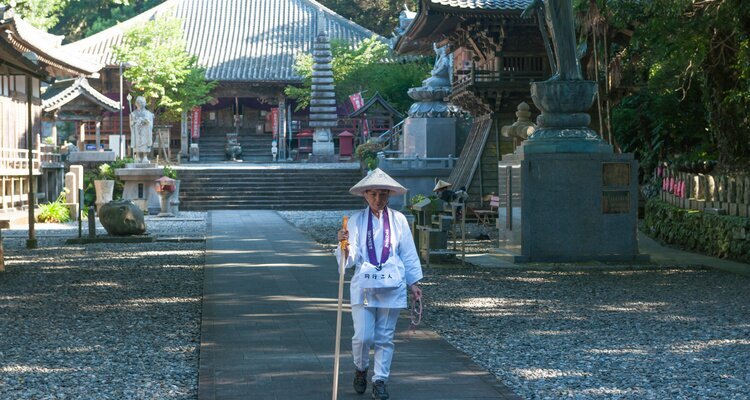 A Local pilgrim is wearing the complete traditional pilgrimage attire in a temple.
It takes about one to two months to walk the full pilgrimage (20-40 km per day) to visit all the 88 temples. However, you don't need to complete the entire journey—the scenery is quite similar along the way. We recommend focusing on the most classic sections for a 4-5 day trip.
A 4-5 day trip lets you experience all four pilgrimage stages of Master Kūkai's journey. You'll visit classic temples, walk through forest paths, and enjoy coastal views along the traditional route. This is the best way to feel the true spirit of the pilgrimage.
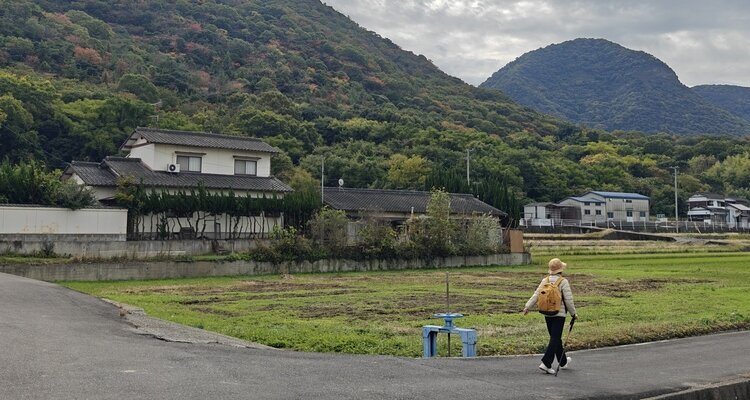 Our product manager is walking on the way from No. 74 Kōyamaji to No. 73 Shusshakaji.
If you have 2-3 days, I recommend visiting Kagawa and Tokushima. You'll experience both the beginning and ending stages of the pilgrimage. The temples are close together, the atmosphere is deeply spiritual, and these stretch offers beautiful scenery with easy, relaxing walks.
Short on time? One day could head to Kagawa. You can hike and visit temples in about 3 hours. The trail takes you to viewpoints overlooking Matsuyama city. This is the final stage of Master Kūkai's training, starting from his birthplace, so you'll get a meaningful glimpse into his spiritual journey and life story.
If you have your own ideas but are unsure how to organize them, we can provide you with customized services.
Which Sections/Cities of Shikoku Pilgrimage Are Best to Hike
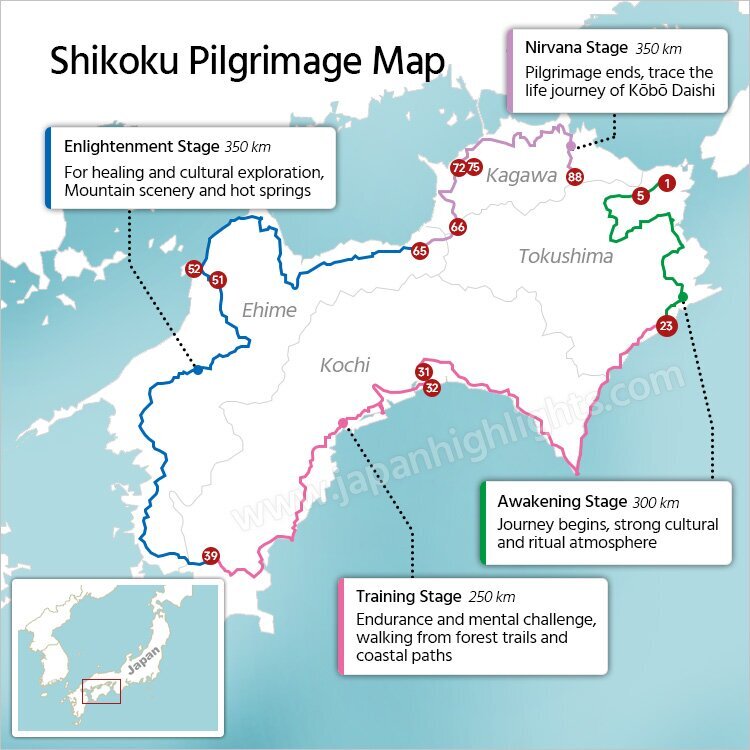 Shikoku Pilgrimage Map (The numbers in the image correspond to the identification numbers of the 88 temples.)
With limited time, how do you choose from such a long route? We've personally walked and evaluated the pilgrimage. Here are the four best sections that capture the essence of this journey, and how to choose your hike.
The Four Best Sections: Quick Comparison (5 stars – Highly Recommended)
| Sections | Cities/Temples | Distance | Time | Recommend Rating |
| Section 1 | Tokushima (No.1-5) | 10.7 km | 4.5 hours | ★★★★ |
| Section 2 | Kochi (No.31-32) | 8 km | 3 hours | ★★ |
| Section 3 | Matsuyama (No.51-52) | 10.5 km | 4 hours | ★★★★ |
| Section 4 | Kagawa (No.75-72) | 5.2 km | 2.5 hours | ★★★★★ |
For the most immersive pilgrimage experience, walk all 4 sections across Shikoku. This classic route complete the pilgrimage in 4-5 days, lets you walk in the footsteps of Kobo Daishi and experience the heart of the pilgrimage.
You'll learn key rituals, follow the ancient path of Kobo Daishi, visit the distinctive temples listed above, and unwind in historic hot springs along the way.
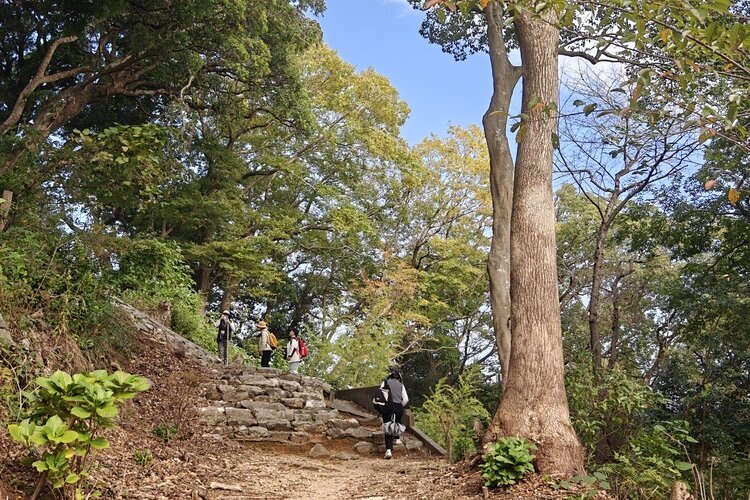 The Mountain Path behind to Zenjibu-ji Temple in Kochi
If you want to experience a spiritual journey along an ancient path, we recommend Tokushima and Kochi. Spend 2-3 days here.
You'll learn traditional rituals, gear up in white robes and bamboo hats, then follow old mountain trails where pilgrims have walked for centuries. It is the best way to feel the true spirit of the pilgrimage.
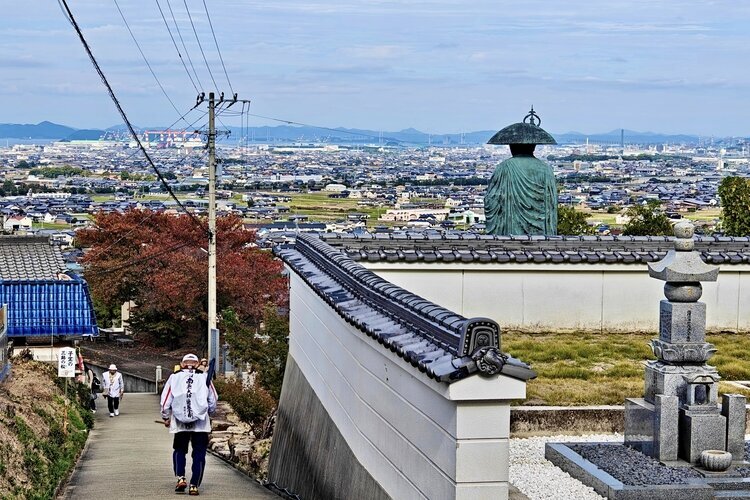 Shusshakaji Temple (Temple No. 73) in Kagawa
If you prefer a more relaxed way to experience Buddhist culture, we recommend Kagawa and Ehime.
This section takes you through peaceful villages and to visit four temples with distinct styles. Along the way, you can enjoy views overlooking Matsuyama city, and after the walk, unwind at Dōgo Onsen, Japan's oldest hot spring.
Section 1: Awakening (Tokushima) - Beginning Your Journey and Learning the Rituals
- Route: No.1 Ryōzenji → No.2 Gokurakuji → No.3 Konsenji → No.4 Dainichiji → No.5 Jizōji
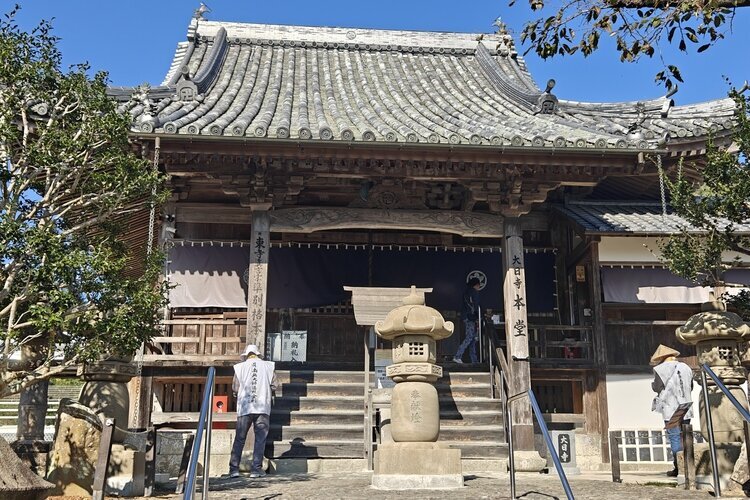 Local pilgrims are chanting sutras in No.4 Dainichi-ji Temple
This section is where your pilgrimage begins. You will learn the basic pilgrimage rituals at the temples. Along the way, enjoy an authentic look at rural Japan, far from tourist crowds.
The total walking distance is quite long, especially for a first day on the trail. We recommend walking to the first three temples and using local transport for the remaining sections.
The scenery becomes repetitive, and conserving your energy allows you to enjoy the experience more fully. If you are physically prepared, you may of course walk the entire route.
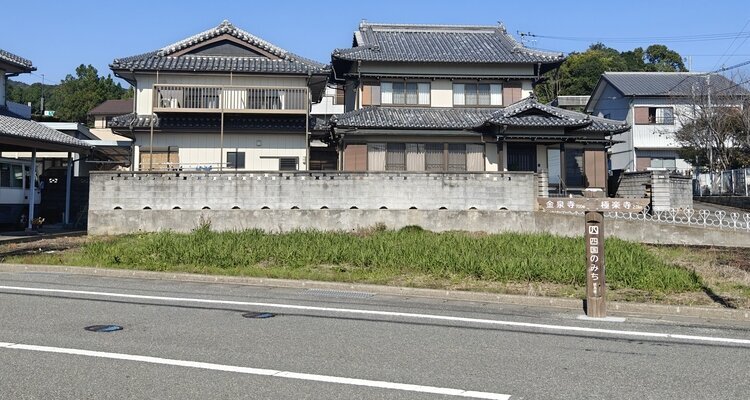 The scenery and road conditions on the way to Konsen-ji Temple
Tips:
- The walking distance is long, so start early (around 8 AM) to have time to rest and complete the route.
- For a more immersive experience, consider wearing traditional pilgrimage attire. All essential items can be purchased at shops near the first temple.
If you book with us, we can provide traditional pilgrimage items (stamp book, hat, walking staff) to enhance your experience. Feel free to contact us.
Section 2: Training (Kochi) - Discipline and Challenge
- Route: No.31 Chikurinji → No.32 Zenjibuji
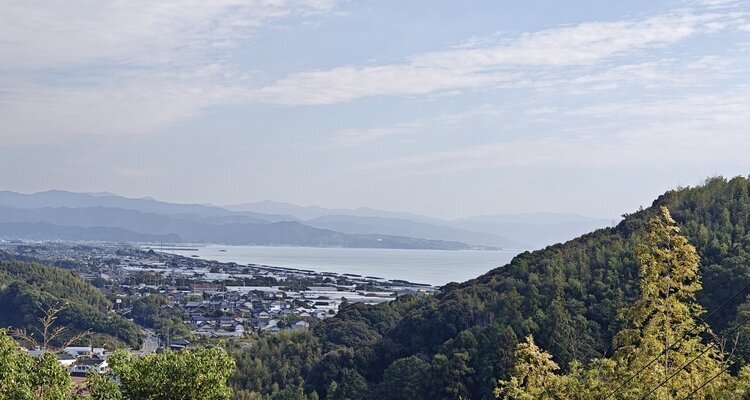 The View from Zenjibu-ji Temple
This mountain-to-sea route connects two distinct temples: Chikurinji, nestled in serene forests with cultural heritage buildings, and Zenjibuji, perched on the coast with sweeping ocean views.
For this section, you have two walking options: an ancient forest path or a countryside road.
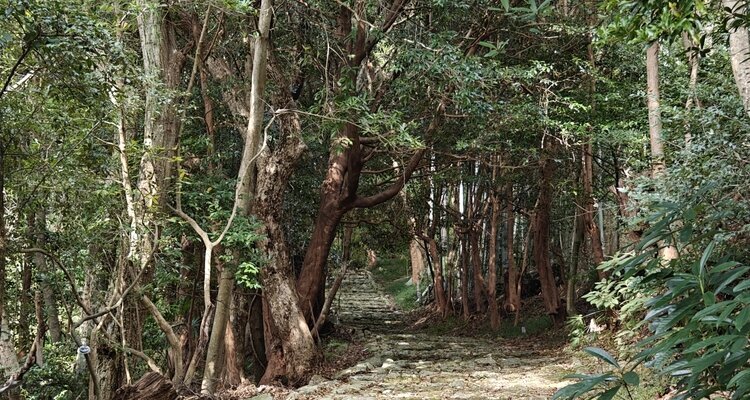 The ancient path from Temple 31 to Temple 32 in Kochi
For pilgrims and nature lovers, the ancient forest path from Chikurinji is the more rewarding choice. It offers natural scenery and fully expresses the mountain-to-sea spirit of spiritual training.
However, it demands stronger physical fitness. After more than two hours of walking, the final approach to Zenjibuji involves a steep, often muddy climb.
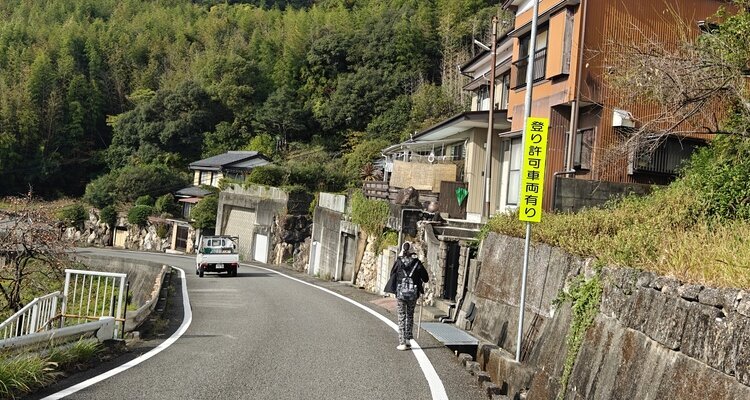 Walking Road from Temple 31 to Temple 32
For a more comfortable walk, following the countryside roads. It is easier but can be boring. That is why we recommend arranging a car pickup.
You can stop walking at any time and continue by vehicle. This saves time and energy for exploring both temples thoroughly.
Section 3: Enlightenment (Matsuyama) - Healing Body and Soul
- Route: No.51 Ishiteji → No.52 Taisanji
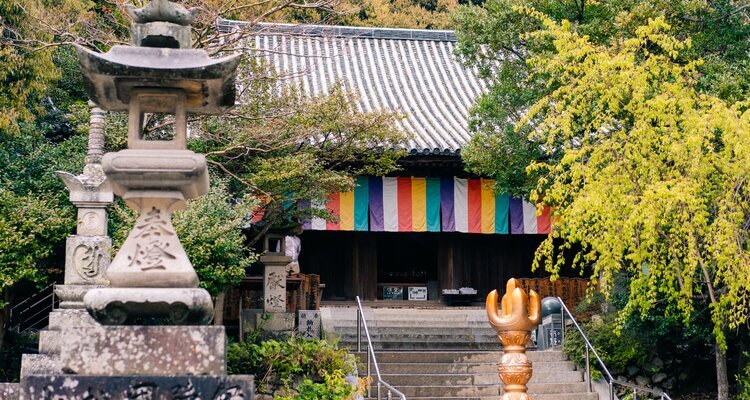 Ishite-ji Temple
This section tests your willpower the most. Both temples sit on mountains with impressive scale and centuries of history.
The route takes you from peaceful rural villages through Matsuyama's old Dogo Onsen town to extensive suburban roads. You also can stop anytime and take a car to the temple sites.
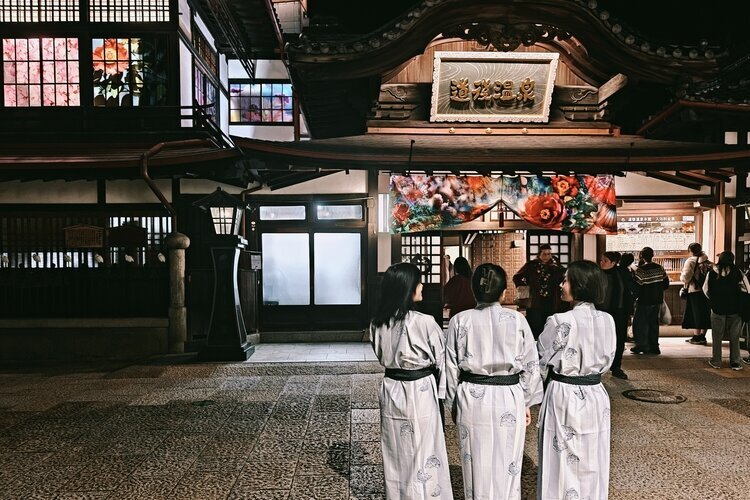 We are wearing yukatas at the entrance of Dōgo Onsen
After a long walking time, fatigue naturally sets in. We recommend staying overnight at Dogo Onsen Town, one of Japan's three ancient hot springs, to ease the strain.
Soak in the historic baths, enjoy delicious Western cuisine, and let your body fully recover before continuing your pilgrimage journey.
Section 4: Nirvana (Kagawa) - Completion and Fulfillment
- Route: No.75 Zentsuji → No.74 Kōyamaji → No.73 Shusshakaji → No.72 Mandara-ji
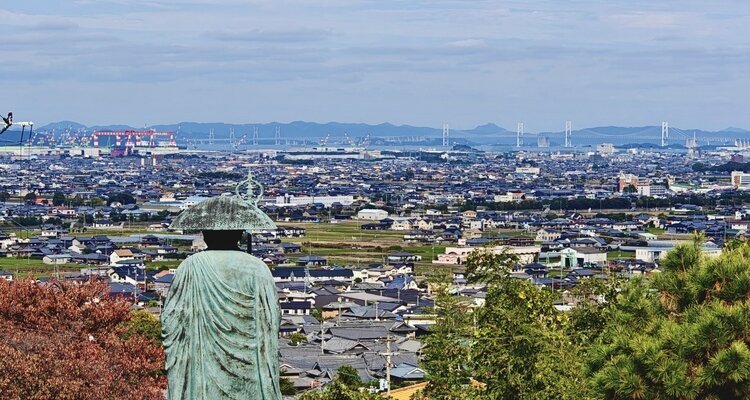 The panorama view from Shusshakaji Temple (Temple No. 73) in Kagawa
If you only have time for one section, make it this one. It holds the deepest spiritual significance with scenic walk. Perfect for first-time pilgrims and suitable for all fitness levels.
These four temples trace master Kūkai's life journey—from his birthplace at Zentsuji to his enlightenment at Mandaraji. Shusshakaji sits atop a mountain with a giant Buddha statue overlooking the city, offering stunning views.
The route is mostly flat, winding through farmland, villages, parks, and orchards. It's like a comfortable countryside stroll.
If you enjoy in-depth hiking while experiencing temple stays, onsen, and local cuisine between Tokyo and Osaka, we recommend the 3-Week Grand Japan: History & Spiritual Pilgrimage Walk.
How to Plan Your Shikoku Pilgrimage Itinerary
We have created a hiking route that links local sights, so you can enjoy the culture of Shikoku while also easing the fatigue of hiking.
 The whirlpools we saw from the Sightseeing Cruise in November
Day 1: Tokushima - Naruto Whirlpools and First Section Walk
- Morning: Take a boat tour to see the Naruto Whirlpools.
- Afternoon: Walk Section 1 - Temples No. 1 to No. 5 (Awakening).
- Overnight: Naruto.
Day 2: Kochi - Hidden Valley Exploration
- Morning: Depart Naruto and visit the Iya Valley, exploring its stunning scenery.
- Afternoon: Enjoy a boat ride on the Oboke Gorge.
- Overnight: Kochi.
 Oboke Gorge
Day 3: Kochi - Section 2 Hiking and Kochi Castle Visit
- Morning: Walk Section 2 - Temple No. 31 Chikurinji to No. 32 Zenjibuji (Training).
- Afternoon: Visit Kochi Castle and explore the Hirome Market for local delicacies.
- Overnight: Kochi.
Day 4: Matsuyama-Section 3 Hike and Hot Spring Town Rest and Recover
- Morning: Depart Kochi and travel to Matsuyama Onsen Town.
- Afternoon: Hike Section 3 - Temples No. 51-52 (Enlightenment).
- Overnight: Matsuyama.
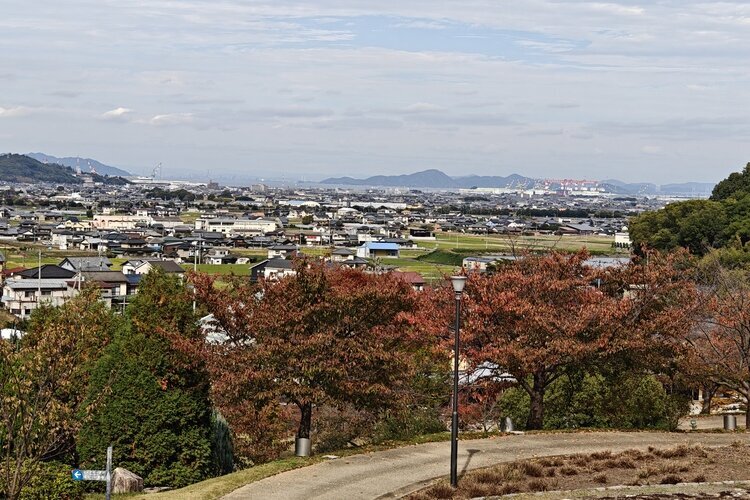 The road from Kumayama-ji Temple to Shusshaka-ji
Day 5: Takamatsu-Sacred Mountain Shrine and Final Pilgrimage Section
- Morning: Depart Matsuyama and visit Konpira Shrine.
- Afternoon: Walk Section 4 - Temple No. 51 Ishiteji to No. 52 Taisanji (Nirvana).
- Overnight: Takamatsu.
Day 6: Departure to Osaka or your next destination.
If you have other pilgrimage routes in mind or any travel ideas, feel free to contact us. Our consultants will provide you with a satisfying travel plan.
Best Time to Hike Shikoku Pilgrimage
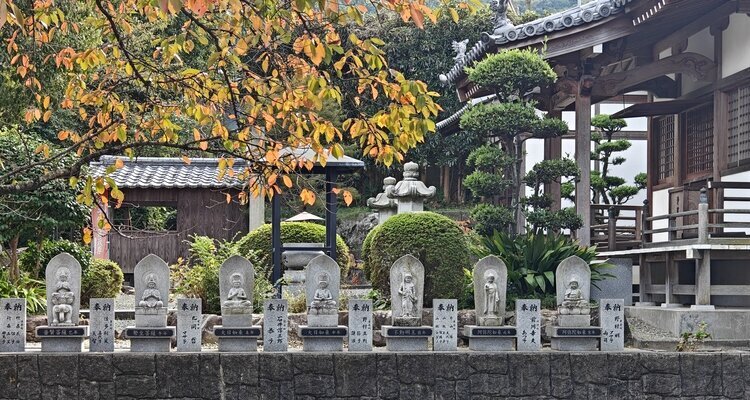 The Buddha statues enshrined in Mandaraji Temple (Temple No. 72) in November
Spring (March to May) and autumn (October to November) are generally considered the best seasons for the Shikoku Pilgrimage, but based on our hiking experience, autumn is the superior choice.
Autumn has pleasant daily temperatures ranging from 59°F to 77°F (15°C to 25°C), similar to spring. The season offers more stable weather with frequent sunny days and less rainfall, making roads less slippery.
Times to Avoid:
- Rainy Season (early June to mid-July): Heavy downpours and high humidity (78-83%).
- Typhoon Season (August to September): Risk of strong winds, heavy rain, and potential trail closures.
- Winter (December to February): brings cold temperatures and the possibility of snow in mountainous and shaded areas, which increases the difficulty of hiking.
Where to Stay on Shikoku Pilgrimage?
 Japanese Ryokan with Western-style beds in Dogo Onsen Town
The walking route covers long distances, requiring a hotel change each day. For comfort and convenience, base on places like hotels in major cities such as Takamatsu, Matsuyama, Tokushima, and Kochi are the most practical option.
These cities offer a good selection of reliable hotels with easy access to transportation.
When planning accommodations for the Shikoku Pilgrimage, most travelers choose between temple lodging , hotels, and ryokan.
If you would like to experience a traditional ryokan, we strongly recommend staying in Dogo Onsen in Ehime, one of the most renowned hot spring towns along the route.
You might think about staying in a temple lodging. I suggest being careful with this choice. While it offers deep cultural immersion through early-morning wake-ups, vegetarian meals, and evening prayers, the strict schedule and possible language barriers may affect sleep and overall comfort.
Due to limited availability, hotels and ryokan are best booked about three months in advance, especially during peak pilgrimage seasons.
How to Get to Shikoku from Kyoto/Osaka
From Kyoto or Osaka, take the Shinkansen to Okayama, the main transfer hub for Shikoku. As Shikoku has no Shinkansen, continue from Okayama by local or limited express trains crossing the Seto Ohashi Bridge to reach the major prefectures.
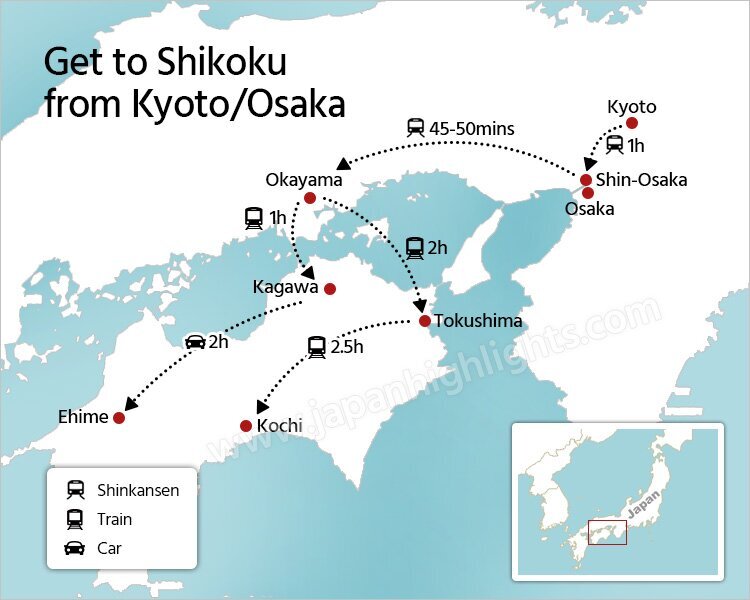 How to Get to Shikoku
How to Prepare for Hiking Shikoku Pilgrimage
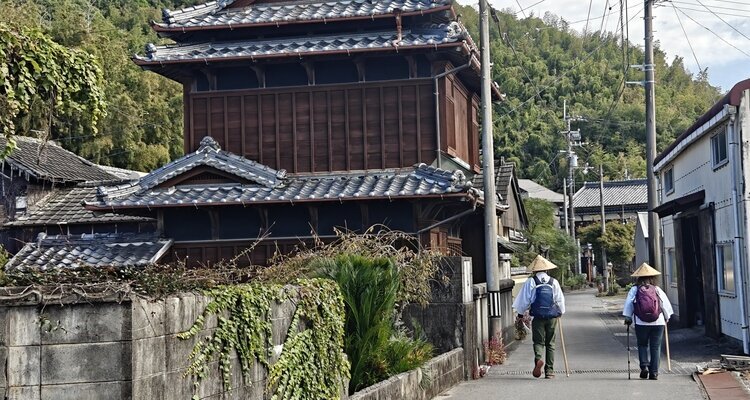 Local pilgrims are walking on the way between Temple No.31-32
- Temple dress code: Cover shoulders and knees. No tank tops, shorts, short skirts, see-through attire, or slippers.
- Footwear: Wear well-broken-in hiking shoes; high-cut boots are recommended for ankle support.
- Support Gear: Bring trekking poles and knee braces to reduce strain on joints.
- Food & Water: Carry water, snacks, electrolytes, and energy food, as shops and restaurants may be scarce on long sections.
- Essentials: Pack sun protection to guard against UV rays.
- Physical Preparation: Train in advance with regular walking and simple ankle exercises to build stamina and reduce the risk of injury.
FAQ
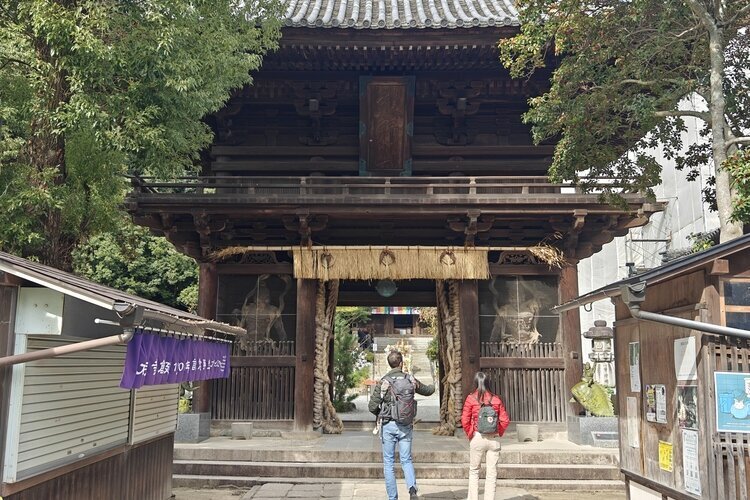
1. Are foreigners welcomed by locals on the Shikoku Pilgrimage?
Yes, as long as you respect the pilgrimage customs, locals do not oppose foreigners participating. They even encourage visitors along the way to complete the journey.
2. How Difficult Is the Shikoku Pilgrimage?
The physical challenge is moderate, with most paths flat and easy to walk. The real test is mental endurance and patience. About 70% of the route follows long, unexciting road sections.
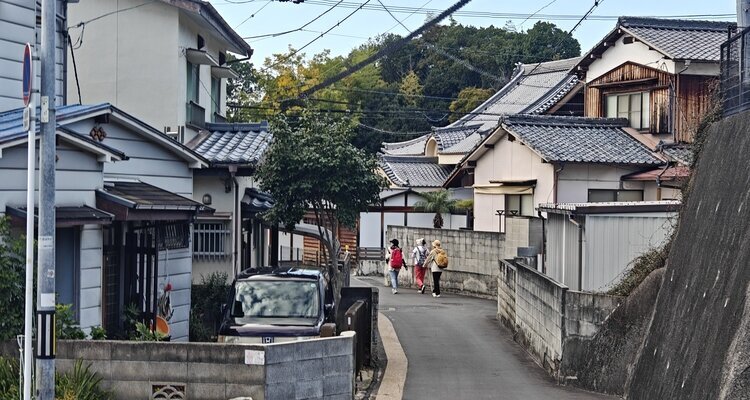 Scenery Along the Shikoku Pilgrimage
3. Should I Hike Shikoku or Kumano Kodo?
Both are UNESCO World Heritage pilgrimage routes, but they offer different experiences. Shikoku Pilgrimage is ideal for those seeking a temple-focused, Buddhist cultural experience. It is more immersive and less touristy, with many historic temples along the route.
The scenery on Shikoku is less dramatic than Kumano Kodo. If your priority is nature and scenic hiking, Kumano Kodo is the better choice.
4. Do I need to be Buddhist or speak Japanese on Shikoku Pilgrimage?
Not at all. Many modern pilgrims walk for personal reflection, cultural exploration, or simply the love of hiking. While knowing basic Japanese phrases helps, many pilgrims complete the journey with minimal language skills. The rituals are easy to observe and follow.
5. What are the Basic Temple Etiquette?
Bow before entering at the Gate→Wash hands and rinse mouth→Ring the Bell→Offer coins→Ring the Bell→Pray→Collect Stamp→Exit(Bow at the gate again)
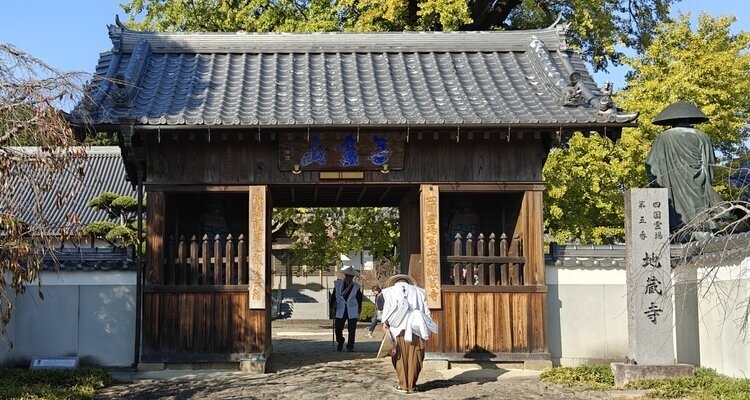 Local pilgrims bow before leaving the Jizō-ji Temple
6. What is Osettai?
Osettai is a tradition where locals offer gifts to pilgrims—food, drinks, small souvenirs. It stems from respect for Kōbō Daishi. If someone offers you osettai, accept graciously with a bow and say "Arigatō gozaimasu" (thank you very much). It's considered rude to refuse.
7. Are There Bears?
The chance of encountering a bear in Shikoku is very low. Unlike other parts of Japan, Shikoku rarely has bear sightings, so there is no need to worry.
Plan Your Shikoku Pilgrimage with Us
Ready to start your journey? Contact us to design a customized Shikoku Pilgrimage experience based on your interests, fitness level, and schedule. Our carefully selected sections give you the cultural depth and spiritual essence without the monotony of endless paved roads.